











Sourcing Poultry Equipment Manufacturers in China: Buyer Guide
Sourcing poultry equipment from a Chinese manufacturer means controlling four variables di…


Check out our latest news,
 10:54
10:54 Automatic release moves broilers out of the cage on a conveyor line; semi-automatic release still needs a crew to pull hens from each tier by hand. The decision comes down to three measured numbers: line rate, crew-hours per house, and the downgrade rate your processor charges back.henhen
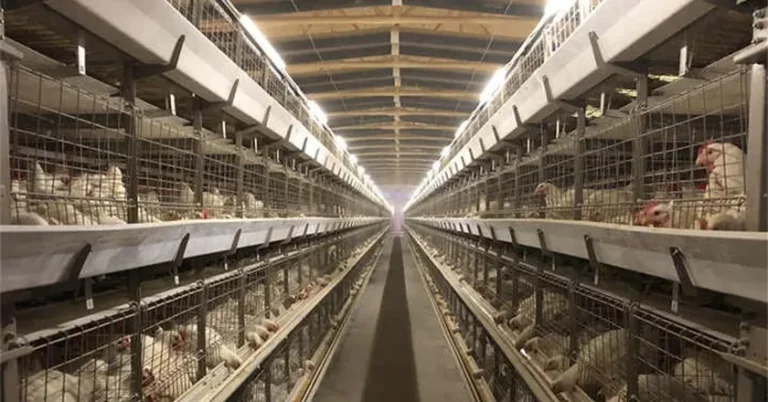
In an H-type cage house, catch-out is the point where the whole automation case is either proven or lost. Everything before it — feeding, drinking, climate control — runs continuously and unattended. Catch-out is a single compressed event, usually at night, that puts a large crew inside a house full of market-weight hens for several hours.
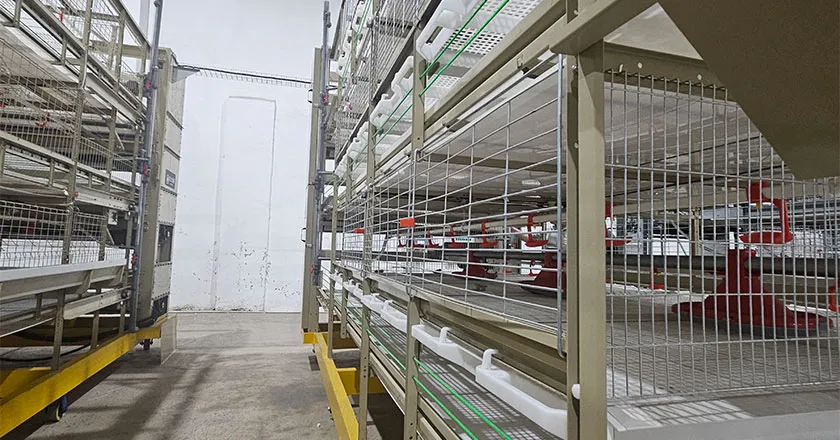
Semi-automatic (pull-out) release. Cage doors open and hens are drawn out of each tier by hand or onto a short pull-out tray, then carried or passed to crates staged in the aisle. The cage structure assists the handling; people still do the moving. Crew size scales with house size, and the rate depends on tier height, aisle width and how experienced the catching team is.
Automatic (chain/conveyor) release. hens are released from the tiers onto a longitudinal conveyor that runs the length of the row, transferred to a cross-conveyor, and delivered to a crating or loading point at the house end. The crew shrinks to a supervision and crating role. Throughput becomes a property of the equipment rather than of the labour pool available that night.
That distinction matters more than it first sounds. A pull-out system has a variable rate you cannot contract for. A conveyor system has a rated rate you can write into a purchase specification and test at commissioning.
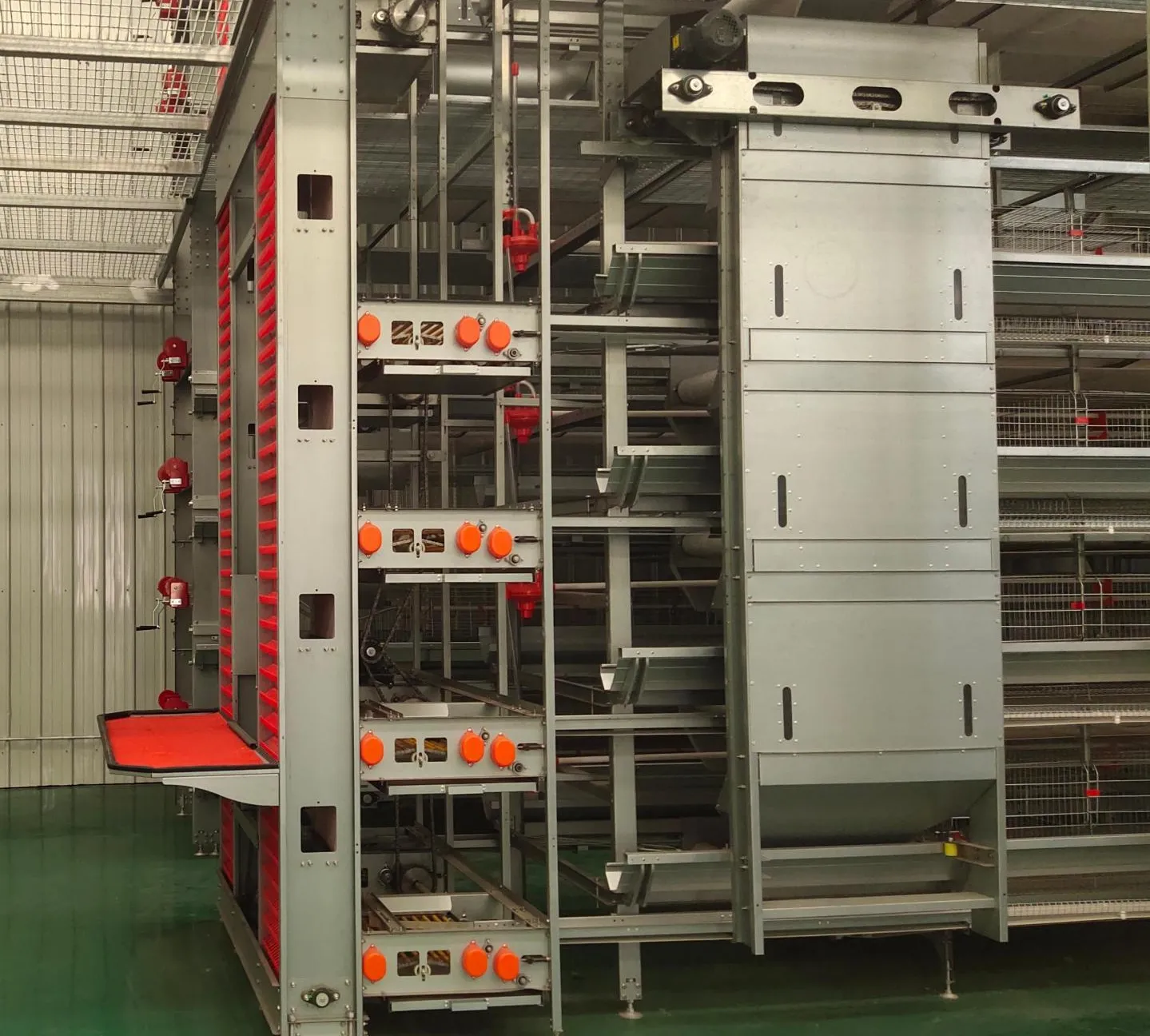
| Dimension | Semi-Automatic Pull-Out | Automatic Harvesting Conveyor |
| What Sets the Speed | Crew size, crew experience, tier height | Conveyor line rate and transfer capacity |
| Rate Predictability | Varies night to night; not contractable | Rated figure; testable at commissioning |
| Crew Role | Catching, lifting, carrying, crating | Supervising release, crating, loading |
| Peak Labour Demand | High and concentrated; recruitment risk | Low; smaller fixed team |
| Handling Events per hen | Multiple: pull, carry, pass and crate | Fewer: release, convey and crate |
| Injury Exposure—hen | Rises with fatigue late in the shift | Depends on transfer-point design and belt speed |
| Injury Exposure—Worker | Repetitive lifting in dust and low light | Reduced lifting; adds moving-machinery risk |
| Capital Cost | Lower; largely part of the cage structure | Higher; conveyor, drives, controls and transfer points |
| Operating Cost Profile | Variable; tracks local wage rates | Mostly fixed: power, maintenance and spare parts |
| Power Dependency | Low | Requires a stable supply or standby generation |
| Downtime Consequence | Crew works slower | Catch-out stops until the fault is cleared |
| Best Fit | Smaller houses, low wage costs and single-house sites | Multi-house sites, tight catch windows and scarce labour |
Compared with the category-level automatic harvesting systems most commonly promoted in this segment, the throughput figure is nearly always published while the semi-automatic baseline it is supposed to beat is not. That asymmetry is what makes the comparison hard for buyers. You are handed one number and asked to assume the other.
Published category data for automatic broiler harvesting conveyors sits in the range of roughly 3,000 to 10,000 hens per hour, depending on line configuration and transfer capacity. Semi-automatic rates are almost never published at all, because they are site-specific.
So build the comparison the other way round. Measure your own pull-out rate over one full catch-out, then run both numbers through the same arithmetic. The table below does that for a 50,000-hen house.
Clock hours and crew-hours to clear a 50,000-hen house
| Measured Line Rate (hens/Hour) | Clock Hours to Clear House | Crew-Hours at Crew of 10 | Crew-Hours at Crew of 4 | Fits an 8-Hour Night Window? |
| 2,000 | 25.0 | 250 | 100 | No — spans multiple nights |
| 3,000 | 16.7 | 167 | 67 | No — two nights |
| 5,000 | 10.0 | 100 | 40 | Marginal — overruns by 2 hours |
| 6,250 | 8.0 | 80 | 32 | Exactly at the limit |
| 8,000 | 6.3 | 63 | 25 | Yes |
| 10,000 | 5.0 | 50 | 20 | Yes |
Where injury and downgrade cost actually shows up
FAO poultry production guidance identifies catching, handling and transport as recognised sources of carcass bruising, wing and leg damage, and mortality in transit — the losses appear on the processor’s grading sheet rather than on the farm’s own records, which is precisely why they get underweighted at the equipment purchase stage.
Six cycles of this data is worth more in a payback calculation than any figure printed in a brochure, including ours.
Mugong’s H-Type Automatic Broiler Cage with Harvesting System is a chain-type automatic harvesting cage designed to reduce labour, hen injury rate and catch-out cost. The table below separates what is currently published from what is not, so that no figure in your tender document rests on an assumption.
| Parameter | Status | Notes |
| System Type | Published | Chain-type automatic harvesting broiler cage |
| Design Objectives | Published | Reduced labour, reduced injury rate and reduced catch-out cost |
| Structure Material Options | Published (Company-Level) | Hot-dip galvanized and aluminized-zinc structures; aluminized-zinc is stated to provide 3–4× the corrosion resistance of ordinary hot-dip galvanized wire, validated by 500+ hours of salt-spray testing |
| Certification | Published (Company-Level) | ISO 9001:2015, CE and SGS. No model-specific certificate numbers are published |
| Project Capacity Range Served | Published (Company-Level) | Commercial layer and broiler projects ranging from 10,000 to 200,000 hens |
If you are still deciding between H-type cage and floor systems for the broiler house itself, the release-method comparison is downstream of that choice, and it is worth settling the housing decision first — catch-out method options differ substantially between the two, and a floor house never offers a tier-release conveyor at all.
Q: What throughput should I expect from an automatic broiler harvesting conveyor?
A: Published category figures for automatic harvesting systems in this segment fall in the range of roughly 3,000 to 10,000 hens per hour, varying with line configuration and transfer capacity. Treat this as a category reference. Ask your specific supplier for a rated figure with the test conditions attached, because hen weight and line length both affect the result.
A: There is no universal threshold, because the answer depends on your local loaded labour cost, the number of houses sharing the equipment, cycles per year, and whether your processing contract pays for lower damage rates. The calculation structure is set out in the payback section above. Run it with your own quotation and your own measured pull-out rate.
A: It reduces the number of handling events per hen, which is the mechanism by which injury falls. Whether it reduces measured downgrades on your site depends heavily on transfer-point design and belt speed matching. Measure it across at least two cycles under the grading categories your processor actually uses before assuming a benefit.
A: These parameters are not currently published. Request them from engineering along with the rated line rate and stocking density. The specification status table above sets out what is published and what needs to be requested.
A: Sometimes, but the constraint is usually aisle width and end-of-house space for the cross-conveyor and crating station rather than the cage rows themselves. Have the house measured against the supplier’s transfer-point drawing before assuming a retrofit is cheaper than a replacement system.
A: This is a specification question, not an operating one. Ask what the system does on power loss with hens partially released, whether release gates fail closed, and how the line is cleared manually. Write the answer into the purchase specification.
A: Not as a published figure. Broiler harvesting equipment is quoted per project, because tier count, structure specification, house integration and destination country all move the cost materially. Send the house layout and target hen capacity to obtain a quotation, and ask for the equipment-only and installed prices separately so the payback calculation uses the correct number.
Sourcing poultry equipment from a Chinese manufacturer means controlling four variables di…
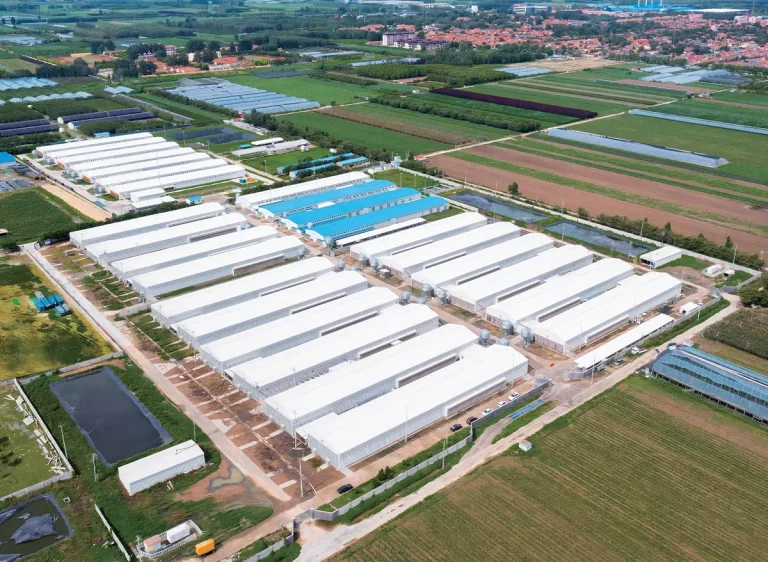
A steel structure poultry house is a prefabricated steel building designed for layer, broi…
We will reply to your inquiry within 24 hours.For urgent inquiries, please contact us via WhatsApp: +86 133 6144 9578 or call us directly.
*We respect your privacy. All information submitted is strictly confidential.
Your details will only be used to respond to your inquiry. We never send unsolicited emails or promotional messages.