











Sourcing Poultry Equipment Manufacturers in China: Buyer Guide
Sourcing poultry equipment from a Chinese manufacturer means controlling four variables di…

Check out our latest news,
 09:57
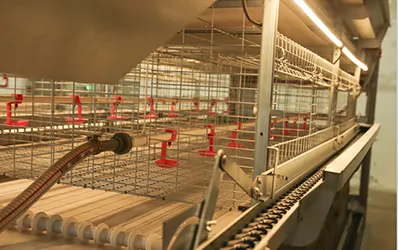
09:57 A fully automatic layer brooder cage is a multi-tier rearing system built for chicks from day one to transfer, with automated feed, water, manure removal and climate control sized to birds weighing under 1.3 kg. It is specified separately from production cages because feeder height, mesh spacing and heating loads differ.
Most equipment catalogues treat the brooder cage as a line item under the layer range. That framing costs money later. A pullet that arrives at the production house 100 g under target weight, or from a flock with a body-weight coefficient of variation above 10%, does not recover its lost laying persistency, and no amount of production-house automation fixes it.
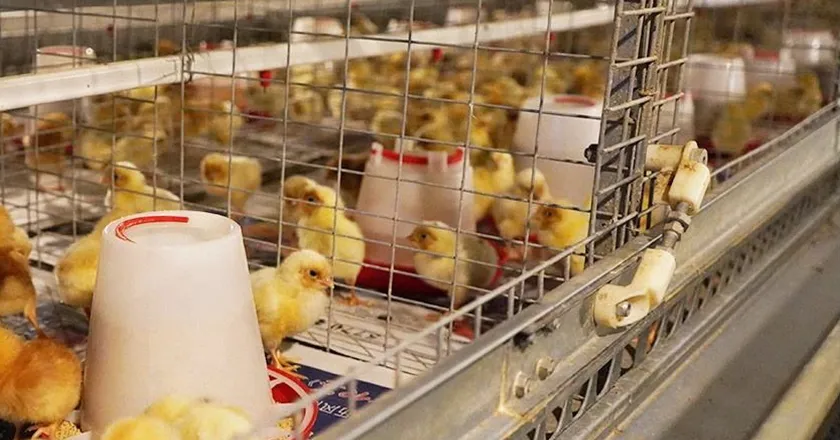
The two systems share a family resemblance and almost nothing else in their working dimensions.
A day-old chick weighs roughly 35–40 g and cannot reach a trough designed for a 1.8 kg hen. It falls through mesh spacing that safely supports an adult bird. It cannot regulate its own body temperature for the first two weeks, which makes the brooding house a heating problem before it is a ventilation problem. By week 16 the same bird needs perch and feeder access close to what she will find in the production house, or the transfer becomes a feeding disruption on top of a handling stress.
That is the design brief for a rearing cage: one enclosure that works for a bird whose body weight increases roughly 35-fold across the period it occupies the cage.
Manufacturers solve it with adjustable feed trough height, removable chick-guard mesh or a floor insert for the first weeks, and drinker lines on adjustable risers.
| Design dimension | Rearing / brooding stage | Production stage |
| Hens weight served | ~35 g at placement to 1.2–1.5 kg at transfer | 1.6–2.0 kg, stable |
| Floor mesh | Fine spacing plus chick mat or insert for weeks 0–2 | Sloped egg-roll floor, adult mesh |
| Feed trough height | Adjustable across the cycle | Fixed at one bird height |
| Drinker line | Adjustable height nipple line, low flow at placement | Fixed height nipple line |
| Primary climate load | Supplemental heat, 33–35 °C at chick level in week 1 | Heat removal and air speed |
| Egg handling | None | Belt collection, central egg conveyor |
| Occupancy | ~16–18 weeks per batch | ~60–80 weeks per batch |
Hens weights and brooding temperatures shown here are general planning references drawn from commercial layer strain management guides. Confirm them against the specific management manual for the strain you place, because targets differ between Hy-Line, Lohmann and ISA lines and are revised periodically.
Density is where under-equipped brooding does most of its damage, and it is also the parameter competitor pages most often omit.
Two mistakes recur. The first is planning density on final bird count rather than placement count, which ignores the fact that the same cage tier must hold chicks at week 1 and near-mature pullets at week 16. The second is planning on floor area alone while ignoring linear feeder space per bird, which is the constraint that actually drives uniformity.
Work the calculation in this order:
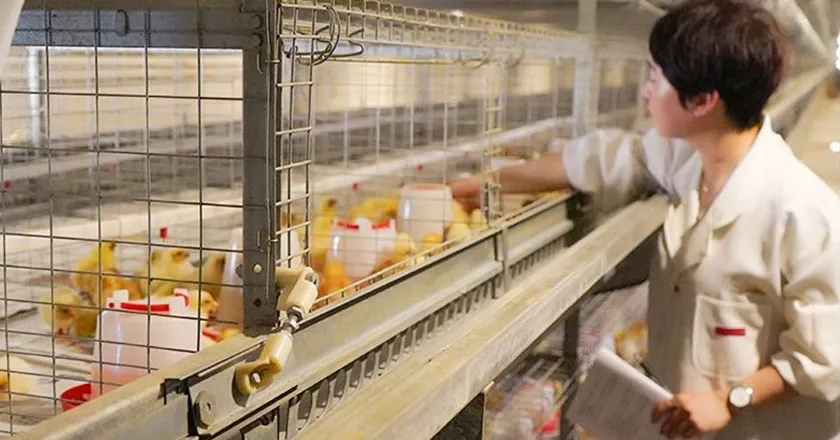
The term covers different scopes across suppliers. At minimum, ask which of the following are in the quoted price and which are separate:
Compared with general-purpose cage systems sold as an accessory to a layer range, a purpose-built rearing system is judged mainly on the adjustability of feed and water height and on the control curve for heating during the first fortnight. Those two items separate systems that look similar in a catalogue photograph.
FAO poultry production guidance identifies early-stage brooding management as a principal determinant of subsequent flock performance in commercial systems. Source currency should be verified before this reference is republished.
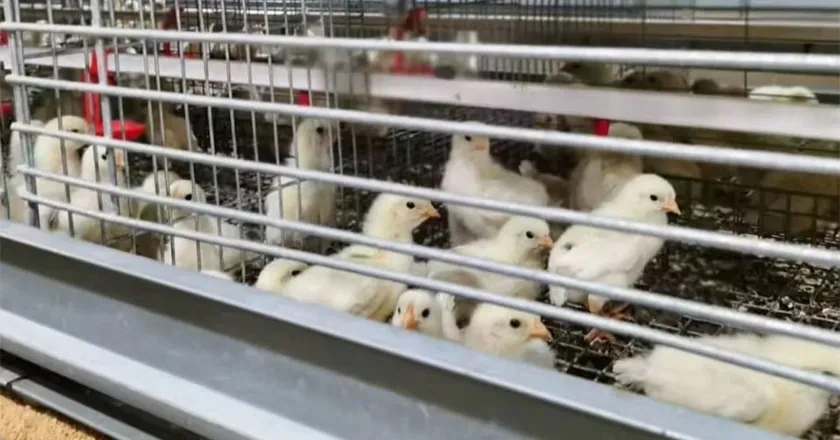
Transfer usually falls between weeks 15 and 17 for commercial layers, and the equipment on both ends constrains the window.
Transfer too early and pullets enter the production cage before they can reach a fixed-height trough, which produces a feed-intake dip during the exact period when body weight should be climbing towards onset of lay. Transfer too late and birds may come into lay in the rearing cage, where there is no egg collection and eggs are lost or broken on the mesh.
Three equipment facts determine your real window:
An edge case worth planning for: farms running continuous placement with a single rearing house. If your rearing cycle is 17 weeks and your cleaning and downtime is two weeks, one rearing house cannot serve a production house on a rolling schedule without either a second rearing house or accepting a gap in production placement. Check this before ordering, not after.
The site lists this product as a cascade rearing system for raising layer chicks in cages with a corrosion-resistant structure. Detailed dimensional parameters are not published. Rather than substituting figures from a different product line or from another manufacturer, here is what is confirmed and what a buyer must request.
| Parameter | Status | Notes |
| System type | Published | Cascade (stepped) rearing system for layer chicks |
| Structure and corrosion protection | Published | Corrosion-resistant structure; company product line uses hot-dip galvanized and aluminized-zinc materials, with aluminized-zinc stated at 3–4× the corrosion resistance of ordinary hot-dip galvanized wire and validated by 500+ hour salt-spray testing |
| Certification | Published | Company-level ISO 9001:2015, CE and SGS. No model-specific certificate number is published |
The production-cage column is included for one reason: house planning. If the rearing and production houses sit on the same site, the aisle width and column spacing of the production system usually set the site layout, and the rearing house is fitted around it.
Send this as a written list rather than asking for a general quotation. It shortens the quotation cycle and makes competing offers comparable.
Mugong pricing is quote-based and project-specific. No published price range exists for the rearing system, so any figure for brooding equipment must come from a quotation rather than from a catalogue.
What can be published are market-reference ranges for layer production equipment, which help a buyer self-qualify before enquiring:
| Project Type | Estimated Cost | Notes |
| Automatic layer battery cage, equipment only | ~US$15–25 per bird capacity | Industry norm for H-type and A-type systems, per Vpoultryfarmequipment |
| 10,000-bird layer cage project, equipment | ~US$18,000–32,000 | Varies by automation depth and steel specification, per Poultryfarmbusinessplan |
| 20,000-layer fully automatic system | ~US$35,000–120,000 | Varies by automation configuration level, per Tpoultryfarmequipment |
| Full turnkey (cage, house and site works) | Quote only | Building, ventilation and site preparation add large variable cost |
Two cautions on reading those numbers. Per-bird figures and total equipment figures are not interchangeable, and a per-bird figure quoted with housing included is a different number from one quoting cage equipment alone. The ranges above are for production cages; rearing equipment for the same flock is an additional line, not a share of the same budget.
Cost drivers to raise in the quotation conversation: bird capacity and tier count, manual versus semi-automatic versus fully automatic specification, galvanized versus aluminized-zinc structure, depth of climate control, whether a steel-structure house is included, destination country freight and certification, and turnkey scope.
A: Physically the birds will fit from around week 8, but not before. The binding problems are trough height, mesh spacing and the absence of supplemental heating in a production house. Some operators run a modified production cage as a grower cage from week 7 to transfer, with a separate week 0–6 brooding system. That two-stage approach adds one handling event, which is a trade-off against the capital saved.
A: Tier count follows density and inspection access, not the other way round. Higher tier counts reduce house footprint per bird but make top-tier inspection and manual culling slower, and staff who cannot easily see the top tier will not check it as often. Request the supplier’s stated density per tier and calculate house length both ways before deciding.
A: Commonly 16–17 weeks to transfer, plus cleaning and downtime between batches. That total determines whether one rearing house can serve one production house continuously. Work the schedule out on a calendar before sizing the rearing house.
A: Dimensional parameters for the rearing system are not published. Send the specification request list above with your enquiry and the engineering team will return the figures for the tier configuration you are considering.
A: It does not, but sourcing both from one supplier makes house layout, aisle width and control-system integration a single design problem rather than a negotiation between two vendors. If you split the order, ask each supplier for a written compatibility statement covering aisle width, house internal width and controller protocol.
Sourcing poultry equipment from a Chinese manufacturer means controlling four variables di…
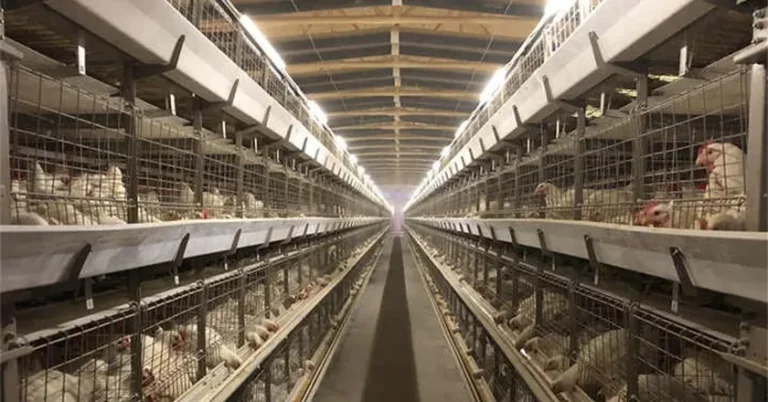
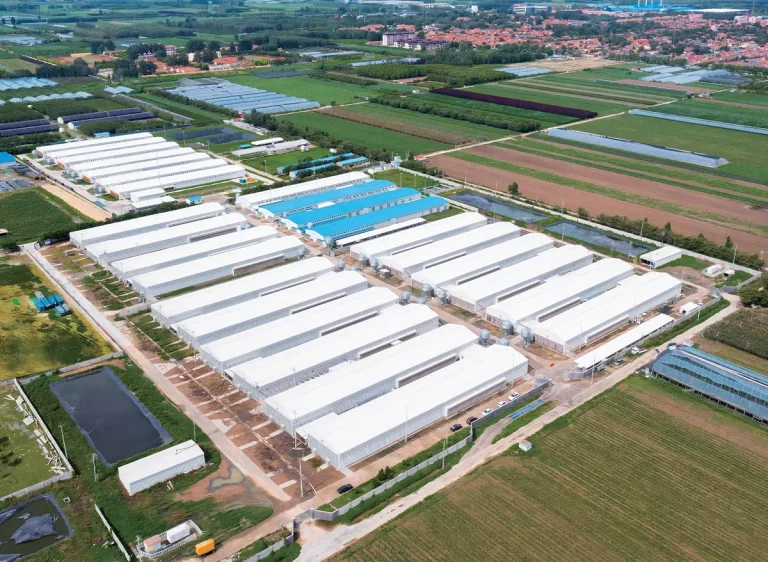
A steel structure poultry house is a prefabricated steel building designed for layer, broi…
We will reply to your inquiry within 24 hours.For urgent inquiries, please contact us via WhatsApp: +86 133 6144 9578 or call us directly.
*We respect your privacy. All information submitted is strictly confidential.
Your details will only be used to respond to your inquiry. We never send unsolicited emails or promotional messages.