











Sourcing Poultry Equipment Manufacturers in China: Buyer Guide
Sourcing poultry equipment from a Chinese manufacturer means controlling four variables di…


Check out our latest news,
 10:18
10:18 Choose flat-feeding (floor) equipment when your buyer contracts, retail customers or export markets require non-caged broiler production. Choose cage systems when you are optimising birds per square metre on a constrained site. Everything else — labour, litter, capital cost — follows from that first decision.
Flat-feeding equipment — also written as floor rearing, litter rearing or ground-raising equipment — is the set of systems that lets broilers live on a bedded house floor while feed, water, air and temperature are delivered mechanically overhead or at bird level.
A working scope normally includes:
What it does not include is a structural hen-containment system. That is the entire point of the comparison. In a cage system the equipment holds the birds; in a floor system the building holds the birds and the equipment only serves them. This changes how you size, cost and clean everything downstream.
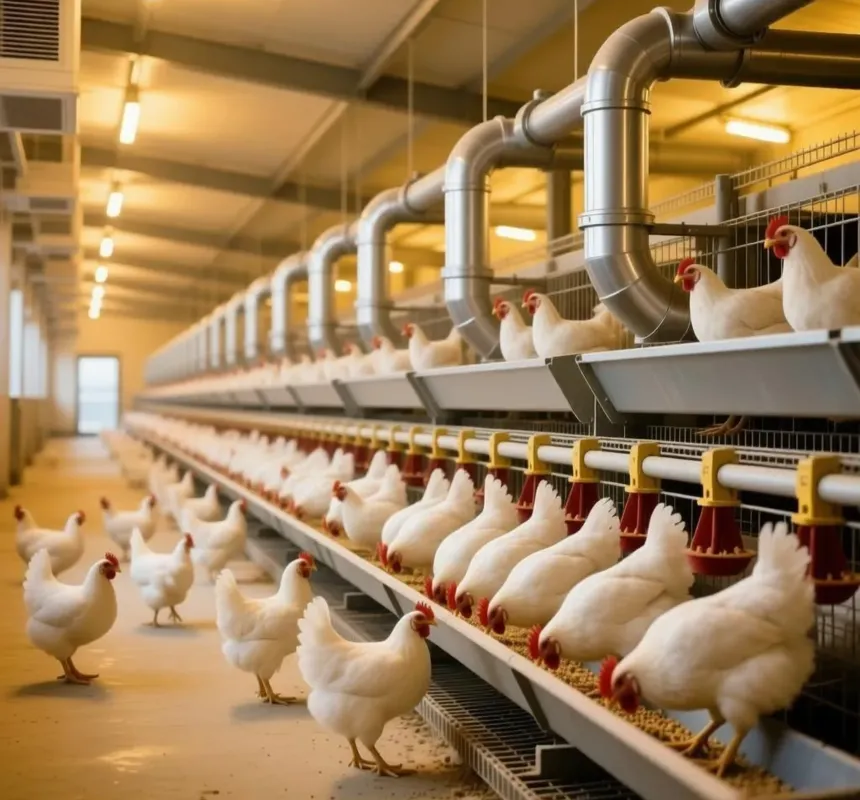
Most supplier pages list floor equipment as a single product line and stop there. Buyers then discover the trade-offs after the concrete is poured. Here is the comparison laid out on the dimensions that change a project decision.
| Criterion | Flat-Feeding / Floor System | Broiler Cage System |
| Market Access | Accepted by welfare-linked retail programmes and most export buyers requiring non-caged products | Restricted or excluded where buyer contracts specify cage-free broiler meat |
| Birds per House Footprint | Limited to one plane; stocking density is governed by kg/m² requirements | Multiplied by tier count, providing the highest output per square metre of land |
| Land and Building Cost per Bird | Higher because floor area scales linearly with flock size | Lower because vertical stacking distributes the building cost across more birds |
| Equipment Capital per Bird | Generally lower, with fewer structural components | Higher because the system includes the structure, tiers and harvesting mechanism |
| Litter | Required and must be purchased, managed and disposed of after every cycle | Not required; manure is removed by belt |
| Catch-Out Labour | Requires manual crews and night catching, resulting in more bird handling | Mechanised harvesting reduces crew size and handling time |
| Footpad and Breast Lesion Risk | Directly related to litter moisture control | Related to floor-mesh design and rest periods |
| Cleaning and Downtime | Requires complete litter removal, wash-down and disinfection between cycles | Cage-bank wash-down with no litter-removal cycle |
Broiler stocking density in the European Union is governed by a welfare directive that sets a baseline maximum live weight per square metre, with higher limits permitted only where a producer meets additional house monitoring, mortality and environmental conditions (EU broiler welfare directive; confirm the current national transposition for your destination market). Several major retail and foodservice welfare programmes go further and specify lower densities, enrichment and lighting schedules than the legal floor.
For an investor this has a practical consequence. Your density assumption is not an engineering choice you make with your equipment supplier. It is a commercial input handed to you by whoever signs your offtake agreement, and it should be fixed in writing before house dimensions are drawn. FAO poultry production guidance makes the same general point about matching housing systems to intended market channels rather than to available capital.
Nothing above makes floor rearing the default. On a fixed site area, tiered broiler cages produce substantially more live weight per cycle than a single-plane floor house, because the third dimension is doing work that land would otherwise have to do.
The secondary gains are operational. Birds are separated from droppings, which removes footpad dermatitis risk driven by wet litter. Manure leaves the house on belts as a drier, more consistent product, which matters if you have a fertiliser offtake or a biogas plant. And catch-out becomes a mechanical operation instead of a night-shift labour exercise. Mugong’s H-Type Automatic Broiler Cage with Harvesting System is built around chain-type harvesting for exactly this reason, reducing labour requirement, bird injury rate and catch-out cost.
Compared with the equipment-only packages common in this category, a floor system also asks more of the building itself. The ventilation and heating specification is doing work that cage tiers and belt manure removal would otherwise share.
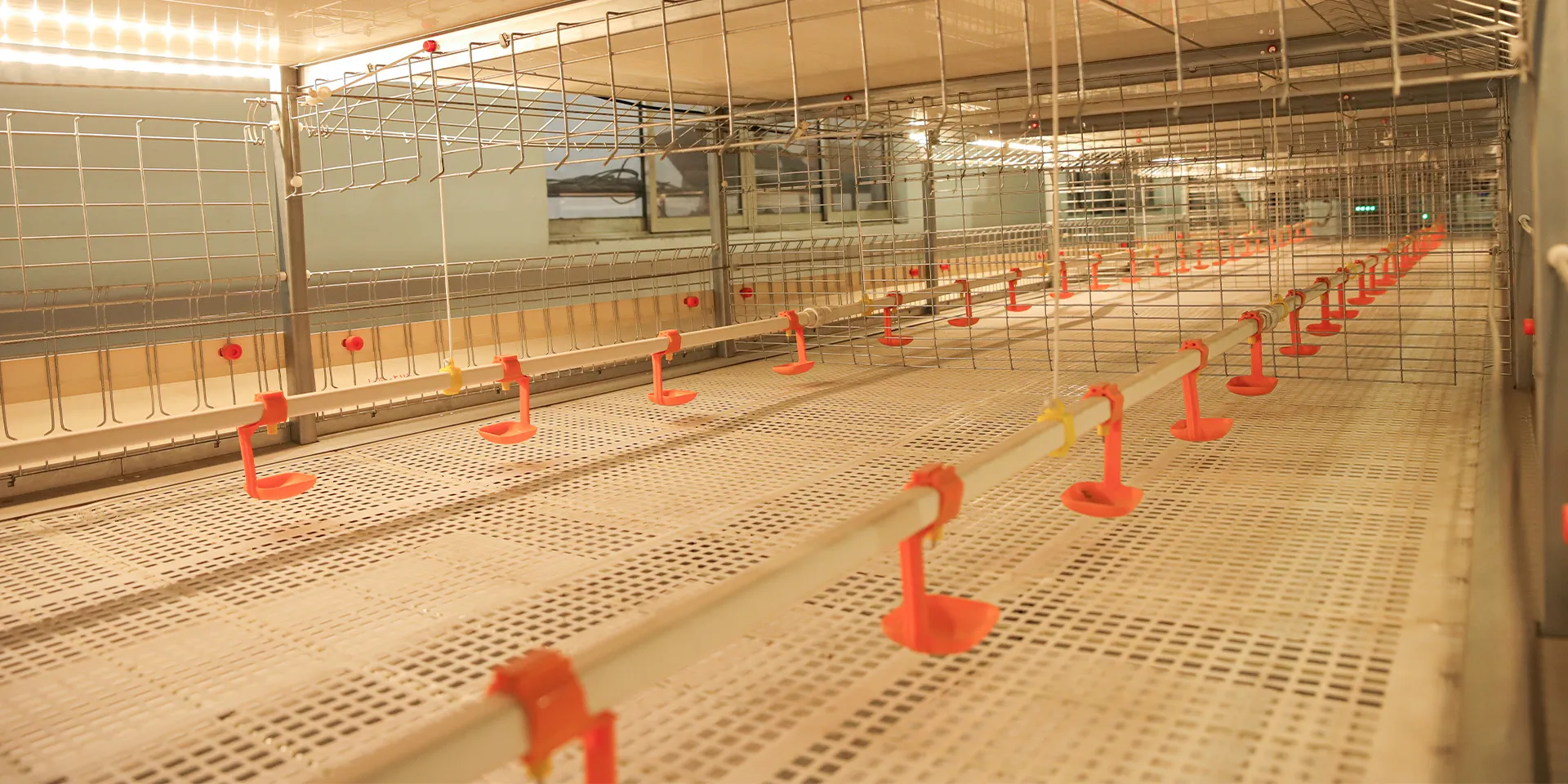
Ask three floor-rearing operators what went wrong in year one and litter will feature in at least two answers.
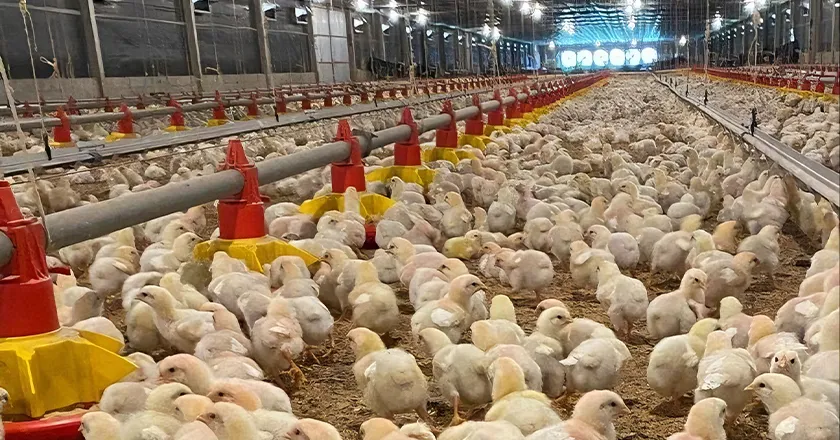
Litter is a recurring purchase, a logistics problem and a disease-control variable at the same time. Rice husk, wood shavings and chopped straw all behave differently under the same ventilation setting. Moisture content above the workable band produces caking, ammonia release and footpad lesions that are visible at processing and priced accordingly. Below it, dust rises and respiratory challenge follows.
Three things determine whether litter management stays under control:
Point three is the one most often missing from feasibility models. Bedding that costs little in a rice-growing province may be a landed import cost somewhere else, and it recurs every cycle for the life of the farm.
Day-to-day stockmanship in a floor house is not necessarily heavier than in a cage house. Walking a floor house to inspect birds, remove mortality and check equipment is straightforward work. Cage inspection across four or five tiers involves platforms or trolleys and takes longer per thousand birds in some layouts.
The labour gap opens at two moments in the cycle. The first is catch-out, where floor systems depend on a manual crew working at night to limit heat stress, and cage systems with harvesting equipment do not. The second is turnaround: removing spent litter, washing, disinfecting and re-bedding a floor house is a bigger job than washing down a cage bank.
For a single-house operation the difference is manageable. For an integrator running many houses on a tight cycle calendar, catch-out crew availability and turnaround days per house become the constraint on annual throughput, and that is where the cage option earns its higher capital cost back.
| Parameter | What Is Published |
| System Type | Fully automatic and semi-automatic floor (litter) systems for broiler houses |
| Functional Scope | Feeding, drinking and ventilation |
| Pan Spacing / Birds per Pan | Request from engineering |
| Nipple Spacing / Birds per Nipple | Request from engineering |
| Line Lengths and Winch Travel | Request from engineering |
| Feed Hopper and Silo Capacity | Request from engineering |
| Ventilation Rates by House Volume | Request from engineering |
| Corrosion Protection | Mugong applies hot-dip-galvanized and aluminium-zinc-coated structures across its product lines, with stated corrosion resistance 3–4 times greater than ordinary hot-dip-galvanized wire and more than 500 hours of salt-spray testing. This is a company-level materials position, not a published floor-equipment-specific figure. This qualification must remain at publication. |
| Certification | ISO 9001:2015, CE and SGS at company level; no model-specific certificate numbers have been published |
Send this list to any supplier, including us, before comparing prices:
Where a supplier answers items one and five with a range rather than a figure tied to your house drawing, treat the quotation as preliminary.
A: Equipment capital per bird is generally lower, but land and building cost per bird is higher and litter is a recurring cost that cage systems do not carry. On a per-kilogram-produced basis over ten years the answer depends on your land cost and bedding price, not on the equipment quotation.
A: Physically yes, but the house was likely designed with a ceiling height, ventilation pattern and floor area suited to tiered stocking. Expect a significant reduction in bird numbers and a ventilation redesign. Have the airflow modelled against the empty floor layout before removing cage banks.
A: Take it from your buyer’s welfare specification and your national regulation, whichever is stricter, and get it in writing before house dimensions are fixed. Do not plan against a supplier’s suggested figure.
A: Not currently. Component spacing, line lengths and ventilation capacities are issued against your house drawing at the quotation stage. The specification status table above shows exactly which parameters are published and which are not.
A: Neither, inherently. Floor-house mortality tracks litter moisture and ventilation control; cage-house mortality tracks heat management and mesh design. Both are management outcomes rather than properties of the housing type.
Sourcing poultry equipment from a Chinese manufacturer means controlling four variables di…
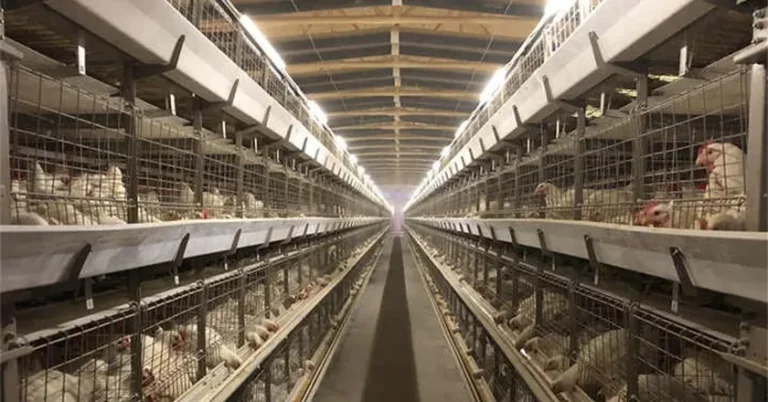
A steel structure poultry house is a prefabricated steel building designed for layer, broi…
We will reply to your inquiry within 24 hours.For urgent inquiries, please contact us via WhatsApp: +86 133 6144 9578 or call us directly.
*We respect your privacy. All information submitted is strictly confidential.
Your details will only be used to respond to your inquiry. We never send unsolicited emails or promotional messages.