


Cold Storage for Egg and Poultry Products: Sizing Basics
A cold storage system on a poultry farm is a refrigerated room, or set of rooms, that hold…

Check out our latest news,
 15:52
A cold storage system on a poultry farm is a refrigerated room, or set of rooms, that holds eggs or dressed birds at a controlled temperature and humidity between collection and dispatch. Size it from three inputs: the temperature band your product and market require, the longest holding time you must cover, and peak daily output.
In food logistics, “cold storage system” usually means a distribution warehouse. On a poultry farm the job is narrower: bridge the gap between the moment product leaves the house and the moment a truck takes it away.
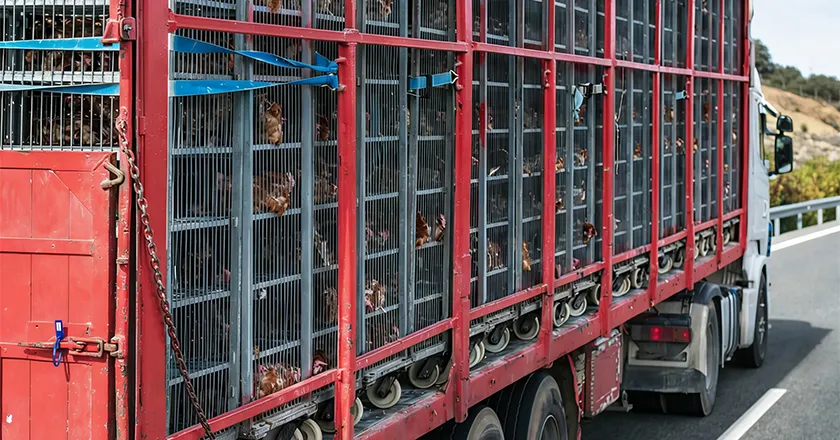
That gap looks different depending on what you produce:
Each of these has a different target temperature. Treating them as one “cold room” is the most expensive sizing mistake on this list, so the temperature question comes first.
The table below summarizes the published bands. Note the column on direction: for some products colder is better, for others the rules or the biology push the other way.
| Product | Target band | Humidity | Source | Direction |
| Table eggs, US (packed for consumers) | Ambient ≤ 7.2 °C (45 °F) | Not specified | USDA FSIS, 9 CFR 590.50 | Colder is required |
| Table eggs, US (on farm, after lay) | Ambient ≤ 7.2 °C (45 °F) starting 36 h after lay | Not specified | FDA Salmonella Enteritidis rule, as summarized by USDA FSIS | Colder is required |
| Table eggs, EU Class A | Constant temperature; premises not artificially held below 5 °C | Not specified | EU egg marketing standards (Reg. (EC) 589/2008, since replaced by Delegated Reg. (EU) 2023/2465) | Avoid chilling |
| Hatching eggs, 0–4 days storage | 19–21 °C | 60–75 % RH | Lohmann Breeders Parent Stock Management Guide | Moderate cool only |
| Hatching eggs, 5–7 days storage | 17–18 °C | 70–78 % RH | Lohmann Breeders Parent Stock Management Guide | Cooler as storage lengthens |
| Fresh poultry carcasses | ≤ 4 °C, reached as soon as possible after evisceration | Not specified | EU Reg. (EC) 853/2004, Annex III, Section II | Colder, fast |
| Frozen poultry meat | −18 °C | Not specified | Food Safety Authority of Ireland summary of EU 853/2004 requirements | Frozen |
This is the misconception that catches export-oriented farms. The US rule exists to slow Salmonella Enteritidis growth inside the egg; USDA FSIS risk work found contamination levels roughly 30 times higher in eggs held five days at 65 °F than at 45 °F.
The EU logic is about condensation. The EU regulation’s own recitals explain that cold eggs brought into room temperature can “sweat,” and moisture on the shell helps bacteria get in. So EU Class A eggs are kept at a steady, cool-but-not-chilled temperature from farm to shop, with short tolerances: eggs below 5 °C for up to 24 hours in transport or 72 hours at retail are not treated as chilled.
The practical consequence: a farm supplying both markets, or switching buyers, may need two temperature zones rather than one cold room. Ask your buyer which standard governs before you size anything.
A 50,000-hen farm with daily pickup needs a fraction of the room a 50,000-hen farm with weekly pickup needs. Holding time is set by:
For hatching eggs, storage time also changes the target temperature, as the Lohmann bands above show. A room designed for three-day holding at 20 °C will be wrong if the hatchery shifts to weekly setting.
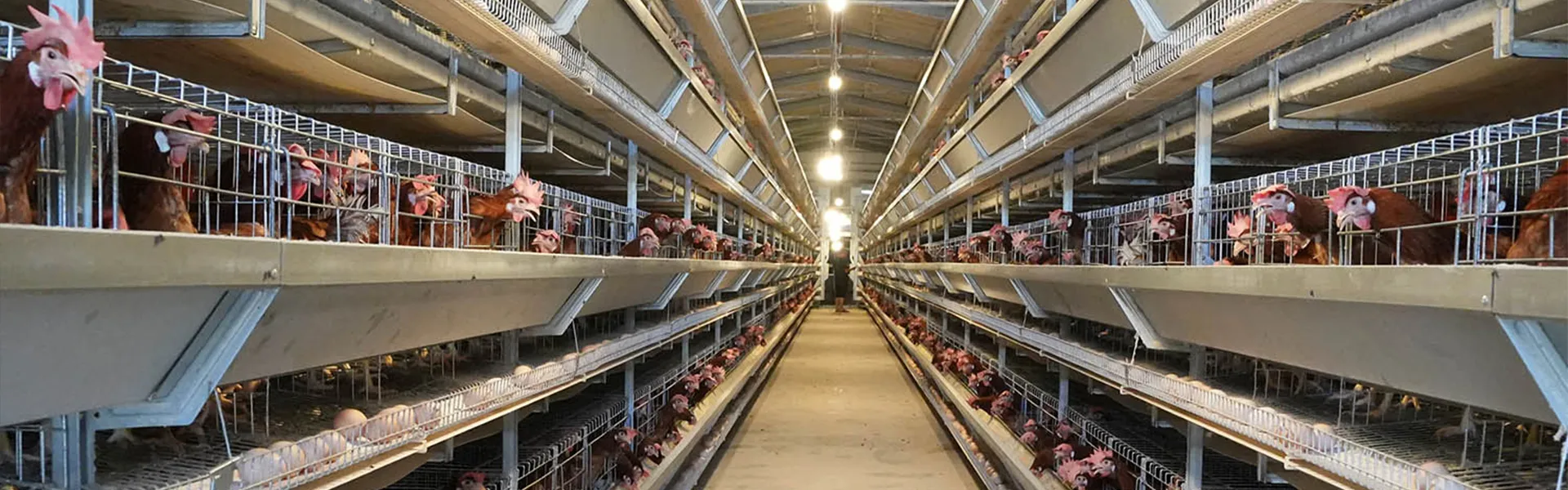
These steps give a first estimate to take to a refrigeration designer. They do not replace a heat-load calculation.
You can check the result quickly: if the room only works when every pallet position is full and the doors stay closed, it is undersized for peak days.
For on-farm slaughter, sizing has two separate parts. A chiller must pull warm carcasses down to 4 °C quickly; a holding room only has to keep already-cold product at temperature. Research on air chilling of chicken carcasses, published through the International Institute of Refrigeration, notes that the time needed to reach the 4 °C limit is the main commercial factor in the cost of the cooling system. Sizing a holding room and loading it with warm birds is a common way to end up with product that never reaches the legal limit in time.
| Factor | On-farm cold room | Same-day dispatch, no cold room |
| Fits US consumer-egg rule | Yes, if held ≤ 7.2 °C from 36 h after lay | Only if the buyer collects within the window |
| Fits EU Class A practice | Yes, if held constant and not chilled below 5 °C | Yes, if transport is temperature-stable |
| Exposure to missed pickups | Buffered by holding days | Eggs wait at ambient temperature |
| Capital and power cost | Room, refrigeration plant, backup power | None for storage |
| Condensation risk at loading | Present in hot, humid climates | Lower, since eggs are not chilled |
| Record-keeping | Logger and alarm needed | Depends on buyer |
The trade-off that decides most projects: an on-farm room only pays back if dispatch is irregular or the market rule demands it. If your buyer collects daily in a temperate climate, the money may be better spent on the houses.

The cost drivers to bring to that quote are:
For the layer equipment that feeds the room, Mugong‘s published market reference is about US$15–25 per bird of capacity for an automatic layer battery cage system (equipment only), with fully automatic 20,000-layer systems typically in a US$35,000–120,000 range depending on automation level. Treat these as typical industry ranges, not a quote.
What temperature should eggs be stored at on a farm?
It depends on the product and market. US consumer eggs must be held at an ambient temperature no higher than 7.2 °C (45 °F) from 36 hours after lay. EU Class A eggs are kept at a constant temperature without chilling below 5 °C. Hatching eggs are held warmer, around 17–21 °C depending on storage time.
Can table eggs and hatching eggs share one cold room?
Not if either is held to its proper band. US table eggs need 7.2 °C or below, while hatching eggs stored for a few days are held around 19–21 °C. A single setpoint would be wrong for one of them.
How many days of storage should I plan for?
Plan for your longest realistic gap between pickups, plus a buffer for holidays and transport disruption. In the EU, remember that eggs must reach the consumer within 21 days of laying, so long on-farm holding reduces the buyer’s shelf window.
Is a carcass holding room the same as a chiller?
No. A chiller removes heat from warm carcasses quickly enough to reach 4 °C as required under EU Regulation 853/2004. A holding room only maintains temperature. Loading warm carcasses into a holding room can leave product above the limit for too long.
Does Mugong publish a price for cold storage rooms?
No published reference range covers cold rooms. Pricing depends on zones, pallet positions, chilling duty, site climate and backup power, so it requires a project quote.
A cold storage system on a poultry farm is a refrigerated room, or set of rooms, that hold…
A poultry equipment quote is the price for a defined scope of cages, feeding, drinking, eg…

We will reply to your inquiry within 24 hours.For urgent inquiries, please contact us via WhatsApp: +86 133 6144 9578 or call us directly.
*We respect your privacy. All information submitted is strictly confidential.
Your details will only be used to respond to your inquiry. We never send unsolicited emails or promotional messages.