











Sourcing Poultry Equipment Manufacturers in China: Buyer Guide
Sourcing poultry equipment from a Chinese manufacturer means controlling four variables di…


Check out our latest news,
 10:12
10:12 Sourcing poultry equipment from a Chinese manufacturer means controlling four variables directly: destination-market certification, minimum order quantity, freight-and-installation scope, and spare-parts lead time after the container leaves port. Get those four in writing before comparing quotes — price alone tells a distributor almost nothing about total delivered cost.
Factory-direct manufacturers design, weld, galvanize and assemble on their own production line. Shandong Mugong Farming Equipment, for example, runs production on a 100+ acre base with an in-house R&D team, which means technical questions about wire-mesh coating or ventilation load go to an engineer, not a sales inbox forwarding the question to someone else.
Trading companies buy from one or several factories and resell under their own brand. They can be useful for buyers who want a single English-speaking point of contact across multiple equipment categories, but a trading company’s warranty commitment is only as strong as its relationship with the underlying factory — a relationship the buyer usually can’t verify.
Marketplace listings are pages, not companies. The same factory can appear under several different listing names with inconsistent contact details, which makes it difficult to confirm who is actually accountable for a shipment.
Compared with marketplace-aggregator listings that bundle unrelated suppliers under one search result, a factory-direct relationship gives a distributor one traceable chain of accountability from quotation to after-sales — but it also means doing more due diligence up front, since there’s no aggregator absorbing that risk on the buyer’s behalf.
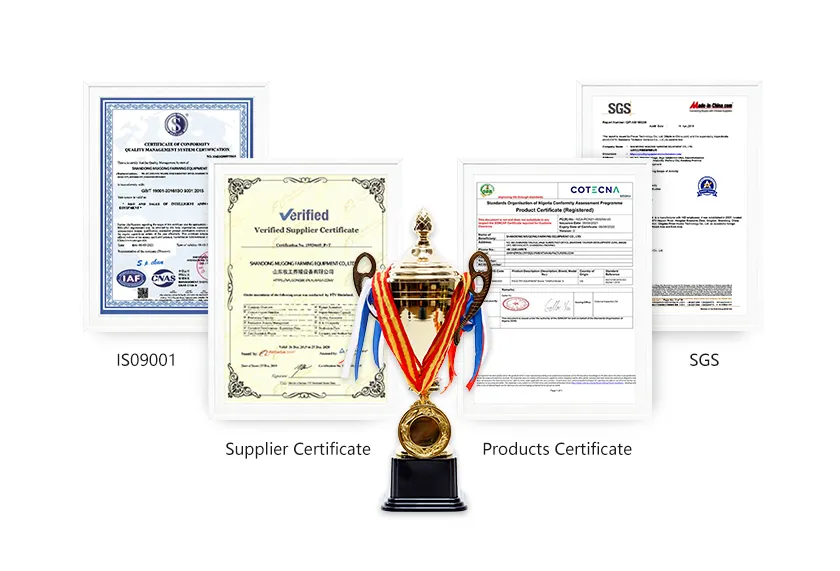
A supplier’s own quality certifications and your destination country’s import requirements are two separate checklists, and conflating them is the most common mistake first-time importers make.
Manufacturer-side certifications describe how the equipment is built and tested. These typically include ISO 9001 quality-management certification, CE marking for the European conformity standard, and SGS third-party inspection. Salt-spray corrosion testing (500+ hours is a commonly cited internal validation benchmark for aluminized-zinc and galvanized wire structures) is a manufacturing-process check, not a government certification, and a supplier should be able to explain which of the two a given document represents.
Destination-market certifications are a separate, country-specific requirement layer. Nigeria’s SONCAP and Kenya’s PVOC are two examples of pre-shipment conformity schemes that some African markets require regardless of what certification the equipment already carries from its country of manufacture. CE marking does not substitute for these; it confirms conformity to EU rules, not to a different country’s import regulation. A distributor bringing equipment into a market with its own conformity-assessment program needs to confirm, before ordering, whether that scheme applies to poultry equipment categories and who is responsible for the paperwork — buyer or seller.
| Certification Type | What It Actually Confirms | Who Typically Arranges It |
| ISO 9001:2015 | Manufacturer’s quality-management system | Manufacturer (company-level, not per shipment) |
| CE Marking | Conformity to EU technical standards | Manufacturer |
| SGS Inspection | Third-party pre-shipment inspection | Either party, by agreement |
| SONCAP / PVOC (Where Applicable) | Destination-country import conformity | Usually buyer-initiated and factory-supported |
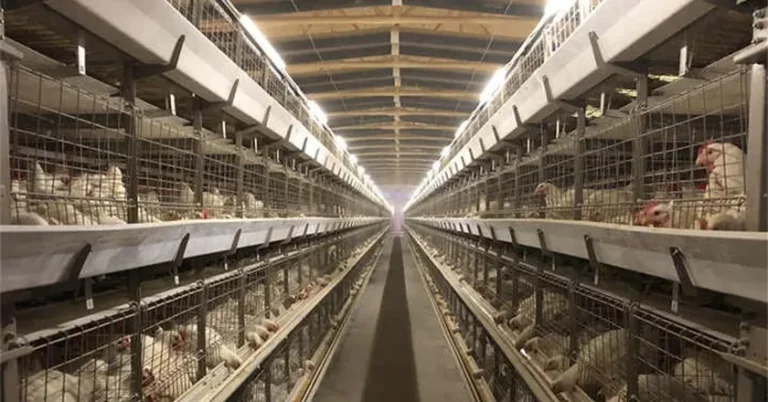
Minimum order quantity for cage and equipment systems is rarely a fixed number — it moves with tier configuration, automation level and whether the order is equipment-only or part of a turnkey scope. Rather than asking “what’s your MOQ,” a distributor gets a more useful answer by asking these in sequence:
A manufacturer serving commercial projects in the 10,000–200,000-hen range should be able to answer all five without hedging; vague answers to steps 2 through 4 are a sign the quote was assembled quickly rather than engineered to the order.
Before requesting a formal quote, a distributor or OEM buyer should be able to check off:
A quote request built around this list produces a comparable, apples-to-apples response; a request built around “send me your best price” does not.
To get an accurate, comparable quote rather than a placeholder number, send the manufacturer:
There isn’t a single fixed MOQ across the industry; it depends on tier configuration and automation level. Rather than asking for a number, specify your target bird capacity and ask the factory directly whether it falls within their standard production run or triggers a custom-tooling minimum.
By default, an “equipment-only” quote does not include freight, customs clearance, site works or installation labor. A turnkey (EPC) quote folds those in, but its equipment line item is then not directly comparable to a standalone equipment-only quote. Confirm scope explicitly before comparing two suppliers’ prices.
This varies by supplier and by whether they hold any regional parts stock versus shipping every part from the factory. Ask for a specific delivery-window commitment in writing rather than accepting a general assurance of “fast shipping.”
A factory-direct relationship gives one traceable line of accountability for design, manufacturing and after-sales. A trading company can simplify communication across multiple product categories, but its warranty commitment depends on a factory relationship the buyer typically can’t verify directly.
Sourcing poultry equipment from a Chinese manufacturer means controlling four variables di…
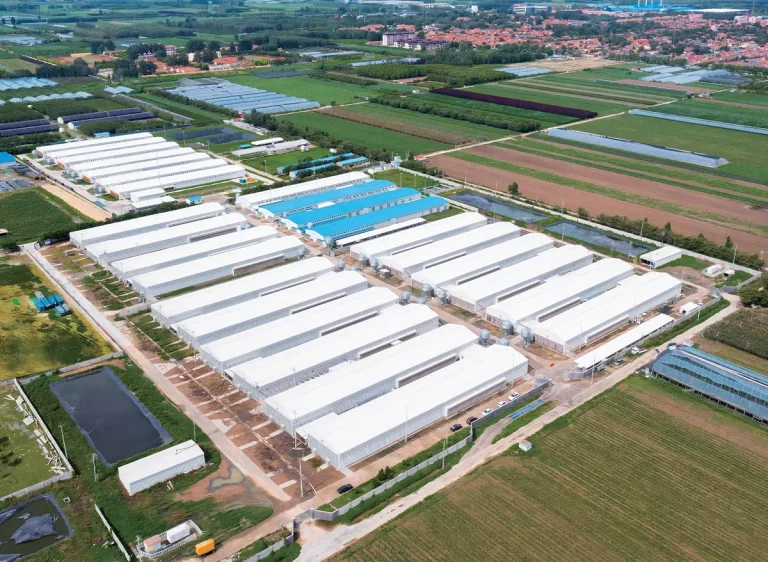
A steel structure poultry house is a prefabricated steel building designed for layer, broi…
We will reply to your inquiry within 24 hours.For urgent inquiries, please contact us via WhatsApp: +86 133 6144 9578 or call us directly.
*We respect your privacy. All information submitted is strictly confidential.
Your details will only be used to respond to your inquiry. We never send unsolicited emails or promotional messages.