










Fully Automatic Turnkey System for Broilers: What’s Included
What a fully automatic turnkey broiler system actually includes — a scope matrix showing w…


Xem tin tức mới nhất của chúng tôi,
 17:36
17:36 A fully automatic turnkey broiler hệ thống is a single contract covering house design, equipment manufacture, installation, commissioning and operator training. The label is not standardised. Two suppliers can both call a package turnkey while one delivers a finished operating farm and the other ships crates to your port.
The term describes an outcome — you arrive, turn the key, the farm runs — not a defined deliverable list. Procurement teams inherit the problem. A tender evaluated on unit price alone will rank an equipment-only bid above an EPC bid every time, because the equipment-only bid has quietly moved earthworks, foundations, power connection, customs clearance and installation labour into the buyer’s column without saying so.
Government and development-financed broiler projects feel this hardest. Budget approval usually happens once. When a contract that looked complete turns out to exclude the transformer, the borehole and the access road, the shortfall lands mid-construction, at which point the project is already committed to a site and a supplier.
The fix is boring and effective: force every bidder to fill in the same scope matrix before you compare prices.
| Dimension | Equipment-Only Supply | Full Turnkey EPC |
|---|---|---|
| Contract Counterparties | 1 supplier + 3–6 local contractors | 1 |
| Price Basis | Per set / per-house equipment list | Project sum with scope annex |
| Who Absorbs Interface Errors | Buyer | Supplier |
| Buyer Team Needed | Project manager, civil contractor, electrical contractor, customs broker | Owner’s representative |
| Typical Schedule Risk | Sequencing gaps between trades | Shipping and clearance |
| Warranty Boundary | Ends at the equipment | Covers installed system performance |
| Change-Order Exposure | High—every gap becomes a new purchase | Lower, if the annex is detailed |
| Best Fit | Operator already running houses and adding capacity | First project, remote site, or donor-funded tender |
Compared with the marketplace-listing style of supplier page common in this category, which lists components and service-life claims without naming what the buyer must still provide, a scope annex converts the same information into something a procurement committee can score.
The honest downside of EPC: you pay for coordination you might be able to do yourself, and you lose the freedom to buy the steel house locally at local prices. In countries with a competent steel fabrication sector and a buyer who has built before, splitting the house away from the equipment can be the cheaper route. It is the wrong route when nobody on the buyer’s side has commissioned a mechanically ventilated broiler house.
Floor (litter) rearing remains the default for most export-market broiler contracts, especially where the offtaker specifies welfare conditions or where the buyer wants flexibility between broilers and breeders in the same building.
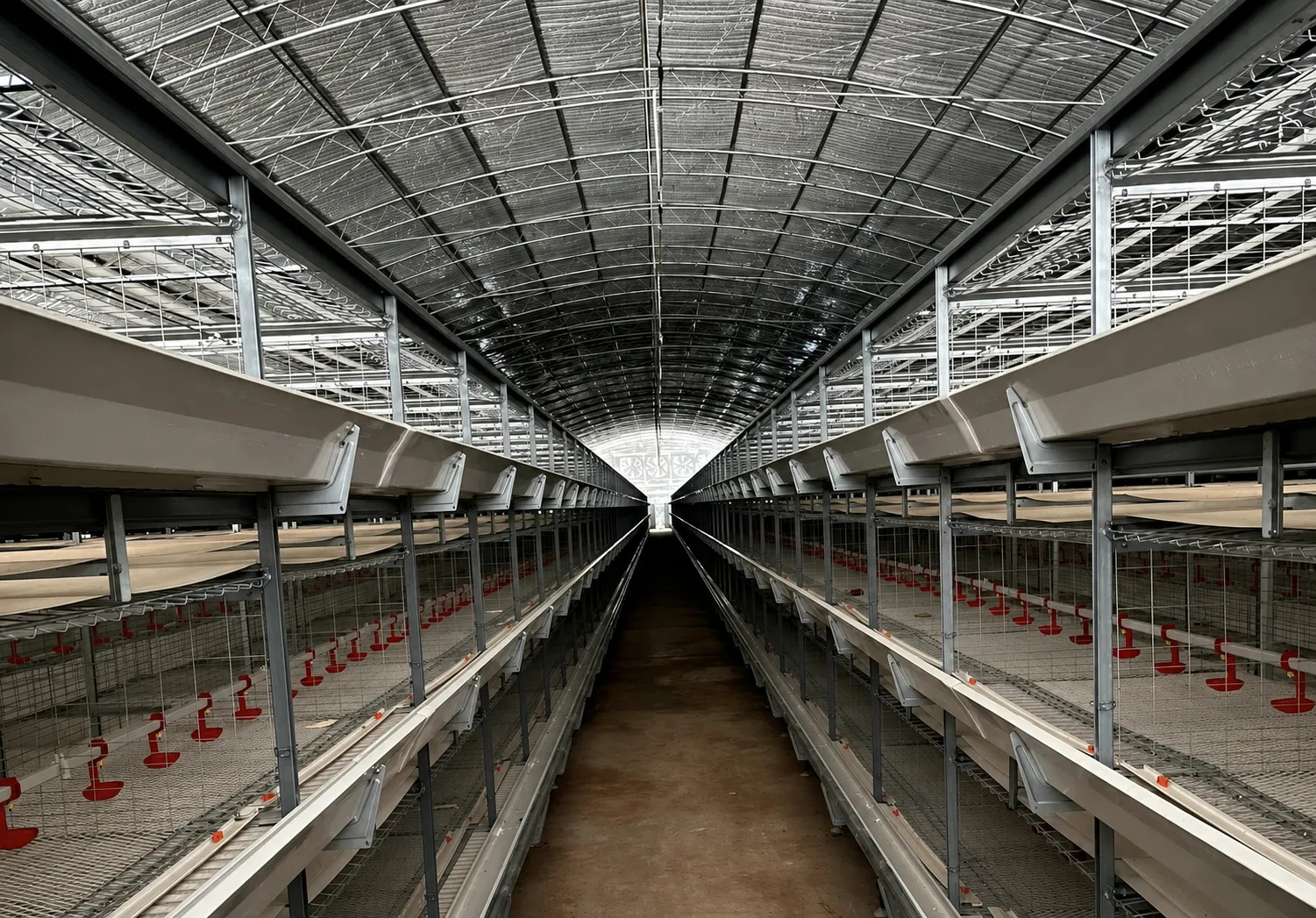
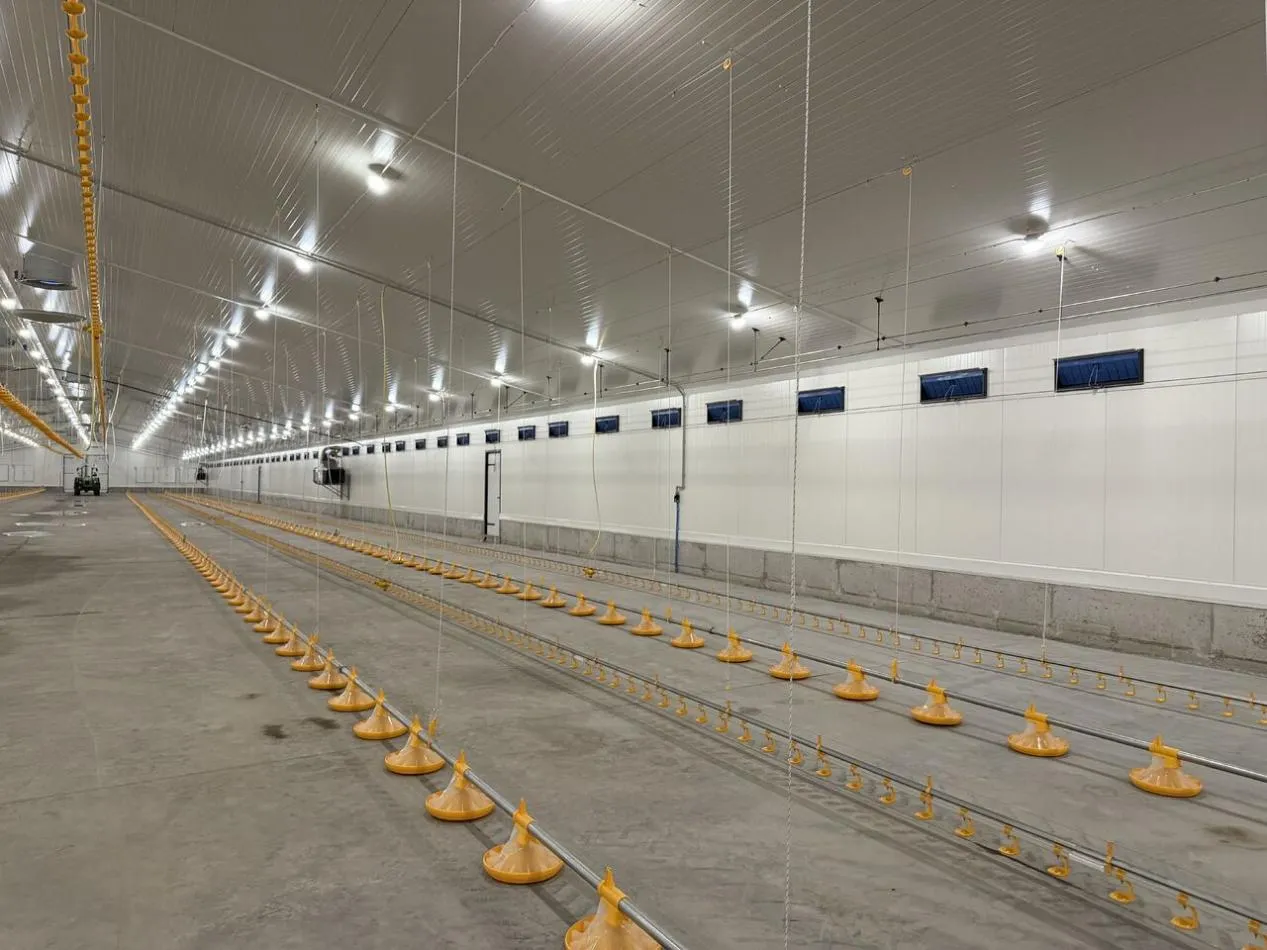
Mugong‘s Broiler Floor Farming Equipment is documented as a fully automatic or semi-automatic litter system for broiler houses, covering feeding, drinking and ventilation. Dimensional and capacity parameters are not published in our public technical resources. Rather than fill the gap with figures borrowed from a different product family, here is the actual status:
| Tham số | Status | Ghi chú |
|---|---|---|
| System Type (Full Auto / Semi Auto) | Published | Both configurations offered |
| Hệ thống cấp liệu | Published as included function | Pan line detail on request |
| Hệ thống cấp nước | Published as included function | Nipple line detail on request |
| Thông gió | Published as included function | Sizing is house-specific |
| Pan Line Spacing, Pans per Line, Birds per Pan | Not published | Request per house geometry |
| Nipple Spacing and Drinker Line Count | Not published | Request per house geometry |
| Stocking Density per m² | Not published | Depends on target live weight and climate |
| House Span, Length, Eave Height | Not published | Steel Structure Poultry House is a separate product line |
| Structural Material and Corrosion Treatment | Company-level | Hot-dip galvanized and aluminized-zinc structures are used across cage product lines; stated 3–4× corrosion resistance versus ordinary hot-dip galvanized wire, with 500+ hours of salt-spray validation |
| Certification | Company-level | ISO 9001:2015, CE, and SGS. No per-model cert |
Send this to any supplier — including us — before you compare quotations. Numbered so you can paste it into a tender clarification letter.
It does not, unless the contract says so in measurable terms. Equipment scope and production performance are separate obligations. Feed conversion and mortality depend on chick quality, feed formulation, water quality, vaccination and stockmanship, none of which the equipment vendor controls. FAO poultry production guidance treats management practice and equipment as distinct determinants of flock performance, and a contract that blurs them will not survive its first bad cycle.
What a supplier can reasonably guarantee: that installed equipment meets the specification in the annex, that climate control holds a defined temperature band against a defined outside condition, and that the system passes a commissioning test. Ask for those. A promised FCR figure with no reference to feed or genetics is not an enforceable commitment.
Turnkey broiler pricing is quote-based and project-specific. Two distinctions matter before any figure is useful.
Per-bird figures usually include the building. Industry references putting battery cage systems at roughly US$15–25 per bird capacity are describing housing and equipment together. Project-level equipment figures usually exclude it. A reference range of about US$18,000–32,000 for a 10,000-bird cage project, varying with automation depth and steel specification, is an equipment number with no building in it. Multiplying the per-bird figure by flock size and then comparing it against an equipment-only quotation produces a gap that looks like overpricing and is actually a scope difference. Both of those reference ranges describe layer cage systems rather than broiler floor systems, so treat them as order-of-magnitude context for how the two quotation formats differ, not as a broiler price.
The drivers that actually move a broiler turnkey number:
For an equipment-only comparison you can usefully benchmark price per bird capacity. For EPC you cannot, because the civil works content varies with soil, climate and local labour rates more than with flock size.
Writing the boundary into your tender
A tender written this way takes about two extra weeks. It removes the single most common cause of budget overrun in first-time broiler projects, which is not equipment price but unbudgeted scope arriving after the contract is signed.
Q: Does a turnkey contract include the land and permits?
A: No. Land acquisition, zoning approval and environmental permits stay with the buyer in every contract structure. A supplier can advise on siting distance, prevailing wind direction and biosecurity separation, but cannot hold a permit in your jurisdiction.
Q: Who pays for import duty and customs clearance?
A: Almost always the buyer, because the importer of record must be a local entity. Confirm this in the commercial terms before signature, and budget for clearance time as a schedule risk rather than a cost line only.
Q: Can I buy the equipment from one supplier and the steel house from another?
A: Yes, and it can be cheaper where local steel fabrication is competitive. The condition is that someone on your side owns the interface — anchor bolt positions, door and fan openings, floor levels and cable routing all have to match the equipment drawings before concrete is poured.
Q: What is the difference between floor farming equipment and a broiler cage system in a turnkey package?
A: Floor systems spread birds across the litter and generally need more building area for the same flock. Cage systems raise birds in tiers and reduce house footprint. The choice changes house dimensions, ventilation calculation and manure handling, so it has to be settled before house design starts, not after.
Q: How long does a fully automatic broiler turnkey project take?
A: The variables are house count, civil works complexity, shipping route and clearance. Ask each bidder for a schedule broken into manufacturing, shipping, civil works, installation and commissioning, with the critical path marked, and check whether civil works are assumed to run in parallel with manufacturing or after it.
Q: What certification should I ask for?
A: Mugong holds ISO 9001:2015, CE and SGS certification at company level. Where a destination market requires a model-specific or shipment-specific certificate, request it in writing at bid stage, since company-level certification does not automatically satisfy every national import regime.
What a fully automatic turnkey broiler system actually includes — a scope matrix showing w…
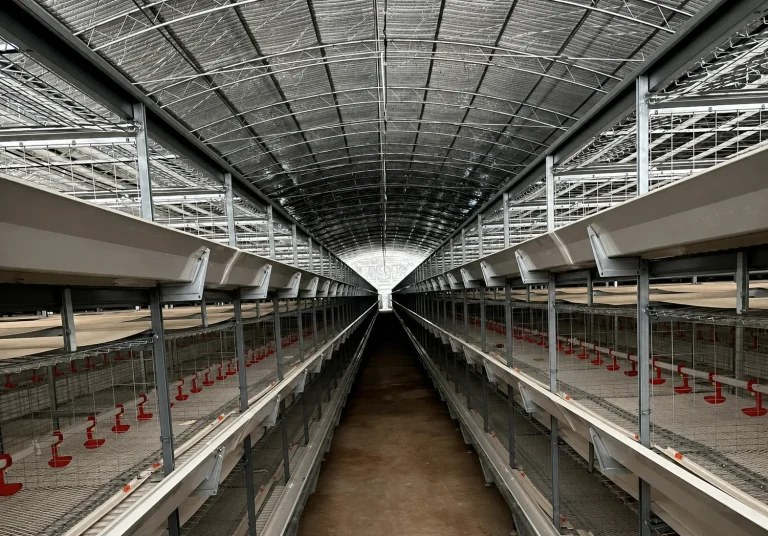
Full spec breakdown of the fully automatic H-type battery cage for broilers: tier count vs…
Chúng tôi sẽ trả lời yêu cầu của quý khách trong vòng 24 giờ. Đối với các yêu cầu khẩn cấp, vui lòng liên hệ với chúng tôi qua WhatsApp: +86 133 6144 9578 hoặc gọi trực tiếp cho chúng tôi.
*Chúng tôi tôn trọng quyền riêng tư của bạn. Tất cả thông tin được cung cấp đều được bảo mật tuyệt đối.
Thông tin của bạn chỉ được sử dụng để trả lời câu hỏi của bạn. Chúng tôi không bao giờ gửi email hoặc tin nhắn quảng cáo không mong muốn.