










Sourcing Poultry Equipment Manufacturers in China: Buyer Guide
Sourcing poultry equipment from a Chinese manufacturer means controlling four variables di…


Sehen Sie sich unsere neuesten Nachrichten an,
 13:44
13:44 Choosing the wrong battery cage layout can lock your poultry farm into high labor, poor airflow, or hard upgrades. Agitate: That mistake shows up fast—uneven egg production, higher stress in the chicken flock, and messy manure handling. Solution: In this guide, I’ll compare a-type and h-type systems in plain terms so you can pick the right cage system quickly and confidently.
The main difference between an A-type battery cage and an H-type battery cage is structure and automation capacity. A-type cages form an “A” frame and are usually simpler and lower cost, making them common for smaller or budget-focused farms. H type systems use stacked, vertical rows with stronger frames, better space utilization, and easier integration of automated feeding, egg collection, and manure removal, which fits larger, modern layer battery cage system projects.
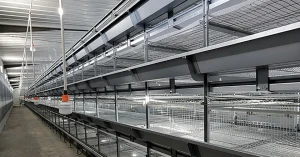
H-Typ Automatisches Hähnchenbatterie-Käfigsystem
What is a battery cage system in modern poultry production?
A-type and H-type: what they look like and how the cage type changes operations
Which cage system gives better space utilization?
Automation readiness: feeding, watering, egg collection, manure removal
Belüftung und Klimatisierung: Was fördert eine stabile Herdenleistung?
Labor, reduce labor, and labor costs: what changes in daily work?
Bird welfare and management: what you can do inside each chicken house
Durability, galvanize, wire mesh, and service life
Cost & ROI: how to compare CapEx and productivity
Wie Sie sich schnell entscheiden können: eine Checkliste für die Auswahl + FAQs
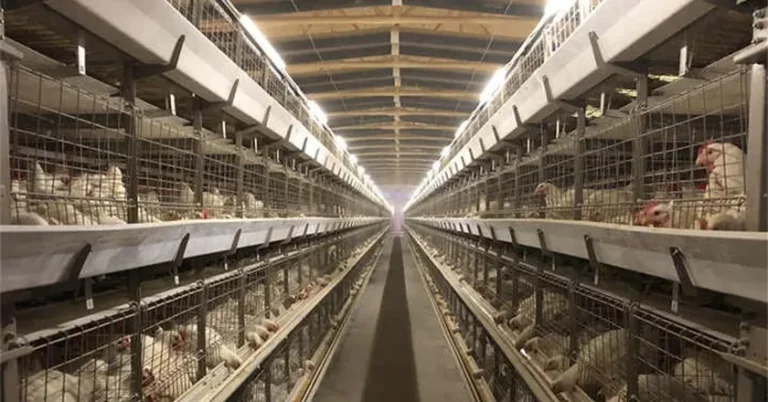
A battery cage setup is a structured cage system used for layer chicken production. Each hen lives in a defined cage space, with feeding and drinking lines placed in front, and a slope that allows eggs to roll onto an egg collection path. In many projects, this becomes a complete layer cage system with house design, ventilation, lighting, water, feed, and manure management working together.
From an engineering supplier point of view, we treat a battery cage system like a “factory line” for eggs. The chicken does one job—lay eggs—while the poultry cage setup keeps feed, water, air, and hygiene consistent. That consistency is what protects egg production efficiency and makes your farm easier to scale.
Käfige vom Typ A are built like an “A” frame—two slanted sides meeting at the top. This design often uses fewer materials and can be easier to install in simpler houses. Many farms call it type layer cages or a-type layer cages. It’s a classic solution, especially where budget and quick installation matter.
H type designs (often called h-type cages or h type layer battery cage) stack cages in vertical lines, supported by stronger “H” frames. This structure is more rigid, especially in multi-tier setups. When a farm wants modern, high-throughput performance, h-type battery cages usually become the default because they handle upgrades better—especially automation, long houses, and higher bird counts.
Hier der praktische Punkt: Der Käfigtyp verändert den täglichen Ablauf. Sie beeinflusst, wie sich die Luft im Hühnerstall bewegt, wie die Entmistung gehandhabt wird und wie reibungslos die Eier zum Einsammeln und Verpacken gelangen.
If you’re tight on land area, space utilization becomes the make-or-break factor. In many cases, H type systems win on vertical stacking because they can run more tiers in a stable frame. That means more birds per building footprint—helpful for large-scale farms or investors aiming for high output per house.
A-type cages can still deliver good density, but the A-frame geometry can limit how high you stack compared with an H-frame layout. So for a poultry farm with limited building width or where you must maximize birds per house length, H type often gives you more flexibility.
Eine einfache Faustregel:
If your project goal is “maximize birds per house,” H type is often easier to scale.
If your goal is “start quickly with controlled investment,” A-type cages can be a practical first step.
In a modern System, automation is not a luxury—it’s what protects your margin when wages rise and skilled labor is hard to find. The key automation modules include:
Eiersammlung (Band- oder Stangensysteme)
Automatische Beschickung (Trichter + Förderschnecke/Kettenförderer)
Nippel-Trinkleitungen
Manure removal (belt at the bottom, scraping, or drying options)
H type is usually more “automation-friendly” because the frame supports straight-line belt routes and consistent alignment across tiers. In many designs, the belt at the bottom of each tier makes manure removal predictable and reduces ammonia buildup. That helps control manure moisture and improves house hygiene.
A-type cages can also integrate automated systems, but it may require more careful design to route belts and keep access safe. In some older-style houses, manual or semi-automatic routines are still used. That’s not “wrong”—it just means your automation upgrade path may be narrower.
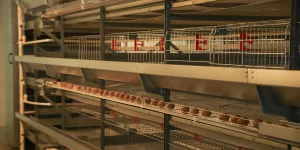
H-Typ Automatik-Schicht-Batteriekäfig
Ventilation is one of the most underrated parts of a battery cage system decision. Even the best chicken cage can perform poorly in a hot, humid, or high-ammonia house. When airflow is uneven, birds cluster, stress rises, and egg production becomes unstable.
H type systems often pair well with tunnel ventilation and controlled inlets because rows and tiers can be arranged to maintain consistent air paths. That consistency helps you manage temperature and moisture more predictably. In high-density houses, better airflow control can improve productivity and reduce disease pressure.
A-type and H-type can both work with good ventilation design—but H type tends to give you more “engineering room” for fans, ducts, cooling pads, and manure belt drying. When your farm targets higher bird counts, that extra control matters.
Lassen Sie uns darüber sprechen, was Ihr Team eigentlich jeden Tag tut. Eine Käfigwahl ändert sich:
Wie das Futter nachgefüllt und überwacht wird
Wie sich die Eier bewegen und wo Bruchstellen entstehen
Wie oft Sie mit Gülle umgehen
Wie schnell Sie Vögel kontrollieren können
In many projects, H type systems reduce walking distance and simplify inspection routes because cage rows are more uniform. That can reduce labor in egg collection, manure cleaning, and routine checks. Over time, that lowers labor costs and stabilizes staffing.
A-type cages can be easier to understand and run with a smaller team at the beginning. For medium farms, that simplicity is valuable. If you don’t plan to mix more than two major upgrades in the first phase, A-type may fit your current operational rhythm.
Reality check: if your farm scales from 20,000 birds to 100,000+ birds, the daily labor gap becomes obvious. That’s where H type often becomes the long-term efficiency choice.
Many buyers ask about bird welfare—and rightly so. Welfare is not only a policy issue; it affects flock health, stress, and consistent output. Both a-type and h-type designs can support good welfare if you control density, provide clean water, stable feed, proper lighting, and keep air quality high.
Das ist das Wichtigste in einem Hühnerkäfigsystem:
Glattes Drahtgeflecht zum Schutz der Füße
Angemessene Neigung, damit die Eier sanft rollen
Ausreichend Platz für die Fütterung und zuverlässige Tränken
Zonen mit niedrigem Ammoniakgehalt und trockener Einstreu/Dünger
Einfacher Zugang zur Überwachung und Entfernung schwacher Vögel
In our engineering work, we often see H type systems deliver more uniform conditions across tiers because automation and ventilation are easier to standardize. That supports stable performance for each laying hen group.
If you’re supplying eggs into higher-standard markets, you’ll also want traceability and consistent operational control. A well-integrated system helps you document management routines and keep audit-ready processes.
Wenn Käufer ein Geflügelkäfigsystem vergleichen, achten sie manchmal nur auf das Layout. Doch in der Langlebigkeit liegt oft der wahre ROI. Fragen Sie nach:
ob wichtige Teile richtig verzinkt sind (Feuerverzinkung oder Hochverzinkung)
The galvanized wire and galvanized wire mesh consistency
ob die Schweißpunkte glatt und fest sind
Korrosionsbeständigkeit in feuchten Umgebungen
Rahmensteifigkeit bei Belastung und Vibration
H type frames are typically heavier and more rigid, which helps long-term stability in stacked cages. If your goal is “run this farm for many years and keep upgrading,” a rigid frame reduces headaches.
A-type cages can still be very durable when built well—especially for moderate scale farms. The important thing is to verify coating thickness, weld finishing, and manufacturing control. As a turnkey supplier, we build the cage system as part of the whole farming equipment package—so we focus on both materials and how they perform inside the house environment.
Ihre Käfigentscheidung sollte den Produktionszielen entsprechen - nicht den Trends. Fragen Sie sich selbst:
Welche Anzahl von Vögeln und Häusern wollen Sie erreichen?
Benötigen Sie eine erstklassige Eiersortierung und geringe Bruchrate?
Is your priority fast build or long-term automation?
H type often supports higher egg production efficiency because systems are engineered for smoother egg transport, predictable feeding, and stable climate control—especially in larger houses. That’s why many integrated companies adopt h-type chicken cage layouts for standardization across multiple sites.
A-type can be a great solution for farms expanding step-by-step. If your strategy is to build one house now, prove performance, then expand, the simpler type layer approach may feel safer.
| Artikel | Batteriehalterung vom Typ A | Batteriekäfig vom Typ H |
|---|---|---|
| Struktur | “A” frame, angled sides | “H” frame, vertical stacked rows |
| Beste Passform | Small–mid farms, phased upgrades | Mid–large farms, standardized expansion |
| Automatisierung | Possible, may need more design care | Easier for full automation integration |
| Raumnutzung | Good, but height may be limited | Strong space utilization with more tiers |
| Handhabung von Dung | Manual/semi-auto common; belt optional | Belt manure removal is common and clean |
| Belüftung | Works well with good design | Oft ist es einfacher, über mehrere Ebenen hinweg zu optimieren |
| Langfristige Skalierbarkeit | Moderate | Strong for large-scale systems |
| Kostenprofil | Lower upfront in many cases | Higher upfront, stronger long-term efficiency |
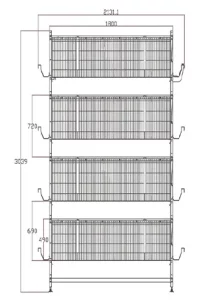
4-stöckiger H-Typ-Batteriekäfig für Masthähnchen
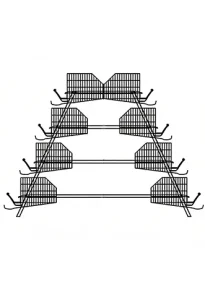
A-type 4-Tier Layer Cage
Below is a simple visual to help you decide fast. (Long bar = stronger fit.)
Budget-first build: ██████████
Simple operation: █████████
Fast installation: ████████
Full automation later: █████
High bird count: ██████████
Automation-ready: ██████████
Clean manure belt management: █████████
Standardization across farms: █████████
A regional operator wanted to start with one house and grow after cash flow stabilized. They chose a-type cages with basic feeding and manual monitoring upgrades planned later. Their priority was speed and manageable complexity. The result: stable output, simpler training for workers, and a smooth first-year operation—then a planned automation upgrade in year two.
A larger group aimed for consistent performance across multiple houses. They selected an h type layer battery cage layout with automated feeding, drinking, egg collection, and belt manure removal. Their priority was predictable productivity and reduced labor. The result: easier standard operating procedures, cleaner houses, and a simpler path to add new houses using the same blueprint.
Als Komplettanbieter ist es unsere Aufgabe, das richtige Käfigsystem für Ihre Betriebsgröße, Ihre Arbeitssituation und Ihre zukünftigen Expansionspläne zu finden - und nicht, ein Design für alle durchzusetzen.
Here’s a simple, engineer-friendly method I use when a buyer says, “I need to decide this week.”
Bestätigen Sie die Größe Ihres Betriebs (Vögel pro Haus + Anzahl der Häuser)
Define your production goals (cost-first vs efficiency-first)
Überprüfen Sie die Einschränkungen des Hauses (Breite, Höhe, Standorte der Ventilatoren, Zugangstüren)
Decide your automation level now (and what you add later)
Evaluate manure strategy (manure removal belt vs manual/semi-auto)
Verify coating and materials (galvanize, wire mesh, key frame thickness)
Run a labor plan: how many workers per house per shift?
Ersatzteile und Wartungsintervalle planen
Ensure the cage layout matches your ventilation design
Choose the system that meets your specific needs with minimal future rework
Is H type always better than A-type?
Not always. H type is often better for larger farms because automation and space utilization are strong. But A-type cages can be the right cage solution for medium projects that value simplicity and controlled investment.
Which cage system helps egg production efficiency the most?
Usually, the one that keeps conditions stable: consistent feed, water, and ventilation, plus clean manure handling. Many large farms see higher egg production efficiency with h-type cages because automation reduces variation.
Can I upgrade A-type cages to full automation later?
In vielen Fällen ja, aber das hängt vom Grundriss des Stalls und dem ursprünglichen Käfigdesign ab. Wenn Sie Upgrades planen, informieren Sie Ihren Lieferanten frühzeitig, damit das Käfigsystem mit zukünftigen Wegen für Fütterung, Eierbänder und Kotentfernung gebaut wird.
How many tiers are typical for A-type and H type?
Both can use multiple tiers, but H type commonly supports more tiers with strong frames. Your house height and ventilation plan often decide the final tier count.
What should I check to avoid poor durability?
Ask about zinc coating, whether components properly galvanize, the quality of weld points, and the wire finishing on wire mesh. Also confirm that the cage system is designed for your local humidity and cleaning routine.
Does a battery cage system reduce labor costs?
Ja - vor allem, wenn Sie die Fütterung, die Eiersammlung und die Entmistung automatisieren. Ein gut durchdachtes System kann den Arbeitsaufwand reduzieren und die Produktion stabilisieren, weshalb viele Betriebe es als langfristige Investition in die Produktivität betrachten.
A-type and H-type are both proven battery cage solutions—the best choice depends on farm size, budget, and automation goals.
H type usually wins for large-scale projects, stronger space utilization, and easier automation.
A-type cages often win for faster start-up, simpler operation, and phased upgrades.
Ventilation + manure strategy matter as much as the cage itself—good house design protects egg production.
Always verify materials and manufacturing: galvanized wire mesh, coating, and weld quality.
Choose based on production goals and a clear expansion plan, not just upfront cost.
If you want, I can turn your farm inputs (house size, target birds, climate zone, automation level) into a one-page recommendation that compares two types of layer cage layouts side-by-side.
Sourcing poultry equipment from a Chinese manufacturer means controlling four variables di…
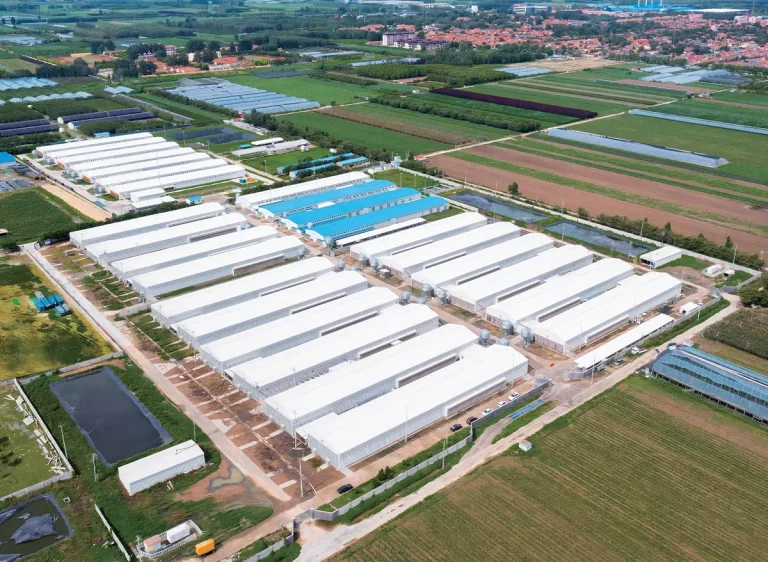
A steel structure poultry house is a prefabricated steel building designed for layer, broi…
Wir werden Ihre Anfrage innerhalb von 24 Stunden beantworten. Für dringende Anfragen kontaktieren Sie uns bitte per WhatsApp: +86 133 6144 9578 oder rufen Sie uns direkt an.
*Wir respektieren Ihre Privatsphäre. Alle übermittelten Informationen werden streng vertraulich behandelt.
Ihre Angaben werden nur zur Beantwortung Ihrer Anfrage verwendet. Wir senden niemals unaufgefordert E-Mails oder Werbenachrichten.