










Sourcing Poultry Equipment Manufacturers in China: Buyer Guide
Sourcing poultry equipment from a Chinese manufacturer means controlling four variables di…


Veja as nossas últimas notícias,
 13:44
13:44 Choosing the wrong battery cage layout can lock your poultry farm into high labor, poor airflow, or hard upgrades. Agitate: That mistake shows up fast—uneven egg production, higher stress in the chicken flock, and messy manure handling. Solution: In this guide, I’ll compare a-type and h-type systems in plain terms so you can pick the right cage system quickly and confidently.
The main difference between an A-type battery cage and an H-type battery cage is structure and automation capacity. A-type cages form an “A” frame and are usually simpler and lower cost, making them common for smaller or budget-focused farms. H type systems use stacked, vertical rows with stronger frames, better space utilization, and easier integration of automated feeding, egg collection, and manure removal, which fits larger, modern layer battery cage system projects.
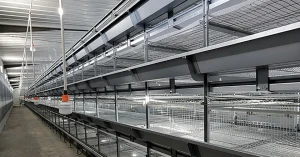
Sistema automático de gaiolas em bateria tipo H para frangos de corte
What is a battery cage system in modern poultry production?
A-type and H-type: what they look like and how the cage type changes operations
Which cage system gives better space utilization?
Automation readiness: feeding, watering, egg collection, manure removal
Ventilação e controlo climático: o que contribui para um desempenho estável do bando?
Labor, reduce labor, and labor costs: what changes in daily work?
Bird welfare and management: what you can do inside each chicken house
Durability, galvanize, wire mesh, and service life
Cost & ROI: how to compare CapEx and productivity
Como decidir rapidamente: uma lista de verificação de seleção passo a passo + FAQs
A battery cage setup is a structured cage system used for layer chicken production. Each hen lives in a defined cage space, with feeding and drinking lines placed in front, and a slope that allows eggs to roll onto an egg collection path. In many projects, this becomes a complete layer cage system with house design, ventilation, lighting, water, feed, and manure management working together.
From an engineering supplier point of view, we treat a battery cage system like a “factory line” for eggs. The chicken does one job—lay eggs—while the poultry cage setup keeps feed, water, air, and hygiene consistent. That consistency is what protects egg production efficiency and makes your farm easier to scale.
Gaiolas do tipo A are built like an “A” frame—two slanted sides meeting at the top. This design often uses fewer materials and can be easier to install in simpler houses. Many farms call it type layer cages or a-type layer cages. It’s a classic solution, especially where budget and quick installation matter.
H type designs (often called h-type cages or h type layer battery cage) stack cages in vertical lines, supported by stronger “H” frames. This structure is more rigid, especially in multi-tier setups. When a farm wants modern, high-throughput performance, h-type battery cages usually become the default because they handle upgrades better—especially automation, long houses, and higher bird counts.
A questão prática é a seguinte: o tipo de gaiola altera o seu fluxo diário. Afecta a forma como o ar circula no galinheiro, a forma como se procede à remoção do estrume e a facilidade com que os ovos são recolhidos e embalados.
If you’re tight on land area, space utilization becomes the make-or-break factor. In many cases, H type systems win on vertical stacking because they can run more tiers in a stable frame. That means more birds per building footprint—helpful for large-scale farms or investors aiming for high output per house.
A-type cages can still deliver good density, but the A-frame geometry can limit how high you stack compared with an H-frame layout. So for a poultry farm with limited building width or where you must maximize birds per house length, H type often gives you more flexibility.
Regra de ouro simples:
If your project goal is “maximize birds per house,” H type is often easier to scale.
If your goal is “start quickly with controlled investment,” A-type cages can be a practical first step.
In a modern sistema, automation is not a luxury—it’s what protects your margin when wages rise and skilled labor is hard to find. The key automation modules include:
Recolha de ovos (sistemas de tapete ou de varas)
Alimentação automática (tremonha + linhas de alimentação de trado/corrente)
Tubos de alimentação de mamilo
Manure removal (belt at the bottom, scraping, or drying options)
H type is usually more “automation-friendly” because the frame supports straight-line belt routes and consistent alignment across tiers. In many designs, the belt at the bottom of each tier makes manure removal predictable and reduces ammonia buildup. That helps control manure moisture and improves house hygiene.
A-type cages can also integrate automated systems, but it may require more careful design to route belts and keep access safe. In some older-style houses, manual or semi-automatic routines are still used. That’s not “wrong”—it just means your automation upgrade path may be narrower.
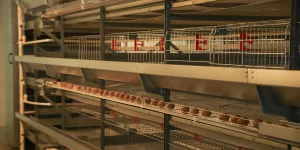
Gaiola automática tipo H para bateria de postura
Ventilation is one of the most underrated parts of a battery cage system decision. Even the best chicken cage can perform poorly in a hot, humid, or high-ammonia house. When airflow is uneven, birds cluster, stress rises, and egg production becomes unstable.
H type systems often pair well with tunnel ventilation and controlled inlets because rows and tiers can be arranged to maintain consistent air paths. That consistency helps you manage temperature and moisture more predictably. In high-density houses, better airflow control can improve productivity and reduce disease pressure.
A-type and H-type can both work with good ventilation design—but H type tends to give you more “engineering room” for fans, ducts, cooling pads, and manure belt drying. When your farm targets higher bird counts, that extra control matters.
Vamos falar sobre o que a sua equipa realmente faz todos os dias. Uma escolha de gaiola muda:
Como é que a alimentação é reabastecida e monitorizada
Como os ovos se movem e onde ocorrem as quebras
Com que frequência manuseia o estrume
A rapidez com que se pode inspecionar as aves
In many projects, H type systems reduce walking distance and simplify inspection routes because cage rows are more uniform. That can reduce labor in egg collection, manure cleaning, and routine checks. Over time, that lowers labor costs and stabilizes staffing.
A-type cages can be easier to understand and run with a smaller team at the beginning. For medium farms, that simplicity is valuable. If you don’t plan to mix more than two major upgrades in the first phase, A-type may fit your current operational rhythm.
Reality check: if your farm scales from 20,000 birds to 100,000+ birds, the daily labor gap becomes obvious. That’s where H type often becomes the long-term efficiency choice.
Many buyers ask about bird welfare—and rightly so. Welfare is not only a policy issue; it affects flock health, stress, and consistent output. Both a-type and h-type designs can support good welfare if you control density, provide clean water, stable feed, proper lighting, and keep air quality high.
Eis o que é mais importante dentro de um sistema de gaiolas para galinhas:
Malha de arame lisa para proteger os pés
Inclinação adequada para que os ovos rolem suavemente
Espaço de alimentação adequado e bebedouros fiáveis
Zonas de baixo teor de amoníaco e de cama seca/estrume
Fácil acesso para monitorizar e remover aves fracas
In our engineering work, we often see H type systems deliver more uniform conditions across tiers because automation and ventilation are easier to standardize. That supports stable performance for each laying hen group.
If you’re supplying eggs into higher-standard markets, you’ll also want traceability and consistent operational control. A well-integrated system helps you document management routines and keep audit-ready processes.
Quando os compradores comparam um sistema de gaiolas para aves de capoeira, por vezes concentram-se apenas na disposição. Mas é frequentemente na durabilidade que reside o verdadeiro ROI. Pergunte sobre:
Se as peças-chave são galvanizadas corretamente (imersão a quente ou revestimento com alto teor de zinco)
The galvanized wire and galvanized wire mesh consistency
Se os pontos de soldadura são lisos e fortes
Resistência à corrosão em ambientes húmidos
Rigidez do quadro sob carga e vibração
H type frames are typically heavier and more rigid, which helps long-term stability in stacked cages. If your goal is “run this farm for many years and keep upgrading,” a rigid frame reduces headaches.
A-type cages can still be very durable when built well—especially for moderate scale farms. The important thing is to verify coating thickness, weld finishing, and manufacturing control. As a turnkey supplier, we build the cage system as part of the whole farming equipment package—so we focus on both materials and how they perform inside the house environment.
A sua decisão sobre a gaiola deve corresponder aos objectivos de produção - não às tendências. Pergunte a si próprio:
Qual é o seu objetivo em termos de número de aves e de número de casas?
Necessita de uma classificação de ovos de qualidade superior e de uma quebra reduzida?
Is your priority fast build or long-term automation?
H type often supports higher egg production efficiency because systems are engineered for smoother egg transport, predictable feeding, and stable climate control—especially in larger houses. That’s why many integrated companies adopt h-type chicken cage layouts for standardization across multiple sites.
A-type can be a great solution for farms expanding step-by-step. If your strategy is to build one house now, prove performance, then expand, the simpler type layer approach may feel safer.
| Item | Gaiola de bateria tipo A | Gaiola de bateria tipo H |
|---|---|---|
| Estrutura | “A” frame, angled sides | “H” frame, vertical stacked rows |
| Melhor ajuste | Small–mid farms, phased upgrades | Mid–large farms, standardized expansion |
| Automatização | Possible, may need more design care | Easier for full automation integration |
| Utilização do espaço | Good, but height may be limited | Strong space utilization with more tiers |
| Manuseamento do estrume | Manual/semi-auto common; belt optional | Belt manure removal is common and clean |
| Ventilação | Works well with good design | Frequentemente mais fácil de otimizar entre níveis |
| Escalabilidade a longo prazo | Moderado | Strong for large-scale systems |
| Perfil de custos | Lower upfront in many cases | Higher upfront, stronger long-term efficiency |
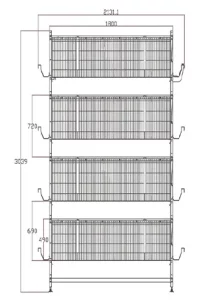
Gaiola em bateria para frangos de corte tipo H de 4 níveis
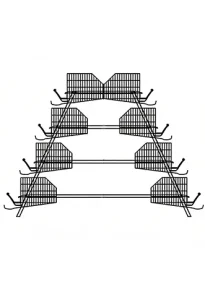
Gaiola em camadas de 4 níveis tipo A
Below is a simple visual to help you decide fast. (Long bar = stronger fit.)
Budget-first build: ██████████
Simple operation: █████████
Fast installation: ████████
Full automation later: █████
High bird count: ██████████
Automation-ready: ██████████
Clean manure belt management: █████████
Standardization across farms: █████████
A regional operator wanted to start with one house and grow after cash flow stabilized. They chose a-type cages with basic feeding and manual monitoring upgrades planned later. Their priority was speed and manageable complexity. The result: stable output, simpler training for workers, and a smooth first-year operation—then a planned automation upgrade in year two.
A larger group aimed for consistent performance across multiple houses. They selected an h type layer battery cage layout with automated feeding, drinking, egg collection, and belt manure removal. Their priority was predictable productivity and reduced labor. The result: easier standard operating procedures, cleaner houses, and a simpler path to add new houses using the same blueprint.
Como fornecedor chave-na-mão, a nossa função é fazer corresponder o sistema de gaiolas certo à dimensão da sua exploração, à situação da mão de obra e ao plano de expansão futuro - e não promover um design para todos.
Here’s a simple, engineer-friendly method I use when a buyer says, “I need to decide this week.”
Confirme a dimensão da sua exploração (aves por alojamento + número de alojamentos)
Define your production goals (cost-first vs efficiency-first)
Verificar as restrições da casa (largura, altura, localização dos ventiladores, portas de acesso)
Decide your automation level now (and what you add later)
Evaluate manure strategy (manure removal belt vs manual/semi-auto)
Verify coating and materials (galvanize, wire mesh, key frame thickness)
Run a labor plan: how many workers per house per shift?
Planear as peças sobresselentes e os intervalos de manutenção
Ensure the cage layout matches your ventilation design
Choose the system that meets your specific needs with minimal future rework
Is H type always better than A-type?
Not always. H type is often better for larger farms because automation and space utilization are strong. But A-type cages can be the right cage solution for medium projects that value simplicity and controlled investment.
Which cage system helps egg production efficiency the most?
Usually, the one that keeps conditions stable: consistent feed, water, and ventilation, plus clean manure handling. Many large farms see higher egg production efficiency with h-type cages because automation reduces variation.
Can I upgrade A-type cages to full automation later?
Em muitos casos, sim - mas isso depende da disposição do galpão e do projeto original da gaiola. Se planear actualizações, informe o seu fornecedor atempadamente para que o sistema de gaiolas seja construído com futuras rotas para alimentação, correias de ovos e remoção de estrume.
How many tiers are typical for A-type and H type?
Both can use multiple tiers, but H type commonly supports more tiers with strong frames. Your house height and ventilation plan often decide the final tier count.
What should I check to avoid poor durability?
Ask about zinc coating, whether components properly galvanize, the quality of weld points, and the wire finishing on wire mesh. Also confirm that the cage system is designed for your local humidity and cleaning routine.
Does a battery cage system reduce labor costs?
Sim - especialmente quando se integra a automatização para a alimentação, recolha de ovos e remoção de estrume. Um sistema bem concebido pode reduzir o trabalho e estabilizar a produção, razão pela qual muitas explorações o tratam como um investimento de produtividade a longo prazo.
A-type and H-type are both proven battery cage solutions—the best choice depends on farm size, budget, and automation goals.
H type usually wins for large-scale projects, stronger space utilization, and easier automation.
A-type cages often win for faster start-up, simpler operation, and phased upgrades.
Ventilation + manure strategy matter as much as the cage itself—good house design protects egg production.
Always verify materials and manufacturing: galvanized wire mesh, coating, and weld quality.
Choose based on production goals and a clear expansion plan, not just upfront cost.
If you want, I can turn your farm inputs (house size, target birds, climate zone, automation level) into a one-page recommendation that compares two types of layer cage layouts side-by-side.
Sourcing poultry equipment from a Chinese manufacturer means controlling four variables di…
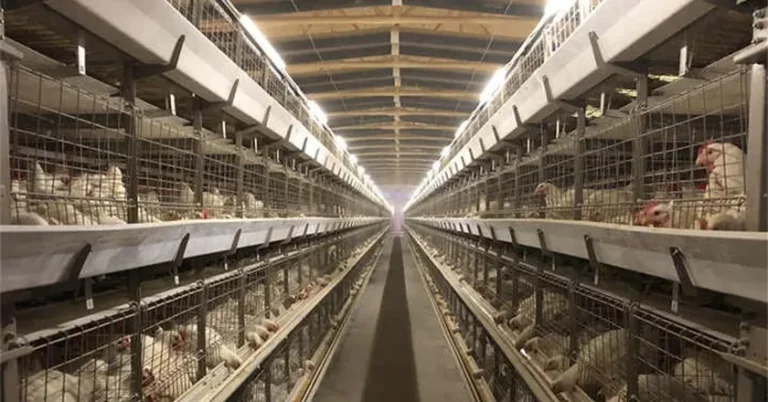
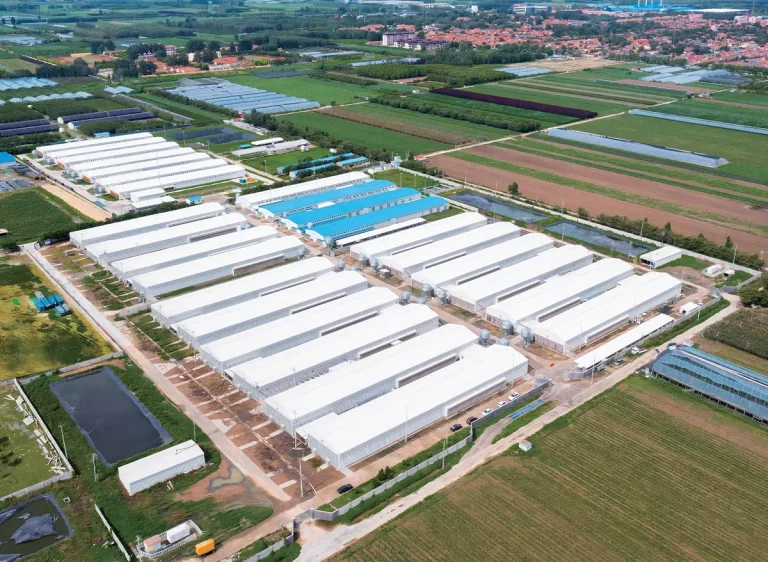
A steel structure poultry house is a prefabricated steel building designed for layer, broi…
Responderemos à sua consulta em até 24 horas. Para consultas urgentes, entre em contacto connosco pelo WhatsApp: +86 133 6144 9578 ou ligue diretamente para nós.
*Respeitamos a sua privacidade. Todas as informações enviadas são estritamente confidenciais.
Os seus dados serão utilizados apenas para responder à sua consulta. Nunca enviamos e-mails ou mensagens promocionais não solicitados.