










Sourcing Poultry Equipment Manufacturers in China: Buyer Guide
Sourcing poultry equipment from a Chinese manufacturer means controlling four variables di…


Veja as nossas últimas notícias,
 10:13
10:13 “Layer cage” is not one product. It covers at least three structurally different formats, and each one carries a different price basis, footprint, and labor requirement. Below, published dimensions are separated from category-average figures.
Three formats get sold under this label, and mixing them up is where most quote requests go sideways.
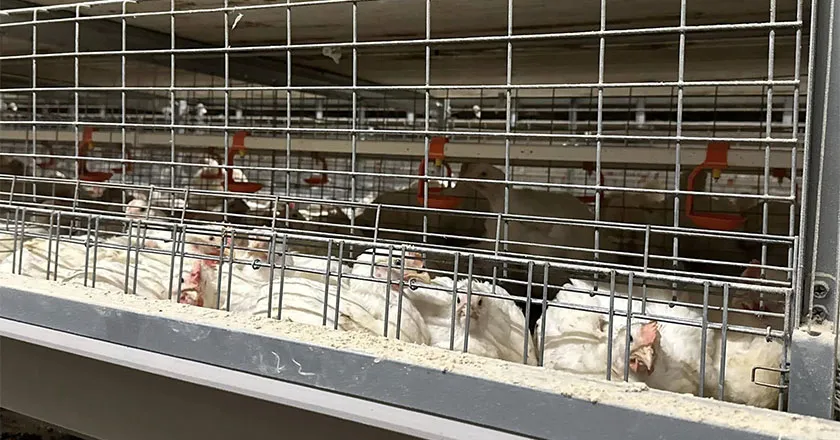
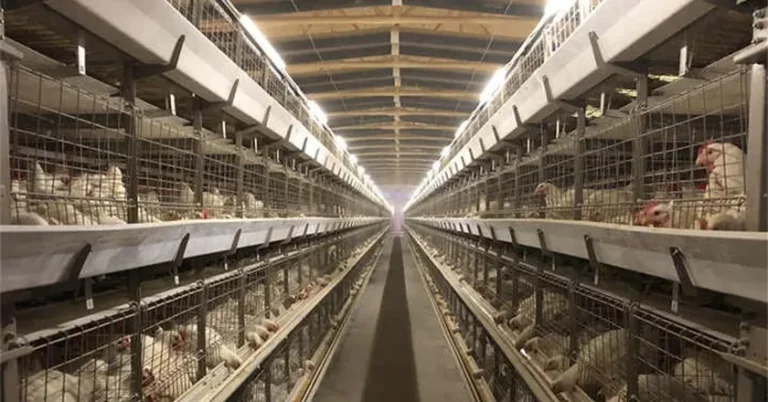
H-type automatic battery cage — a stacked, multi-tier system with mechanized feeding, drinking, egg collection, manure removal, and climate control built in. This is the format most commercial operations scaling past a few thousand birds end up specifying, because labor cost per bird drops sharply once collection and manure handling stop requiring hands.
Type A cage — a lower-automation battery frame, typically manual or semi-manual in feeding and collection. It costs less to buy but more to staff, and it’s the format smaller or budget-constrained operations tend to start with before retrofitting to H-type later.
Enriched (welfare) cage equipment — built to meet welfare-standard requirements common in EU and export-oriented markets. It sits in a different regulatory conversation than the two formats above, and buyers targeting welfare-certified export channels should treat it as its own sizing exercise rather than a variant of the H-type.
A fourth term shows up in the same search results and causes real confusion: the layer brooder cage, used for raising chicks before they reach laying age, not for housing hens in production. If your search intent is chick-rearing rather than egg production, that’s a separate equipment category with its own spec sheet — not covered further here.
Layer Cage Formats at a Glance
| Format | Dimensional Data | Typical Buyer | Base de preço |
| H-Type Automatic Battery Cage | Published (see table below) | Commercial operators scaling to 10,000+ birds | Market reference, per-bird capacity |
| Type A Cage | Not published in current spec sheet | Smaller operations, phased capital budgets | Quote-based; no category reference available |
| Enriched (Welfare) Cage | Not stated on site | Export-market and welfare-compliant buyers | Quote-based; check against enriched-cage welfare standards |
H-Type Automatic Layer Battery Cage: Full Dimensional Specifications
This is the format with published parameters, so it’s the one you can plan a house around without waiting on a custom drawing.
| Parâmetro | Valor |
| Tier configurations | 3 / 4 / 5 / 3+3 / 4+4 níveis |
| Cage height (per tier) | 710 mm |
| Espaçamento entre colunas | 1 200 mm |
| Espaçamento entre calhas | 1 570 mm |
| Largura do corredor | 2 055 mm |
| Total structure height range (across configurations) | 2 330–6 580 mm |
| Roof height range | 2 860–7 110 mm |
| Wire mesh | Aluminized-zinc, rated at 3–4× the corrosion resistance of standard hot-dip galvanized wire |
| Automated functions | Feeding, drinking, egg collection, manure removal, climate control |
| Certificação | ISO 9001:2015 / CE / SGS (company-level, not model-specific) |
One figure this table doesn’t answer, because it isn’t itemized on the current spec sheet: birds per tier or per cage. That number varies with cage width configuration and isn’t standardized the way the frame dimensions are, so treat it as a required question for your supplier conversation rather than something you can back into from the table above.
The taller end of that height range — the 4+4 tier build at up to 6,580 mm total structure height — needs a house with real roof clearance to work. A converted barn or a house built for a 3-tier layout won’t take a 4+4 retrofit without structural changes, which is worth confirming before you spec automation level rather than after.
Type A trades automation for lower upfront cost. Feeding and collection stay manual or semi-manual, which raises the labor line on your operating budget in exchange for a lower equipment line. Operations that plan to phase into automation — start with Type A, retrofit to H-type once volume justifies the labor savings — use this as a deliberate staging strategy rather than a permanent choice. If that’s your plan, confirm retrofit compatibility with your supplier before the first purchase; not every Type A frame accepts an H-type conversion later.
Mugong pricing is project-specific and quote-based. The figures below are published market-reference ranges — useful for self-qualifying a budget, not a fixed price from any one supplier.
| Âmbito | Intervalo de referência | Base |
| Gaiola automática para baterias de galinhas poedeiras, apenas o equipamento | ~Capacidade de US$15–25 por ave | Industry norm for H/A-type systems |
| Projeto de gaiolas para 10 000 galinhas poedeiras, equipamento | ~US$18 000–32 000 | Varies by automation depth and steel specification |
| Sistema totalmente automático de 20 000 camadas | ~US$35 000–120 000 | Range spans automation configuration level |
| Full turnkey (cage + house + site works) | Apenas orçamento | Building, ventilation, and site prep add variable cost that doesn’t reduce to a per-bird number |
Two numbers get conflated constantly in supplier conversations, and it’s worth separating them explicitly: the per-bird equipment figure above covers cage hardware alone. Once housing, ventilation, and site preparation enter the picture, the relevant number is a per-project installed cost, and it moves independently of the per-bird equipment range — a project with an existing usable structure and one built from bare ground can land at very different totals even with identical cage equipment.
H-type systems automate feeding, drinking, egg collection, manure removal, and climate control. Type A cages are manual to semi-manual, which lowers equipment cost but raises the labor requirement per bird.
It depends on tier configuration (3 through 4+4 tier) and cage width, and exact bird-per-tier capacity isn’t itemized in the published spec sheet. Confirm this figure directly with your supplier before finalizing floor-area planning.
No. That range covers equipment only. Housing, ventilation, and site preparation are priced separately and move independently of the per-bird equipment figure.
Detailed pricing for enriched/welfare cage equipment isn’t published in the current catalog. Given the added compliance requirements against enriched-cage welfare standards, budget for a dedicated quote rather than assuming parity with standard H-type pricing.
Some operations do exactly this to phase capital spend, but not every Type A frame accepts an H-type conversion. Confirm retrofit compatibility with your supplier at the time of the original purchase, not after.
Sourcing poultry equipment from a Chinese manufacturer means controlling four variables di…
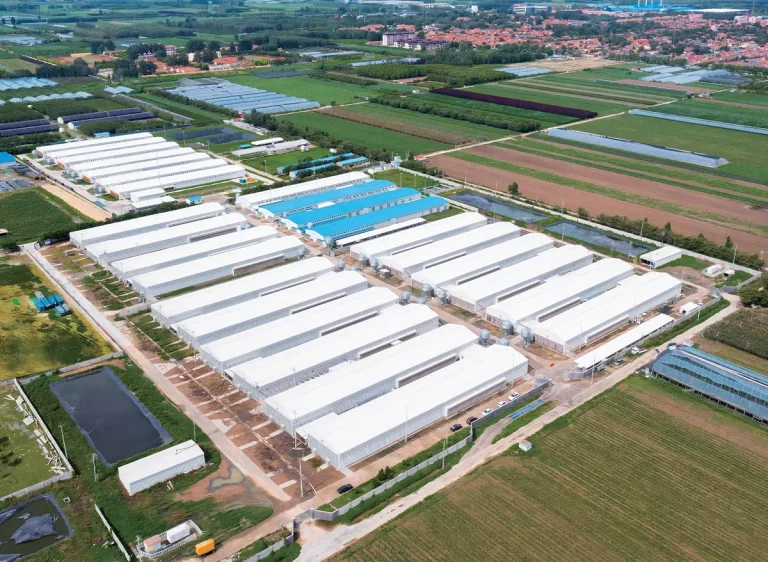
A steel structure poultry house is a prefabricated steel building designed for layer, broi…
Responderemos à sua consulta em até 24 horas. Para consultas urgentes, entre em contacto connosco pelo WhatsApp: +86 133 6144 9578 ou ligue diretamente para nós.
*Respeitamos a sua privacidade. Todas as informações enviadas são estritamente confidenciais.
Os seus dados serão utilizados apenas para responder à sua consulta. Nunca enviamos e-mails ou mensagens promocionais não solicitados.