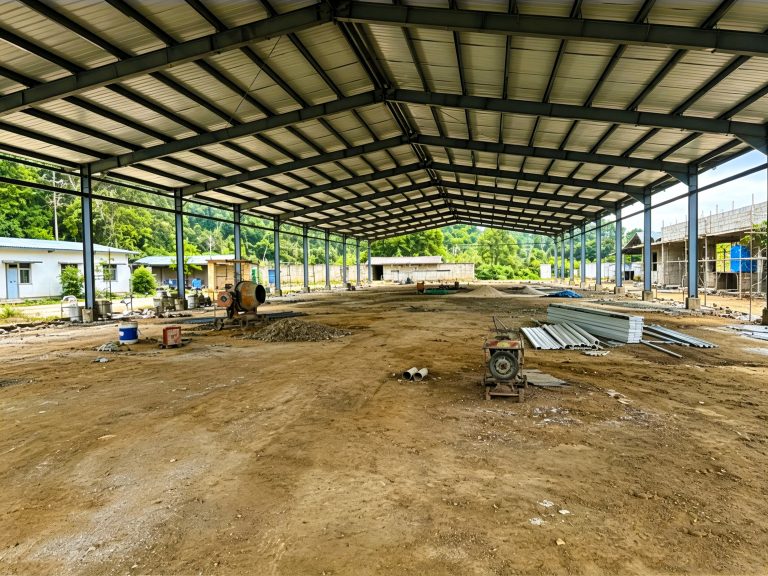
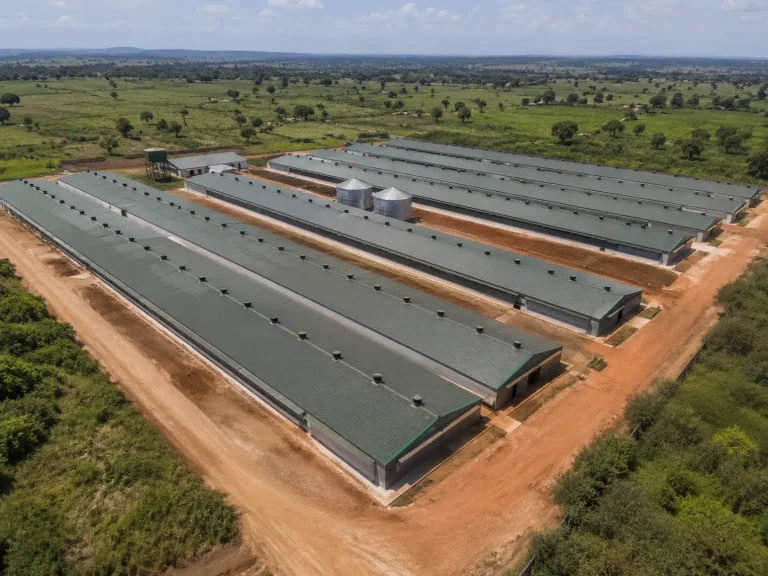
Nella provincia di Tarlac, nel Luzon centrale, nelle Filippine, è stato avviato un progetto su larga scala per un allevamento automatizzato di polli da carne. Con una superficie di circa cinque ettari, il progetto combina tecniche adattate al clima pollaio edilizia, sistemi automatizzati di alimentazione e abbeveraggio, controllo intelligente dell’ambiente e gestione sostenibile dei rifiuti.
Progettata per affrontare le sfide poste dalle alte temperature, dall’umidità, dalla biosicurezza e dall’allevamento avicolo intensivo, l’azienda agricola dimostra come la progettazione moderna dei capannoni per polli da carne possa migliorare l’efficienza produttiva, il benessere degli animali e la sostenibilità operativa a lungo termine.
Panoramica del progetto
L'allevamento avicolo integrato comprende sei capannoni per polli da carne completamente automatizzati. Ciascun capannone è progettato per ospitare fino a 50.000 polli da carne per ciclo produttivo, per una capacità totale di circa 300.000 capi per ciclo.
Una volta a regime, il progetto dovrebbe produrre circa 1,8 milioni di polli da carne all’anno. La sua ubicazione nei pressi di Manila e dei principali impianti di lavorazione del pollame favorisce inoltre l’efficienza nella consegna dei mangimi, nel trasporto di pollame vivo, nella manutenzione delle attrezzature e nell’accesso ai mercati regionali.
| Elemento del progetto |
Dettagli |
| Sede del progetto |
Provincia di Tarlac, Luzon Centrale, Filippine |
| Area agricola |
Circa 5 ettari |
| Allevamenti avicoli |
6 allevamenti automatizzati di polli da carne |
| Capacità per casa |
Fino a 50.000 polli da carne per ciclo |
| Capacità totale del ciclo |
Circa 300.000 polli da carne |
| Obiettivo di produzione annuale |
Circa 1,8 milioni di polli da carne |
| Tipo di pollame |
Polli da carne destinati al commercio |
| Condizioni ambientali |
Tropicale, caldo e umido |
| Sistemi principali |
Ventilazione, raffreddamento, alimentazione, abbeveraggio, pesatura e gestione dei rifiuti |
Le sfide dell'allevamento avicolo nelle Filippine
L'allevamento commerciale di polli da carne nelle Filippine richiede attrezzature e strutture avicole progettate per funzionare in modo affidabile in condizioni tropicali. Le elevate temperature ambientali e l'umidità possono aumentare lo stress da calore, ridurre l'assunzione di mangime, influire sull'aumento di peso e aumentare i rischi di mortalità se l'ambiente interno non viene adeguatamente controllato.
I tradizionali pollai aperti sui lati possono inoltre rendere più difficile il mantenimento di condizioni stabili in termini di temperatura, circolazione dell'aria, igiene e biosicurezza.
I requisiti principali di questo progetto includevano:
- Mantenere un ambiente di coltivazione stabile durante i periodi di caldo e umidità
- Migliorare la ventilazione senza creare correnti d’aria nocive
- Garantire un approvvigionamento affidabile di mangime e acqua a un gran numero di uccelli
- Riduzione del fabbisogno di manodopera e delle incongruenze operative
- Rafforzamento della biosicurezza e della gestione igienica nelle aziende agricole
- Scelta di apparecchiature resistenti alla corrosione per un funzionamento a lungo termine
- Gestire i rifiuti avicoli in modo rispettoso dell'ambiente
- Consentire all'azienda agricola di espandersi nelle future fasi di sviluppo
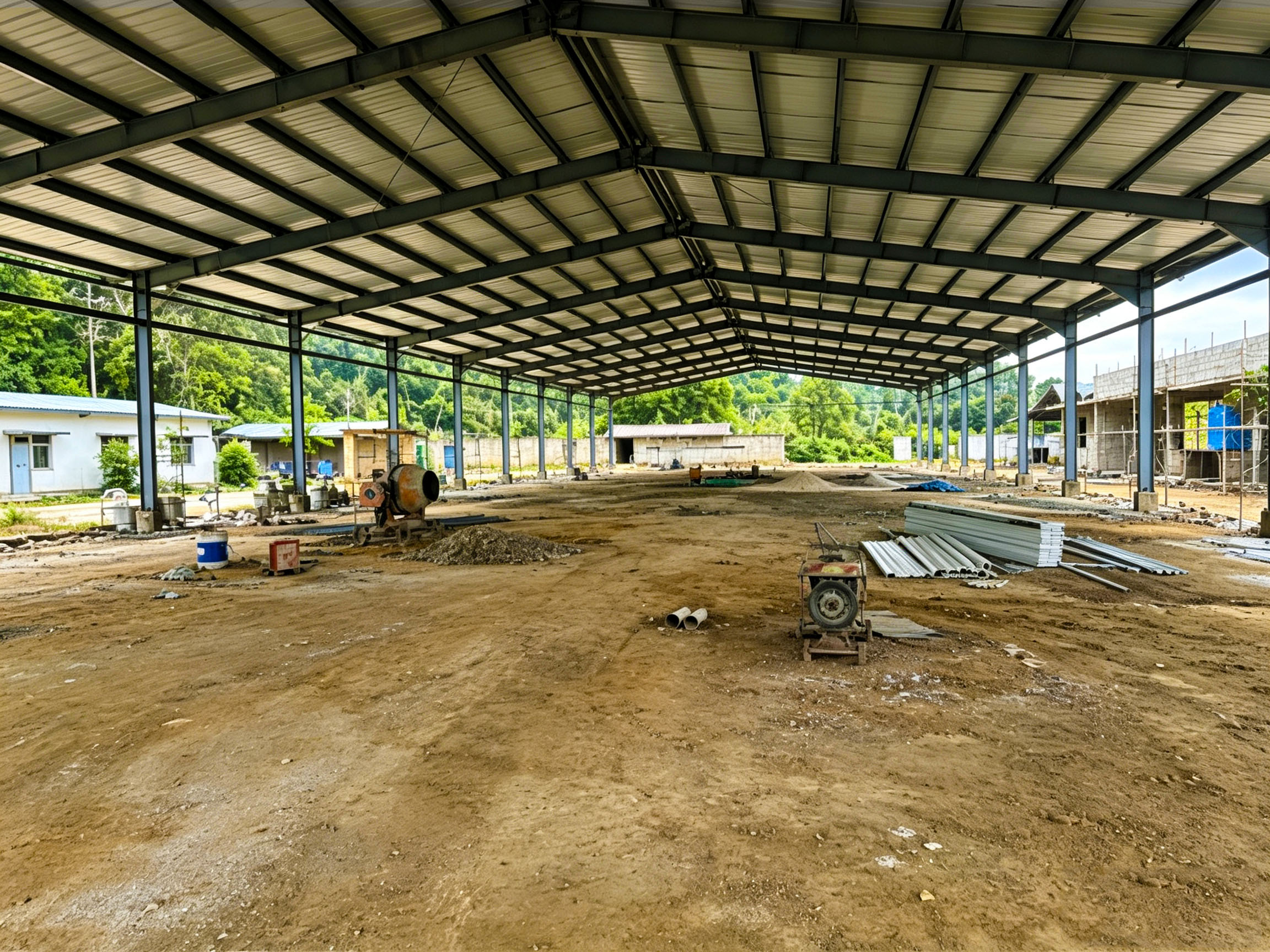
- Progettazione di pollai adattati alle condizioni climatiche
Prima dell’inizio dei lavori è stato condotto uno studio di fattibilità approfondito relativo all’allevamento avicolo. Lo studio ha valutato la domanda locale di pollame, le condizioni del terreno, l’accessibilità stradale, l’approvvigionamento di mangimi, l’impatto ambientale, la capacità di lavorazione e le esigenze di espansione future.
L’orientamento e la disposizione interna dei capannoni sono stati quindi ottimizzati in base al clima locale. I capannoni avicoli sono stati progettati per garantire un ricambio d’aria efficiente, una manutenzione agevole delle attrezzature, una pulizia efficace e un flusso ordinato di lavoratori e materiali.
È stata prestata particolare attenzione alla biosicurezza. La struttura dell’allevamento separa le aree destinate alla produzione avicola da quelle di servizio e di gestione dei rifiuti, contribuendo a ridurre gli spostamenti non necessari tra le zone pulite e quelle potenzialmente contaminate.
Sistema intelligente di ventilazione e raffreddamento
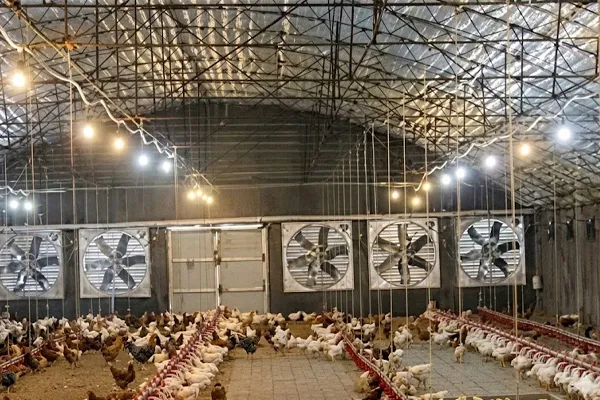
Un sistema di ventilazione per gallerie è stata scelta come soluzione principale per il controllo ambientale. I ventilatori di scarico a velocità variabile funzionano in combinazione con i pannelli di raffreddamento evaporativo per rimuovere il calore e immettere aria raffreddata in ogni capannone avicolo.
I sensori di temperatura e climatici monitorano costantemente le condizioni interne ed esterne. Il sistema di controllo regola automaticamente la velocità della ventola, la modalità di raffreddamento e il flusso d’aria in base ai dati ambientali in tempo reale.
Questo sistema automatizzato di ventilazione per allevamenti avicoli consente di:
- Ridurre lo stress da calore durante i periodi di temperature elevate
- Mantenere condizioni più uniformi in tutto il pollaio
- Favorisce un consumo regolare di mangime e un aumento di peso
- Eliminare il calore in eccesso, l'umidità, la polvere e i gas nocivi
- Ridurre la dipendenza dalla regolazione manuale delle attrezzature
- Creare un ambiente più confortevole per il gregge
Gli impianti di ventilazione e raffreddamento sono stati scelti appositamente per garantire prestazioni affidabili nel clima caldo e umido delle Filippine.
Apparecchiature automatiche per l'alimentazione e l'abbeveraggio
Ogni allevamento di polli da carne è dotato di linee di alimentazione automatizzate e di sistemi di abbeveraggio a tettarella. Questi sistemi garantiscono un accesso costante al mangime e all’acqua potabile pulita, riducendo al contempo gli sprechi e il lavoro manuale.
Il sistema di alimentazione distribuisce il mangime in modo uniforme all’interno del pollaio, contribuendo a ridurre al minimo la competizione tra i volatili e favorendo uno sviluppo più omogeneo del gruppo. Le quantità di mangime possono essere regolate in base all’età e alla fase di crescita dei polli da carne.
Il sistema di abbeveraggio a tettarella fornisce acqua direttamente agli uccelli, riducendo al contempo l'umidità del pavimento e la contaminazione. È possibile mantenere una pressione dell'acqua adeguata e l'altezza corretta della linea di abbeveraggio man mano che il gruppo cresce.
Nel loro insieme, questi sistemi contribuiscono a:
- Disponibilità costante di mangime e acqua
- Riduzione delle perdite di mangime e degli sprechi d’acqua
- Miglioramento delle condizioni dei rifiuti
- Minori esigenze di manodopera
- Maggiore uniformità del vello
- Una gestione quotidiana più semplice dell'azienda agricola
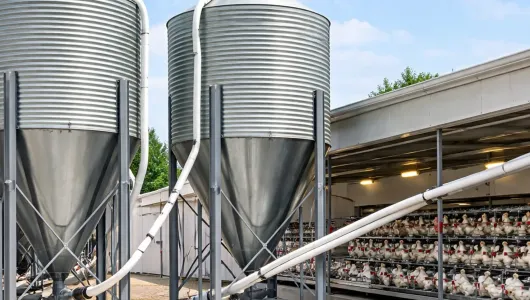
Layer Farm – Sistema di alimentazione con silo centrale
Monitoraggio e pesatura intelligenti
Apparecchiature di pesatura intelligenti monitora le variazioni del peso medio degli uccelli durante l'intero ciclo produttivo. I dati raccolti aiutano i responsabili degli allevamenti a confrontare le prestazioni effettive del gruppo con le curve di crescita previste.
Se integrato con i dati ambientali e relativi alle attrezzature, il sistema offre una panoramica più chiara delle prestazioni del pollaio. Gli operatori possono individuare variazioni insolite relative a peso, consumo di mangime, consumo idrico, temperatura o ventilazione prima che si trasformino in problemi di produzione più gravi.
Il monitoraggio continuo consente di prendere decisioni più consapevoli in merito ai programmi di alimentazione, alle condizioni ambientali, alla gestione del gregge e alla programmazione della macellazione.
Attrezzature resistenti per l'allevamento avicolo
Le attrezzature per l'allevamento avicolo utilizzate nel progetto sono realizzate in acciaio zincato di alta qualità per garantire robustezza, resistenza alla corrosione e una lunga durata.
La sua struttura modulare semplifica l'installazione, la pulizia, l'ispezione, la manutenzione e la futura sostituzione dei componenti. Ciò è particolarmente importante in un ambiente di allevamento avicolo tropicale, dove l'umidità e i gas corrosivi possono accelerare il deterioramento delle attrezzature.
La disposizione delle attrezzature consente inoltre agli addetti di ispezionare le linee di alimentazione, i sistemi di abbeveraggio, i componenti di ventilazione e i dispositivi di controllo senza interferire con la normale gestione del pollame.
Gestione sostenibile dei rifiuti
L'allevamento è dotato di un sistema automatizzato di raccolta del letame e di gestione dei rifiuti. I rifiuti avicoli vengono raccolti in modo efficiente e preparati per essere trasformati in fertilizzante organico.
Questo sistema riduce l'accumulo di rifiuti all'interno dell'area produttiva e contribuisce a garantire condizioni operative più pulite. La trasformazione del letame in fertilizzante può inoltre rappresentare una fonte aggiuntiva di valore per l'azienda agricola, riducendo al contempo l'impatto ambientale associato allo smaltimento convenzionale dei rifiuti.
La soluzione per la gestione dei rifiuti contribuisce al raggiungimento di diversi obiettivi del progetto:
- Migliorare l'igiene dei pollai
- Ridurre gli odori e il rischio di infestazioni
- Semplificare la gestione del letame
- Sostenere la produzione di fertilizzanti organici
- Ridurre l'impatto ambientale
- Migliorare la sostenibilità complessiva dell'azienda agricola
Risultati del progetto e benefici attesi
Si prevede che la soluzione integrata apporti notevoli miglioramenti operativi rispetto all’allevamento avicolo convenzionale a cielo aperto.
I principali benefici previsti includono:
- Condizioni stabili all’interno del pollaio per tutto il ciclo produttivo
- Riduzione dello stress termico degli uccelli in condizioni climatiche tropicali
- Distribuzione più uniforme del mangime e dell'acqua
- Maggiore uniformità del gregge e maggiore prevedibilità della produzione
- Minore dipendenza dal lavoro manuale
- Maggiore biosicurezza e gestione igienica
- Accesso più rapido alle informazioni di produzione in tempo reale
- Pulizia e manutenzione più semplici delle attrezzature
- Un impiego più efficiente dei rifiuti avicoli
- Una base scalabile per l'espansione futura
Si prevede inoltre che il progetto crei oltre 120 posti di lavoro diretti a livello locale, tra cui figure professionali nei settori della gestione agricola, della manutenzione delle attrezzature, della gestione della produzione, della logistica e dell’assistenza tecnica. Per alcuni materiali da costruzione e per i servizi continuativi viene data priorità ai fornitori locali, ampliando così il contributo economico del progetto alla comunità circostante.
Perché il cliente ha scelto Mugong
Oltre 30 anni di esperienza nel settore
Shandong Mugong Farming Equipment Co., Ltd. vanta oltre 30 anni di esperienza nel settore delle attrezzature per l'allevamento avicolo e dei sistemi di produzione integrati. Questo bagaglio di esperienza consente al suo team di ingegneri di valutare le interazioni tra la progettazione dei capannoni avicoli, la capacità delle attrezzature, la gestione del pollame e le condizioni ambientali. Informazioni su Shandong Mugong
Soluzione completa "chiavi in mano" per allevamenti avicoli
Mugong offre molto più che semplici gabbie o linee di alimentazione. La sua gamma di servizi può includere:
- Pianificazione generale delle aziende agricole
- Disposizione del pollaio
- Selezione e abbinamento delle apparecchiature
- Sistemi di alimentazione e abbeveraggio
- Ventilazione e climatizzazione
- Gestione del letame
- Produzione
- Istruzioni per l'installazione
- Formazione degli operatori
- Assistenza post-vendita e ricambi
Un approccio basato su un unico fornitore semplifica il coordinamento delle specifiche delle apparecchiature, dei programmi di installazione e delle responsabilità tecniche.
Espansione futura
L'azienda prevede di realizzare una seconda fase che potrebbe includere allevamenti di pollame da riproduzione e un incubatoio. Tale espansione consentirebbe all'azienda agricola di integrare ulteriori fasi della filiera avicola e di rafforzare il proprio controllo sull'approvvigionamento di pulcini, sulla pianificazione della produzione e sull'uniformità dei prodotti.
Poiché nella prima fase vengono utilizzati pollai modulari e sistemi di attrezzature scalabili, è possibile integrare ulteriori impianti di produzione senza dover riprogettare l'intera infrastruttura dell'allevamento.
Conclusione
Questo progetto di allevamento automatizzato di polli da carne nelle Filippine dimostra come la realizzazione di capannoni avicoli adattati alle condizioni climatiche e l’utilizzo di attrezzature di produzione coordinate possano favorire l’allevamento avicolo commerciale in un ambiente caldo e umido.
Grazie all'integrazione di progettazione dei pollai, ventilazione a tunnel, raffreddamento evaporativo, alimentazione automatizzata, abbeveraggio a tettarella, pesatura dei volatili e gestione dei rifiuti zootecnici, Mugong ha fornito al cliente una base concreta per una produzione di polli da carne più pulita, più efficiente e scalabile.
Per gli investitori, gli allevatori di pollame, gli appaltatori e i promotori di progetti agricoli che intendono realizzare una nuova azienda agricola commerciale, Mugong è in grado di fornire attrezzature avicole su misura e assistenza ingegneristica “chiavi in mano” in base alle condizioni del sito, alla capacità prevista, alla tipologia di volatili e al livello di automazione.
Stai progettando un allevamento avicolo nelle Filippine o in un altro mercato tropicale? Contatta Mugong per discutere della struttura del vostro sito, degli obiettivi di produzione e delle esigenze in termini di attrezzature.













 10:53
10:53