











Sourcing Poultry Equipment Manufacturers in China: Buyer Guide
Sourcing poultry equipment from a Chinese manufacturer means controlling four variables di…

اطّلع على آخر أخبارنا,
 08:34
08:34 Many people want to raise broiler chickens, but poor planning can lead to slow growth, dirty houses, disease, and thin margins. The better path is simple: start with the right broiler farm setup, use strong chick management, keep good ventilation, and treat the farm like a real business.
To farm broiler chicken well, you need healthy day-old chicks, a clean and well-prepared broiler house, correct brooding temperature, reliable feed and water, steady ventilation, strong biosecurity, and a clear selling plan. Modern meat-type broilers can often reach a market carcass weight of about 4 to 6 pounds in 6 to 8 weeks under good management, which is why broiler chicken farming business models can scale quickly when they are managed correctly.
1. What Kind of Broiler Farm Should You Start?
2. How Do You Make a Business Plan for a Broiler Chicken Farm?
3. Where Should You Buy Chicks for a Successful Broiler Flock?
4. What Housing and Poultry Equipment Do Broiler Chickens Need?
5. How Do You Brood Day-Old Chicks the Right Way?
6. What Should Broiler Chickens Eat and Drink?
7. Why Are Ventilation and Temperature Control So Important?
8. How Do Biosecurity Measures and Vaccination Protect the Farm?
9. When Do Broilers Reach Market Weight and How Do You Sell Them?
10. What Makes a Profitable Broiler Chicken Farming Business?
The first question is not just how to raise chicken. It is what kind of broiler business you want to build. Some people start broiler production on a small scale with a simple shed and manual feeding. Others build a larger broiler chicken farm with automated lines, house controls, and contract or integrator-based selling. The right model depends on land, labor, market access, and budget.
If you are serious about start broiler chicken farming, think of it as a farm business, not only a bird-raising activity. A small batch can teach you the basics, but a commercial broiler farm needs planning for chick sourcing, feed logistics, manure handling, labor, disease control, and final sales. That is why a beginner’s guide should always start with scale and market, not only birds.
For beginners, it also helps to understand where the production chain begins. A commercial broiler breeder program comes from specialized parent stock and a breeder farm, where hens and roosters produce fertile eggs for a hatchery. You may not run a breeder operation yourself, but understanding that chain helps you buy better chicks and ask better questions about source quality.
A strong business plan answers four simple questions: how many birds will you raise, where will you buy inputs, how will you sell, and what will your costs look like from placement to harvest? Without that, even a good broiler flock can lose money.
At a minimum, your plan should cover chick cost, feed cost, bedding, medicine or health support, utilities, labor, and mortality allowance. You also need a target sale age and buyer type. Some farmers sell live birds. Others supply dressed chicken. Others work with an integrator. Each option changes your cash flow and your profitability.
Here is a simple planning table you can use:
| البند | ما أهمية ذلك |
|---|---|
| Chick source | Poor chick quality hurts the whole flock |
| Feed budget | Feed is usually the biggest cost in broiler production |
| House size | Determines stocking level and airflow needs |
| Market channel | Affects price, timing, and cash flow |
| Labor plan | Daily care is not optional; it can be labor intensive |
| Health plan | Reduces losses from stress and disease |
A modern broiler chicken farming business works best when building design, feeding, watering, climate, and manure removal are planned together. That is one reason many commercial projects now choose integrated engineering instead of piecing together random equipment.
Good farming starts with good chicks. A weak chick rarely becomes a strong broiler. That is why you should buy from a reliable hatchery or a trusted supplier with known parent stock and transport practices. Minnesota Extension notes that meat birds are commonly purchased from hatcheries and that planning their arrival well matters because growth is fast and timing affects the whole cycle.
When selecting a source, ask simple but important questions. Are the chicks from a recognized broiler breeder line? Were the chicks vaccinated at hatch? How far will they travel? How are they packed and transported? A day-old bird that arrives late, chilled, or dehydrated may struggle from the very start.
You should also check uniformity at delivery. Look for bright eyes, active movement, dry navels, and even size. If many chicks arrive weak or uneven, your flock will become harder to manage. In our experience, one of the easiest ways to improve a successful broiler cycle is to tighten chick procurement before birds even enter the house.
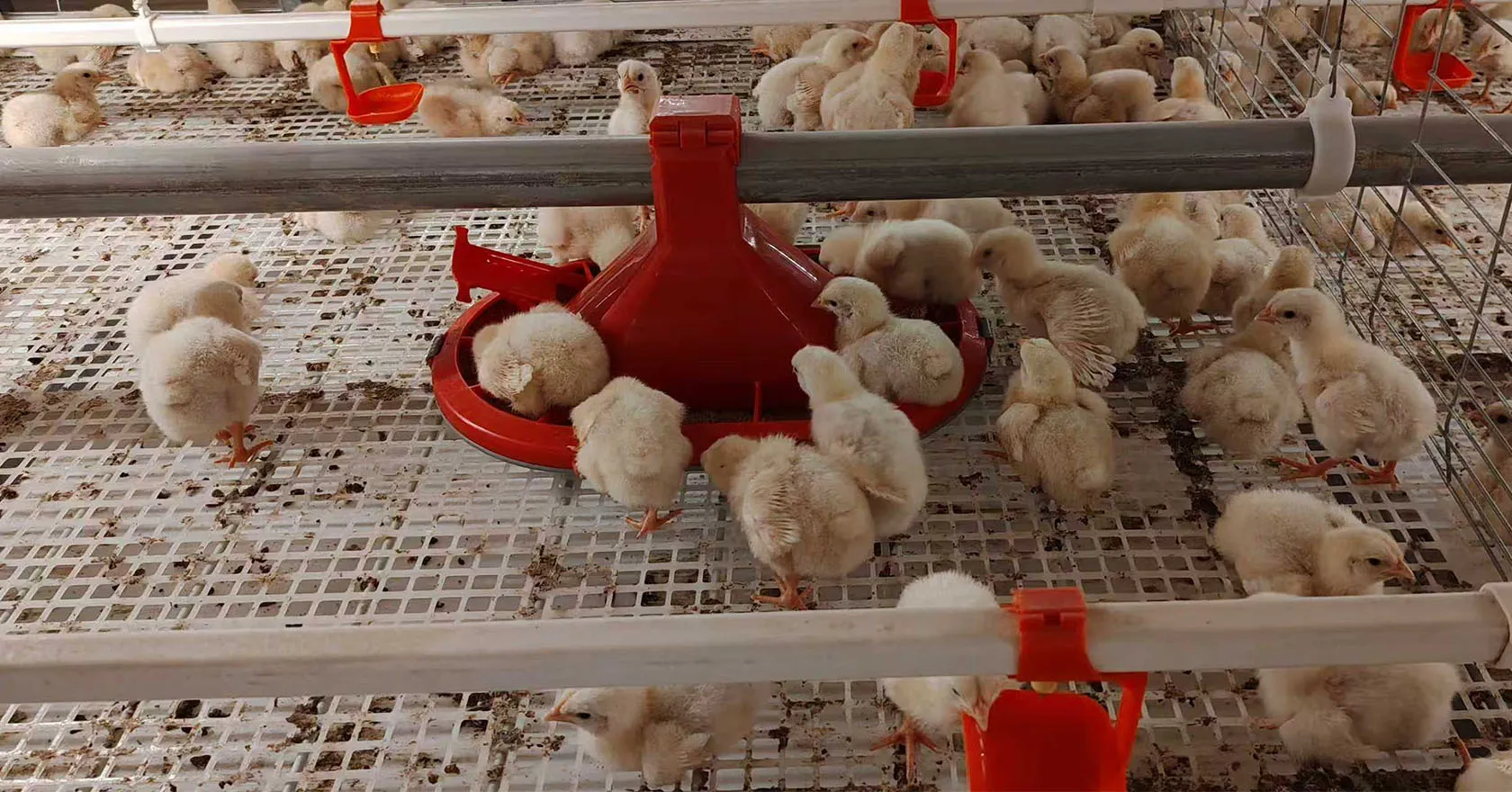
Every broiler chicken farm needs a clean, dry, secure, and well-designed house. Your broiler house does not need to be fancy, but it does need to work. Birds need protection from weather, predators, and large temperature swings. The housing also needs good litter management, enough feeder and drinker access, and effective air movement.
For smaller farms, a simple shed or barn may work. Some niche growers even use a chicken tractor system for pasture-based meat birds, though that is a very different model from intensive commercial production. For a serious poultry farm, fixed chicken houses with proper insulation, air inlets, and mechanical airflow control are usually the better choice. Arkansas Extension notes that broilers need proper housing, temperature, and plenty of ventilation to support rapid growth.
The basic equipment list includes:
On larger farms, automated systems and simple control systems can reduce labor, improve consistency, and support better flock results. That is especially valuable in modern poultry operations where house environment and feed flow need to stay steady every day.
Brooding is the foundation of the whole cycle. If you get the first week wrong, the birds spend the rest of the flock trying to catch up. Aviagen’s 2025 broiler handbook and pocket guide both stress that correct brooding temperature, litter condition, feed access, and ventilation are essential from placement. Whole-house or spot brooding may be used, but chicks must be comfortable and active at feed and water points.
A good brooding setup starts before the chicks arrive. The house should be preheated, dry, and kept clean. Feed and water should already be available. Air should feel fresh, not stuffy. Day-old birds need warmth, but they also need oxygen and dry litter. That is why brooding is never only about heating.
Aviagen recommends that during minimum ventilation, sidewall or ceiling inlets should open enough to direct incoming air properly, and the house should use timed minimum ventilation when the temperature is below or close to the bird comfort set point. In practical terms, that means you must warm the house without suffocating the chicks.
A calm, active chick that eats and drinks early is the best sign that your start is working.
Fast-growing broiler chickens need correct nutrition from day one. Meat birds are selected to grow quickly, so feed quality directly shapes growth, feed use, and health. The goal is simple: help birds gain muscle with the least amount of feed wasted while keeping the flock active and healthy.
Clean water matters just as much as feed. If water delivery is poor, feed intake also drops. Birds should always be able to find clean water easily. That is why the نظام الشرب should be checked many times a day, especially in the first week and during hot weather. Wet spots around drinkers should also be controlled so litter stays dry.
Feed programs vary by genetics and target sale age, but the basic idea is common across the poultry industry: starter diets support early development, grower diets support strong body gain, and finisher diets support efficient weight gain before sale. The exact ration should come from your nutrition supplier or technical team, but steady access, low waste, and clean handling always matter.
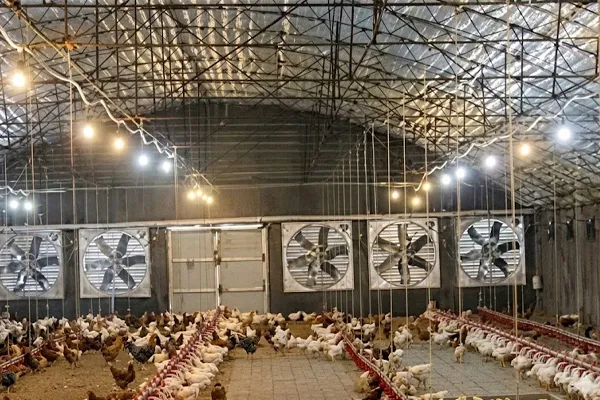
This is one of the biggest success factors in any broiler farm. Good ventilation removes excess moisture, stale air, dust, and ammonia, while also helping birds stay comfortable. Aviagen states that minimum ventilation is used when house temperature is below or near the comfort set point and that the purpose is to keep birds at comfort temperature while maintaining acceptable air quality.
Poor air quickly causes problems. You may see wet litter, eye irritation, breathing stress, or slower growth. If the house is not well-ventilated, birds may eat less and perform worse. That is why maintaining proper ventilation is not optional. It is one of the real best practices in commercial broiler management.
As birds grow, airflow needs also change. Young chicks need protection from chilling, but older birds often need stronger airflow and sometimes tunnel ventilation with cooling pads in hot climates. Aviagen notes that tunnel fans and pad cooling are standard tools for hot-weather control in broiler houses. Good temperature control is one of the most reliable ways to raise healthy birds and help them reach market weight on time.
A profitable flock can fail very fast if disease enters the farm. That is why biosecurity measures matter so much. WOAH says biosecurity procedures in intensive poultry production are meant to prevent the introduction and spread of infectious agents in the production chain.
In daily farm life, biosecurity means controlling entry, limiting visitors, cleaning vehicles and equipment, separating clean and dirty areas, and disinfecting properly between flocks. It also means planning for the next flock before the current birds leave. Downtime, washing, litter removal, and house sanitation all matter if you want to avoid disease outbreaks or a serious outbreak of avian disease.
Vaccination also plays a role, but the exact program depends on local disease pressure, company policy, and veterinary guidance. Cobb’s vaccination guide emphasizes that vaccine use and administration should follow a practical field program and be monitored carefully, while classic extension guidance also notes that vaccine programs depend on diseases common in your area and are not a substitute for good management. In simple terms: vaccinate smartly, but do not use vaccination to excuse poor hygiene.
Most commercial meat-type broilers grow fast. University of Minnesota Extension states that common Cornish-cross broilers often reach a market carcass weight of about 4 pounds to 6 pounds in roughly 6 to 8 weeks, though slower-growing breeds may take longer. That speed is one reason broilers are so important in modern meat production.
Still, “sale age” is not the same for every market. Some buyers want a smaller bird. Some want heavier birds. Some want live sales, while others want processed chickens for meat. So your sales plan should begin before placement, not after birds grow. This is where marketing strategies matter. Know your buyer, target weight, and price method before the flock starts.
A simple sales checklist helps:
A clear sales plan turns good growth into real money. Without it, even a healthy flock can become a stressful finish.
A profitable broiler business is built on consistency. Good chicks, good feed, correct temperature, clean water, working house systems, and smart selling all matter. But the farms that stay strong over time are usually the ones that treat management like a system, not a daily guess.
That means tracking the numbers. Watch growth rate, mortality, feed use, water use, and flock uniformity. If you see high mortality rates, poor appetite, wet litter, or uneven birds, find the cause fast. Good broiler farming is practical. You cannot fix what you do not measure.
From our side as a turnkey supplier, the strongest long-term results usually come when housing, feeding, drinking, climate, and manure design are planned together. That reduces friction for the caretaker, helps one broiler batch move smoothly into the next cycle, and supports better profitability over time. In other words, a good step-by-step guide matters, but a good system matters even more.
How long does it take broiler chickens to reach market weight?
Many common meat-type broilers reach about 4 to 6 pounds carcass weight in around 6 to 8 weeks under good management, though the exact time depends on genetics and target market.
What is the most important thing in a broiler house?
There is no single magic factor, but proper brooding, good feed and water access, and strong ventilation are among the most important. Poor air and poor chick start can damage the whole flock.
Can I start a broiler farm on a small scale?
Yes. Many growers start small to learn the basics. But even a small broiler chicken farm needs planning for housing, feed, water, health, sales, and cleaning between flocks.
Do broiler farms always need automation?
No, but automation helps as scale grows. On larger farms, automated feeding, drinking, climate, and alarm systems can improve consistency and reduce labor pressure.
How important is vaccination in broiler farming?
It is important, but the program must match local disease conditions and veterinary advice. A vaccine plan is helpful, but it does not replace sanitation and biosecurity.
What causes poor broiler performance most often?
Common causes include poor chick quality, bad brooding, weak air quality, wet litter, feed or water problems, and poor biosecurity that allows disease into the house.
To start broiler chicken farming, you need more than chicks; you need a real farm plan.
Good chick sourcing from a reliable hatchery supports a stronger and more uniform flock.
Early brooding is critical, and poor first-week management can hurt the whole cycle.
Good ventilation, minimum ventilation control, and correct temperature management are central to broiler performance.
Biosecurity helps prevent infection from entering and spreading through the production chain.
Many common broilers can reach around 4 to 6 pounds carcass weight in roughly 6 to 8 weeks under good management.
A strong broiler chicken farming business depends on consistency, measurement, and a practical sales plan.
Sourcing poultry equipment from a Chinese manufacturer means controlling four variables di…
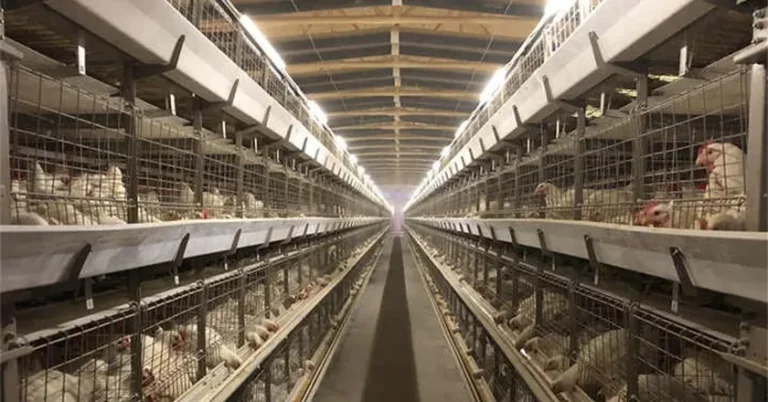
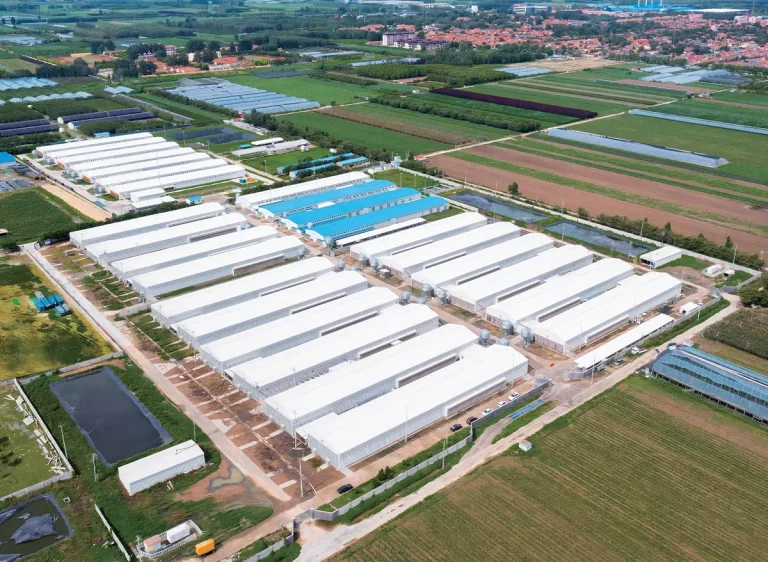
A steel structure poultry house is a prefabricated steel building designed for layer, broi…
سنرد على استفسارك في غضون 24 ساعة. للاستفسارات العاجلة، يرجى الاتصال بنا عبر WhatsApp: +86 133 6144 9578 أو الاتصال بنا مباشرة.
*نحن نحترم خصوصيتك. جميع المعلومات المقدمة سرية للغاية.
سيتم استخدام بياناتك فقط للرد على استفسارك. نحن لا نرسل أبدًا رسائل بريد إلكتروني أو رسائل ترويجية غير مرغوب فيها.