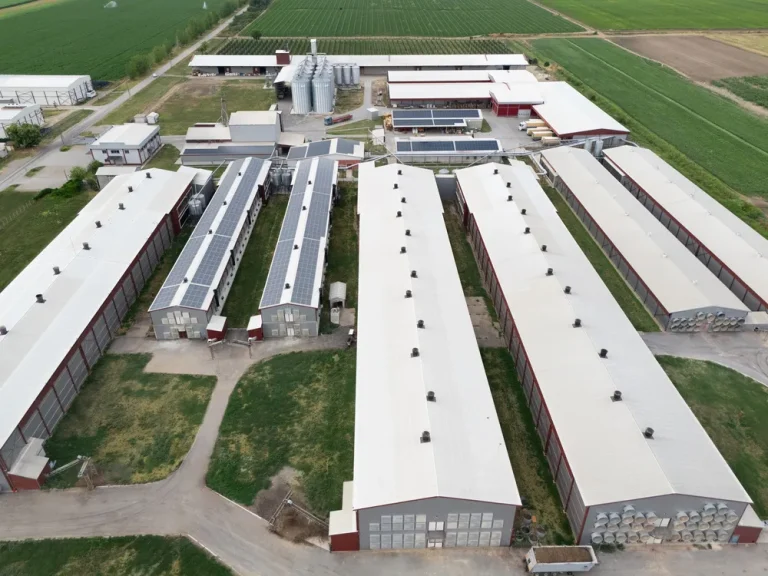
Running a poultry project without the right equipment feels “fine” at first—until feed waste climbs, water leaks soak litter, and heat stress hits your flock. Then costs spike fast. The fix is a well-matched system: housing, cages, feeding, drinking, climate control, and manure treatment designed to work together.
The equipment used in a poultry farm includes the poultry house (steel structure), cage or floor systems, feeding systems, drinking equipment (often nipple drinkers), ventilation and climate control, brooding/heater setup for chicks, and manure collection/treatment. For egg production, add egg handling equipment (collection, grading, washing, packing). The best setups integrate all equipment so birds stay comfortable, clean, and productive.
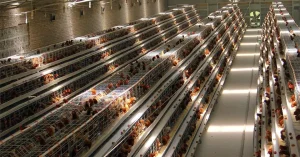
Lồng nuôi loại A
Cấu trúc bài viết
What are the main types of poultry equipment in a modern poultry farm?
Poultry house equipment: what must every poultry house include?
Cage systems vs floor systems: which is ideal for a poultry farm?
Feeding systems: how does a feeder design affect feed distribution and cost?
Drinking equipment: why are nipple drinkers and waterers so common?
Ventilation system & climate control: how do air flows and relative humidity protect bird health?
Brooder, heater, and warmth and light: what do chicks need to brood and grow?
Egg production equipment: what egg handling and egg handling equipment are needed?
Handling equipment & biosecurity: what equipment keeps farms safer and easier to manage?
Turnkey poultry farm equipment checklist: how to choose reliable suppliers and a system for poultry projects?
What are the main types of poultry equipment in a modern poultry farm?
When people ask me “What equipment is used in a poultry farm?”, I break it into 6 working blocks. Modern poultry projects run best when these blocks connect like one machine:
Poultry house structure (steel frame, insulation, doors, lighting)
Bird system: cage or floor/coop design
Feeder and feed storage + delivery
Drinker and water supply (lines, filters, medicator)
Ventilation and climate control
Manure collection and treatment equipment
These are the core types of equipment that support both broilers and layers. Your farm size, climate, and market goal decide the exact models, but the blocks stay the same.
As a turnkey engineering supplier, we don’t sell “single parts” and hope they fit. We design the system for poultry so your equipment matches the building size, bird density, and management style.
Poultry house equipment: what must every poultry house include?
A poultry house is not just a building—it’s a controlled environment for poultry birds. The baseline equipment includes structure + insulation, lighting, and basic airflow control. FAO notes that housing upgrades focus on providing an environment that meets birds’ thermal needs, especially for newly hatched birds that struggle to regulate body temperature.
Here’s what I consider “non-negotiable” equipment in a serious poultry farm:
Steel structure house (roof, sidewalls, insulation)
Curtains or inlet systems for air control
Lighting (including dimming control if needed)
Footbath/entry control for biosecurity
Service corridor for easy feed distribution and maintenance
If you run a chicken coop style farm, the equipment list is smaller, but the same principles still apply: keep birds dry, comfortable, and protected.
Pro tip from our project work: If the building is wrong, even the best poultry equipment can’t save performance. Start with house dimensions, airflow path, and future expansion.
Cage systems vs floor systems: which is ideal for a poultry farm?
This question comes up in almost every farm business planning call. Choosing between a cage system and a floor system depends on your goals: labor, biosecurity, and egg collection (if you do egg production).
Quick comparison table: cage vs floor
| Hệ thống |
Phù hợp nhất cho |
Key equipment |
Typical benefits |
| Lồng |
Layers, high-density farms |
cage rows, automatic feeder, nipple drinker, manure belts |
cleaner eggs, easier egg handling |
| Floor/Litter |
Broiler and some specialty |
feeders, waterers, ventilation system, litter tools |
flexible setup, lower upfront cost |
A cage setup is usually more “industrial.” It supports automation: automatic feeder, water lines, manure belts, and egg collection. A floor system can still be modern, but you must manage litter moisture carefully.
If you’re running types of poultry beyond chicken (like rabbit systems in the same project plan), we often design separate zones so hygiene and airflow don’t conflict.
Feeding systems: how does a feeder design affect feed distribution and cost?
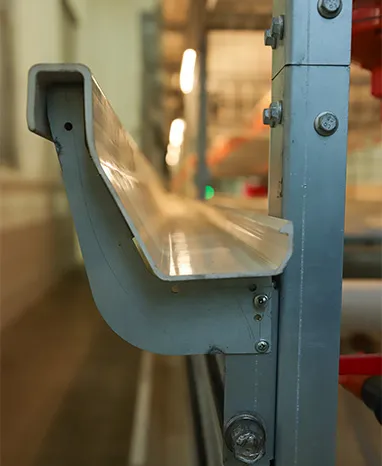
clean, reduce waste, and deliver consistent access for each bird.
In practice, we see 3 common setups:
Pan feeders (common for broiler farms)
Linear feeders (often used in cage lines and some breeder setups)
Trough-based delivery (especially where buyers ask for specially designed feed troughs)
A good system improves feed distribution and keeps birds calmer. When feed access is uneven, birds crowd, weaker birds lose out, and performance drops.
What I look for in equipment specs:
Accurate feed level control
Easy cleaning
Strong drive motor and reliable sensors
Smooth corners (less injury risk, better animal welfare)
In short: a poultry producer does not just “buy a feeder.” They buy stability.
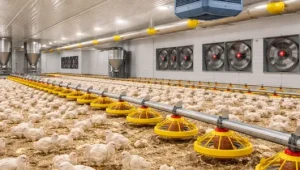
Integrated Poultry House – Feeding + Climate Control
Drinking equipment: why are nipple drinkers and waterers so common?
Clean water is basic, but the delivery method changes everything. Many farms now use enclosed nipple systems because they reduce contamination and leakage. The Poultry Site explains that enclosed drinker systems reduce debris contamination and minimize water leakage onto the floor; birds drink by pushing a pin.
Key drinking equipment options:
Nipple drinker lines (common in modern poultry)
Cup drinkers
Traditional waterers / open bowls (more common in small farms)
Why nipple drinker lines win (most of the time)
Cleaner water, less litter wetness
Lower leakage risk
Easier medication through lines
Better fit for automation
Breeder companies even publish operational guidance such as flow ranges and birds-per-nipple targets (example guidance: high-flow nipple drinkers and recommended birds-per-nipple).
Must-have add-ons in drinking equipment:
Filters + pressure regulators
Water tanks (or header tank)
Medicator
Flush valves and end-line drains
Proper nozzle/nipple height adjustment (critical as chick grows)
If you’ve ever dealt with wet litter, you know the pain. This is where the right drinker setup pays for itself.
Ventilation system & climate control: how do air flows and relative humidity protect bird health?
This is the section many new investors underestimate. Your ventilation system is your flock’s “air engine.” It controls moisture, heat, and air quality.
Several industry guides commonly recommend keeping house relative humidity in a controlled band. For example, one ventilation resource suggests 50–70% RH, noting that too low can cause dust, while too high can lead to wet litter and ammonia issues.
Other sources discuss targets like 40–60% as a practical goal depending on conditions and moisture control strategy.
A simple “humidity risk chart” (easy to remember)
| Relative humidity |
What you might see |
What to do |
| Too low |
Dust, higher heating costs |
Adjust ventilation + manage heat |
| Good band |
Dry litter, stable air quality |
Maintain settings |
| Too high |
Wet litter, ammonia risk |
Increase airflow, check leaks |
This matters because air flows help remove moisture from birds and manure. If moisture stays, litter gets wet, ammonia rises, and bird health suffers.
For equipment selection, we match:
Fan capacity + inlet design
Temperature sensors
Humidity sensors
Controller (your control system)
Optional fogger/cooling pad in hot climates (fogger systems are common for cooling)
A good control system makes ventilation simple. It keeps relative humidity stable and supports predictable performance.
Brooder, heater, and warmth and light: what do chicks need to brood and grow?
A chick is sensitive. Early days decide everything. If you miss brooding conditions, you can lose growth and uniformity quickly.
Core equipment here:
Brooder (gas or electric)
Heater (house heating or local brooding)
Sensors and controller
Lighting plan (that “warmth and light” combo is real)
FAO notes newly hatched birds have limited ability to control body temperature and need supplementary heating, especially in the first days after hatch.
For practical management, I like a simple rule: provide sufficient heat where the chick is, not just in the air. Floor temperature matters.
Also, brooding is not just heat. It’s water + feed + calm. That’s why we design brooder zones so chick can find water fast and start eating early.
Egg production equipment: what egg handling and egg handling equipment are needed?
If you run layers, egg handling becomes your profit center. The goal is to reduce breakage, keep eggs clean, and pack fast.
A full egg line may include:
Egg collection belts or trays
Central egg conveyor
Egg grading and packing unit
Optional washing and drying
Storage room and logistics flow
USDA’s egg grading manual discusses washing, grading, and packing operations and equipment as part of egg handling systems and inspection frameworks.
Industry groups also highlight that grading/washing/packing equipment has management and maintenance risks that must be controlled.
Egg handling equipment checklist (layer farms)
Collection: belts, elevators, transfer points
Inspection: candling, reject lanes
Grading: weight sorting
Packing: trays/cartons/cases
Coding: date/traceability
Cleaning: wash/dry modules where required
I also remind buyers: egg equipment selection must match throughput. For example, commercial grading stations are often described in “eggs per hour” capacity by suppliers.
One more detail: egg flow layout should be straight and clean. It saves labor and reduces damage.
Handling equipment & biosecurity: what equipment keeps farms safer and easier to manage?
Your farm can have great cages and feeders, but poor handling ruins efficiency. Every big poultry farm needs basic handling equipment for daily work.
Common items:
Carts and tools for feed and supplies (hand-operated and can be carried tools still matter)
Cleaning tools (including a wall cleaner for dust and cobweb control)
Entry sanitation: footbaths, hand wash stations
Protective clothing storage
Rodent control plan (not “equipment,” but part of system thinking)
This is also where biosecurity becomes real. You want simple barriers that workers will actually use. If it’s complicated, people skip it.
For bird processing steps like debeaking (used in some layer management practices), the goal is to follow local regulations and welfare guidelines. I’m not here to push one practice; I’m here to make sure your equipment plan supports compliance and animal welfare.
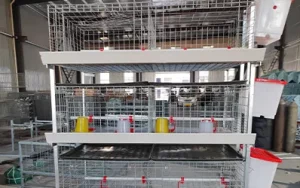
Lồng nuôi gà H-Type đơn giản
Turnkey poultry farm equipment checklist: how to choose reliable suppliers and a system for poultry projects?
Now we reach the “Action” part of AIDA. If you’re planning a new poultry farm or upgrading, you don’t want random machines. You want a solution.
As a manufacturer and engineering supplier, we deliver turnkey poultry and rabbit farming systems integrating:
Steel-structure houses
Cage systems
Feeding and drinking equipment
Climate control and ventilation
Manure collection and treatment
FAO highlights that poultry by-products can become a risk to soil, water, and air quality if not managed properly—so manure management is not optional.
Turnkey buyer checklist (simple, but powerful)
1) Define the production goal
Broiler? Layer? Breeder? Mixed?
Target number of birds and expansion plan
2) Confirm the equipment scope
Housing + ventilation + feeding + drinking
Manure system
Egg handling (if egg production)
3) Ask for engineering outputs
Layout drawings
Bill of materials
Power/water requirements
Installation and training plan
Spare parts list
4) Choose the right partner
Proven projects
Stable materials (galvanized steel grade, corrosion protection)
QA checks and commissioning support
Local distributor support if needed
Câu hỏi thường gặp
What is the most important poultry farm equipment to start with?
Start with the poultry house, ventilation system, feeding systems, and drinking equipment. If those are right, birds stay comfortable and you can manage cost. Then add automation like manure belts or egg handling equipment.
Do broiler farms and layer farms use the same equipment?
They share core equipment (housing, feeder, drinker, ventilation), but layer farms often need cage systems and egg handling equipment. Broiler farms focus more on brooder/heater setup and floor feeding/watering layouts.
Are nipple drinkers better than traditional waterers?
Often yes in modern poultry because they reduce contamination and leakage. Enclosed nipple systems help keep litter dry and support clean water delivery.
What equipment helps control ammonia and moisture in a poultry house?
Ventilation fans, inlets, sensors, and a good control system. Keeping relative humidity in a healthy range helps reduce wet litter and ammonia risk.
What egg handling equipment is needed for egg production?
At minimum: collection belts/trays, conveyors, grading, and packing. Washing/drying and coding can be added depending on market rules and customer needs.
How do I choose a turnkey poultry equipment supplier?
Choose a supplier who can deliver engineering design, manufacturing, installation guidance, commissioning, and after-sales parts. Ask for past project references, layout drawings, and a clear bill of materials.
Key takeaways (bullet summary)
The core poultry farm equipment blocks are: poultry house, cage/floor system, feeder and feed delivery, drinker and water lines, ventilation/climate control, and manure handling.
Nipple drinker lines and enclosed systems help keep water clean and reduce leaks, improving litter conditions.
A strong ventilation system and control system protect bird health by managing moisture, temperature, and air quality.
Chicks need proper brooding: brooder, heater, and stable warmth and light—especially in the first days after hatch.
For layers, egg handling is essential: collection + grading + packing (and washing where required).
The best outcomes come from a turnkey approach where equipment is engineered as one integrated system—not assembled randomly.
If you tell me your bird type (broiler/layer/breeder), target capacity, and local climate, I can map a complete equipment list (with options) and a practical layout plan for your poultry farm project.













 09:49
09:49