- Core Definition and Design Features of A-Type Chicken Cages
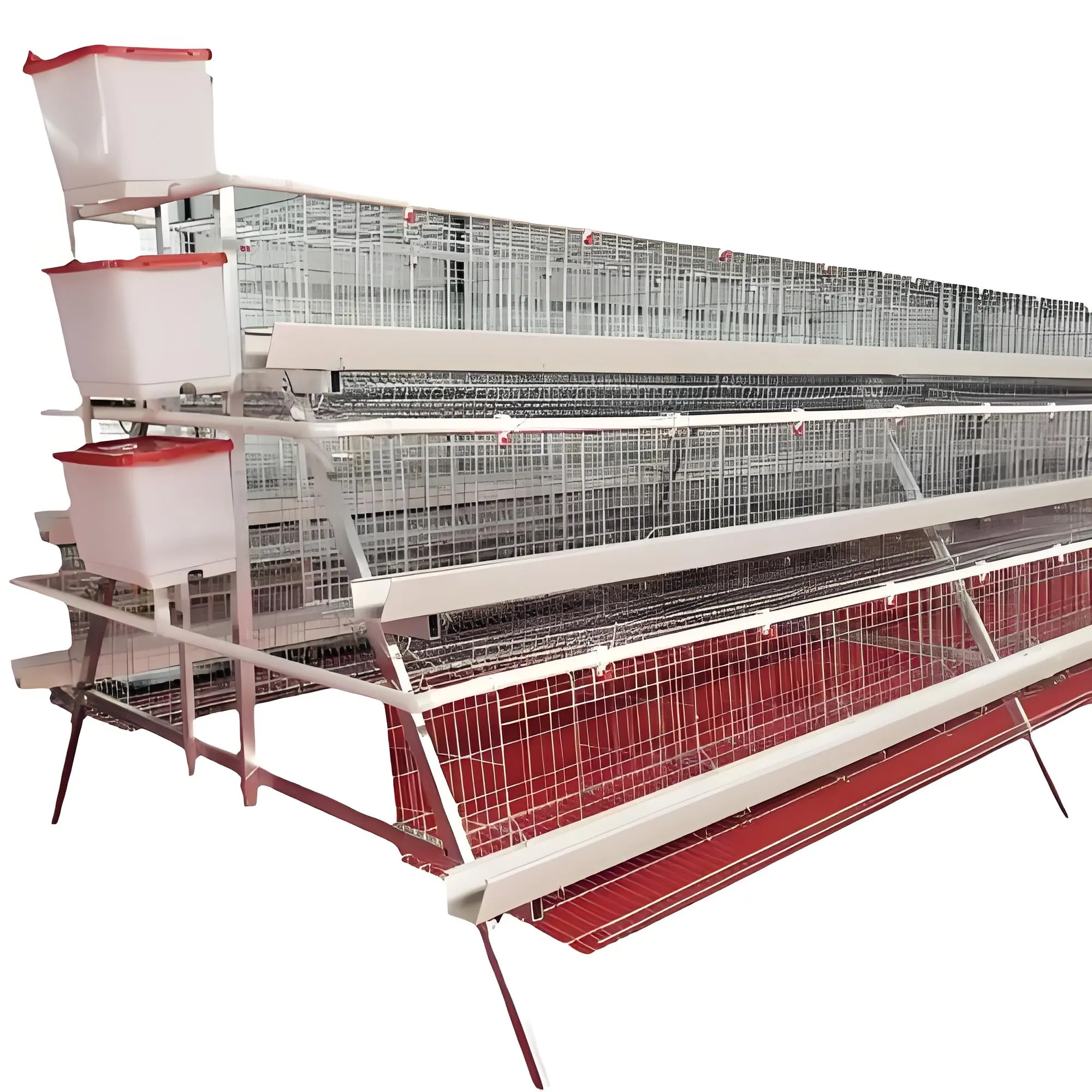
A-Type chicken cages are a classic type of automated stacked cage equipment, named for their overall frame in the shape of a capital letter “A”, and are the mainstream cage system for large-scale commercial layer breeding. Adopting a multi-layer, stepped stacking design, each layer of cages is staggered without upper and lower shielding. It is core-adapted to automated feeding, drinking, egg collection, manure removal and other modules, featuring high space utilization, easy operation and controllable breeding density. It is suitable for the standardized production needs of small to medium and large layer farms, and is also the preferred entry-level automated cage equipment for poultry breeding in 2026.Overall Real Scene of 3-Layer Stepped A-Type Chicken Cages
Designed with a modular assembly structure, the cage body takes hot-dip galvanized steel wire mesh as the core material, with a rigid frame and excellent corrosion resistance; each layer of cage positions is independently separated to ensure the activity space of chickens and avoid group fights; the cage bottom is designed with a reasonable inclination to ensure eggs roll down to the egg collection belt naturally and reduce the egg breakage rate; the stepped layout makes manure removal and ventilation operations free of dead corners, suitable for the transformation and new construction needs of simple chicken houses and standardized breeding plants.
- Core Structure and Configuration of A-Type Chicken Cages
(1) Main Frame
Welded with national standard square pipes/angle steel and treated with hot-dip galvanizing, with a coating thickness of ≥80μm, it is corrosion and vibration resistant, can bear the weight load of multi-layer cages and flocks, is suitable for the long-term indoor breeding environment, and has a service life of 10-15 years. The frame is of modular design, which can be flexibly spliced according to the size of the chicken house. The conventional number of layers of a single set of frame is 3-4, adapting to the height requirements of different chicken houses.Detail of Hot-Dip Galvanized Main Frame of A-Type Chicken Cages
(2) Cage Mesh
- Material: Hot-dip galvanized cold-drawn steel wire with a wire diameter of 2.0-2.5mm. The mesh size is designed according to the layer breed (1.5×1.5cm for brooder cages, 2.5×5cm for adult chicken cages). The mesh is smooth without burrs to prevent chicken claw scratches and infections.
- Cage bottom: With an inclination angle of 7-8°, it adopts an encrypted steel wire mesh to increase the grip of chickens and ensure eggs roll down smoothly. The cage bottom is detachable for easy cleaning and replacement.
- Cage door: Designed with an external snap fastener, it is easy to operate and prevents chickens from escaping. A single cage door is suitable for the breeding density of 3-5 adult chickens to ensure the feeding and drinking space.Detail of Cage Mesh and Cage Bottom of A-Type Chicken Cages
(3) Standard Equipped Automated Auxiliary Parts
A-Type chicken cages are automation-friendly cage equipment that can seamlessly integrate core breeding automation modules, with basic configurations including:
- Nipple drinking system: A drinking line is arranged on the outer side of each layer of cages, with a nipple spacing of 3-4cm, equipped with a water line pressure regulating valve and filter to ensure clean drinking water and stable flow, and reduce drinking water waste and humidity in the cage.
- Trough feeding system: A feeding trough is arranged at the front end of the cage, adapted to a screw/chain automatic feeder. The depth of the feeding trough is ≥8cm to prevent chickens from scratching feed, and the feeding amount can be precisely adjusted.
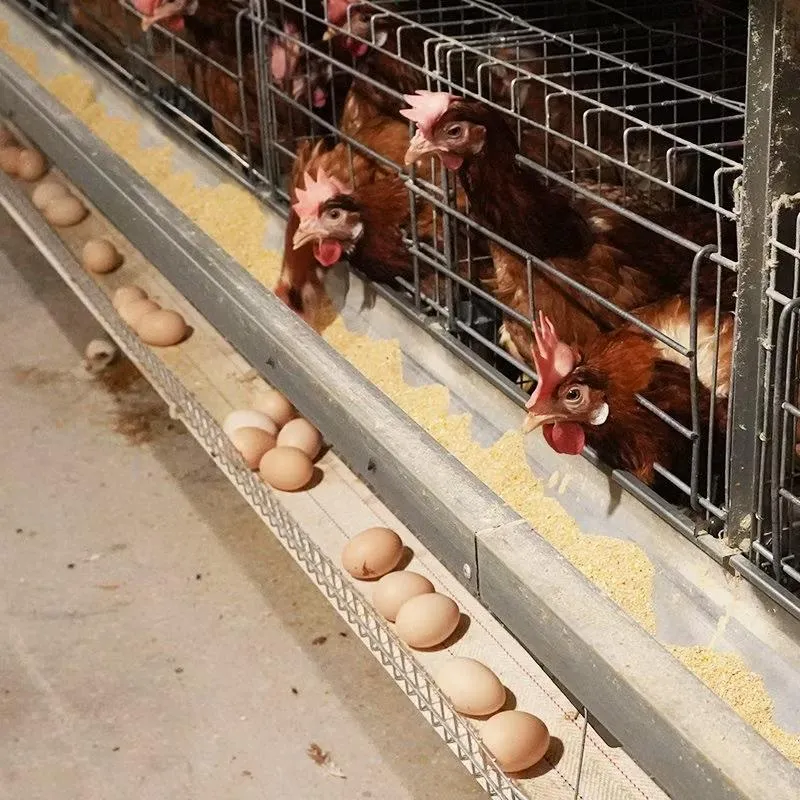
- Belt-type egg collection system: An egg collection belt is arranged under each layer of cages, aligned with the rolling port of the cage bottom. Eggs are transported to the terminal sorting table through the egg collection belt, realizing the whole process automation, and reducing the egg breakage rate and labor cost of manual egg collection.
- Manure removal system: Adapted to a scraper/belt manure remover. The stepped layout allows the manure removal equipment to operate horizontally under the cage body, removing manure in a timely manner, reducing ammonia accumulation and improving the sanitary level of the chicken house.Matching of Automated Feeding, Egg Collection and Manure Removal System for A-Type Chicken Cages
(4) Auxiliary Accessories
Including cage fixing buckles, drinking line brackets, feeding trough flanges, egg collection belt idlers, manure remover guide rails, etc. All accessories are made of hot-dip galvanized material, matched with the main frame to ensure system stability, and are easy to purchase and replace.
- Core Advantages of A-Type Chicken Cages
- High Space Utilization and Controllable Breeding Density
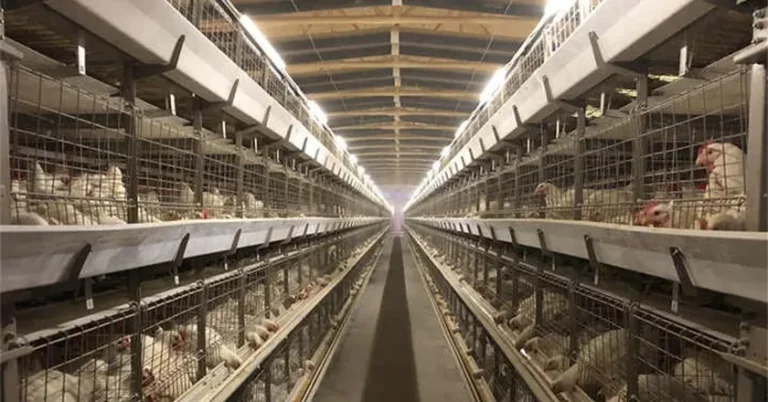
The stepped multi-layer design maximizes the use of the vertical space of the chicken house. Under the conventional layout of 3-4 layers, 15-20 adult chickens can be raised per square meter of the chicken house, much higher than free-range and simple cage equipment; at the same time, the number of chickens raised in a single cage can be adjusted according to breeding needs, balancing density and the basic activity space of chickens, and avoiding stress and disease transmission caused by overcrowding.Space Layout Real Scene of 4-Layer A-Type Chicken Cage in Chicken House
- Strong Automation Adaptability and Greatly Reduced Labor Costs
With a simple frame structure and no complex internal shielding, it can directly integrate a full set of automated breeding equipment to realize unmanned operation of the whole process of feeding, drinking, egg collection and manure removal. A single set of system can be managed by 1-2 people. Compared with manual breeding, the labor cost is reduced by more than 60%, and the operation efficiency is higher, suitable for the large-scale expansion needs of farms.
- Controllable Breeding Environment and Improved Egg Production Stability
The stepped layout ensures that each layer of cages can obtain sufficient light and ventilation without air flow dead corners. Cooperating with the automated manure removal system, it can effectively control the ammonia concentration and humidity of the chicken house and reduce the occurrence of respiratory diseases; the inclined design of the cage bottom and automated egg collection make eggs leave the cage body quickly, reducing the rate of dirty and broken eggs, and the egg qualification rate can reach more than 98%.
- Easy Installation and Maintenance, Wide Adaptability
The modular assembly structure does not require complex construction equipment, can be quickly renovated and installed in the existing chicken house, and is also suitable for the construction of new standardized plants; each part of the cage body is independently designed, and can be replaced individually after damage without overall disassembly; the hot-dip galvanized material is corrosion resistant and easy to clean. Daily maintenance only needs to regularly check the tightness of accessories and the operation status of automated equipment, with low maintenance cost.
- Moderate Investment Cost and Short Return on Investment Cycle
Compared with H-type stacked cages and welfare-enriched cages, A-type chicken cages have lower upfront equipment purchase and installation costs, and are a cost-effective choice for the automation upgrade of small and medium-sized farms; with supporting automated equipment, it can realize the improvement of egg production rate and the reduction of labor and feed costs. For a conventional A-type chicken cage system with a scale of 10,000 layers, the return on investment cycle can be controlled within 1.5-2 years.
- Adaptable Scenarios and Breeding Scale
(1) Core Adaptable Scenarios
- Farms targeting conventional commercial egg production, which do not need to meet stringent animal welfare standards such as the EU, and focus on egg production efficiency and cost control;
- Small and medium-sized farms with chicken houses of simple brick-concrete structure and light steel structure, with a chicken house height of 3.5-5m and no conditions for the transformation of complex ventilation and temperature control systems;
- Traditional farms planning to gradually realize automation upgrade, transitioning from manual breeding to semi-automation and full automation, reducing the threshold and risk of upgrade;
- Breeding areas in temperate and subtropical zones with relatively mild climate, without the need for special temperature control design for extreme high temperature and humidity. The natural ventilation + simple mechanical ventilation of A-type chicken cages can meet the needs.
(2) Adaptable Breeding Scale
Suitable for the breeding scale of 5,000-50,000 layers, it is the core choice for small and medium-sized farms; it can also be used as the cage configuration of branch farms and standardized breeding units of large integrated breeding enterprises to realize the standardized management of each breeding unit.
- Key Points for Selection and Installation of A-Type Chicken Cages
(1) Core Selection Indicators
- Material standard: Confirm that the frame and mesh are made of hot-dip galvanized material (not electro-galvanized) with a coating thickness of ≥80μm, the welding points are smooth and free of false welding, and you can ask the supplier to provide a material inspection report;
- Size matching: Determine the cage size according to the breeding layer breed (such as Roman Brown, Hy-Line Brown). The conventional size of an adult chicken cage is 1.8-2.0m in length, 0.45-0.5m in depth and 0.35-0.4m in height, suitable for the breeding density of 3-5 chickens per cage;
- Automation supporting: Prioritize the selection of A-type chicken cages that can be seamlessly connected with the existing/planned feeding, egg collection and manure removal equipment, confirm the standardization of accessory interfaces, and avoid difficulties in later upgrade and adaptation;
- Manufacturer qualification: Choose manufacturers with large-scale production experience, who can provide on-site installation and after-sales maintenance services to ensure the quality of cage equipment and the stability of system operation.
(2) Key Installation Requirements
- Chicken house foundation: The ground of the chicken house shall be flat and hardened, with a load-bearing capacity of ≥500kg/㎡, and reserve the operation channel (width ≥1.2m) and maintenance channel (width ≥0.8m) for automated equipment;
- Layout design: Adopt single-row/double-row layout according to the length and width of the chicken house, with a distance of ≥0.5m between the cage body and the chicken house wall to ensure ventilation and operation space, and a layer spacing of ≥0.6m for multi-layer cages to facilitate manure removal and inspection;
- Equipment calibration: After installation, calibrate the level of the feeding trough and egg collection belt, control the inclination angle of the cage bottom at 7-8°, and adjust the height of the drinking nipple to adapt to the chicken body shape (the height of the drinking nipple from the cage bottom for adult chickens is 30-35cm) to ensure the smooth operation of each automated module;
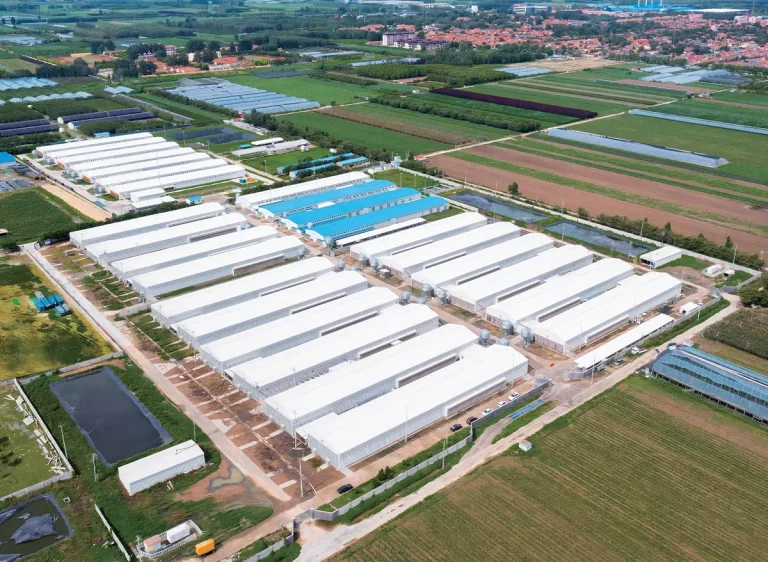
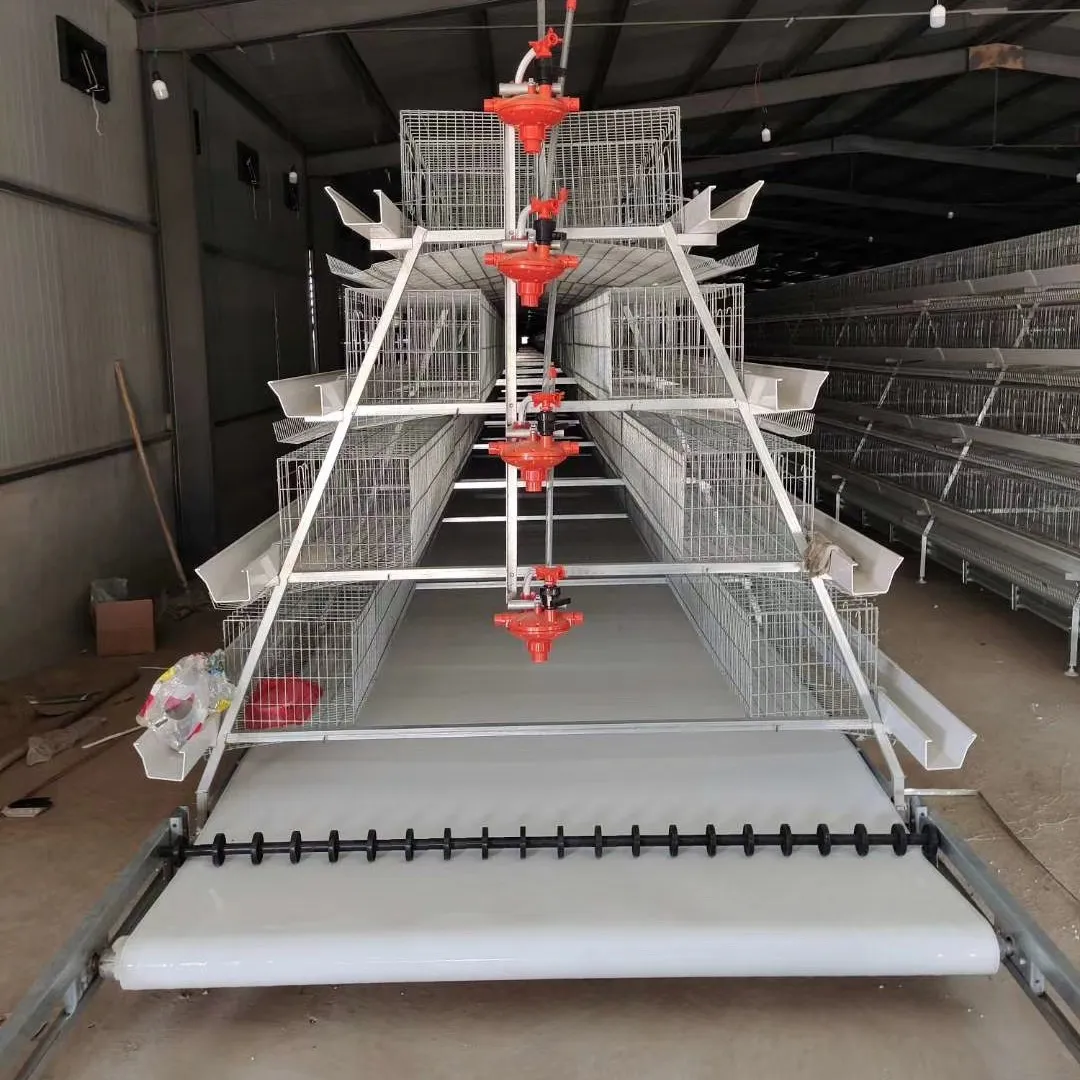
- Fixing and reinforcement: Fix the cage frame and the ground with expansion bolts, and lock the splicing parts with buckles to prevent the cage body from shaking and shifting due to chicken activities and equipment operation during breeding.Standardized Installation and Layout of A-Type Chicken Cages in Breeding Farm
- Daily Operation and Maintenance Specifications
(1) Key Points of Daily Operation
- Density control: Strictly raise chickens according to the density of 3-5 adult chickens per cage to avoid overcrowding, and timely separate cages according to the growth stage of chickens to ensure the feeding and drinking space;
- Equipment inspection: Check the operation status of the automated feeding, drinking, egg collection and manure removal system every day, confirm that there is no jamming, material leakage and water leakage, the egg collection belt has no deviation, and the manure removal equipment removes manure in a timely manner;
- Environmental management: Cooperate with the chicken house ventilation equipment to ensure the daily ventilation time of ≥8 hours, increase the ventilation frequency in high temperature in summer, regularly clean the cage body and the ground of the chicken house to keep it dry and clean;
- Egg product management: Timely clean the dirty and broken eggs on the egg collection belt, regularly disinfect the egg collection equipment to avoid egg product pollution and improve the egg product qualification rate.
(2) Regular Maintenance Requirements
- Weekly: Check the tightness of cage buckles and frame bolts, and tighten the loose parts in a timely manner; clean the drinking line filter to ensure unobstructed drinking water; wipe the egg collection belt to remove stains and adhered egg liquid.
- Monthly: Conduct a comprehensive inspection of the cage mesh and frame, timely repair and replace damaged mesh and rusted welding points; lubricate the transmission parts of automated equipment (such as feeder chain, manure remover guide rail).
- Quarterly: Conduct a comprehensive cleaning and disinfection of the cage body, rinse the cage body and accessories with a high-pressure water gun, spray disinfectant after drying; check whether the hot-dip galvanized coating falls off, and touch up the anti-corrosion paint in time for the fallen parts.
- Annual: Conduct a comprehensive overhaul of the full set of A-type chicken cage system, replace the aging accessories (such as drinking nipples, egg collection belts, manure remover scrapers), evaluate the loss of the frame and cage body, and formulate an annual maintenance plan.
- Upgrade and Expansion Directions of A-Type Chicken Cages
- Automation upgrade: Upgrade from semi-automation (manual assisted feeding and manure removal) to full automation, add silos, automatic temperature control systems and environmental monitors (temperature, humidity and ammonia concentration) to realize real-time monitoring and intelligent adjustment of breeding data;
- Cage transformation: For the demand of increasing breeding density, upgrade the 3-layer cage body to 4 layers if the height of the chicken house permits, and cooperate with high-efficiency manure removal and ventilation equipment to further improve space utilization;
- Improvement of supporting facilities: Add a chicken house light control system (timed switch, brightness adjustment) and automatic disinfection equipment to improve the standardization of the breeding environment and further increase the egg production rate;
- Large-scale expansion: After the stable operation of a single set of A-type chicken cage system, replicate standardized breeding units, expand the breeding scale, and realize unified management, unified distribution and unified sales of each unit.
- Core Precautions
- Avoid blindly pursuing high density: Excessively increasing the number of chickens raised in a single cage will lead to chicken stress, decreased egg production rate and increased risk of disease transmission. The density must be strictly controlled according to the breed and growth stage;
- Attach importance to anti-corrosion maintenance: The high temperature, high humidity and high ammonia environment in the chicken house is easy to cause the cage body to rust. Regular cleaning and anti-corrosion treatment must be done to extend the service life of the cage equipment;
- Adapt to the chicken house climate: In high temperature and high humidity areas (such as Southeast Asia and southern China), it is necessary to equip A-type chicken cages with water curtains, air coolers and other temperature control equipment to make up for the insufficient ventilation of the stepped layout in extreme climates;
- Choose standardized accessories: When purchasing replacement accessories daily, prioritize the selection of original or standardized accessories to ensure matching with the original system and avoid equipment failures caused by incompatible accessories.
- Summary
With the core advantages of high space efficiency, strong automation adaptability, moderate investment cost and easy maintenance, A-type chicken cages have become the most cost-effective cage choice for large-scale layer breeding in 2026, especially suitable for the automation upgrade and standardized production needs of small and medium-sized farms. Its stepped design not only balances breeding density and operational convenience, but also can seamlessly integrate a full set of automated breeding equipment to achieve the goals of cost reduction, efficiency increase and improved egg production stability.
In the process of selection, installation and operation, it is necessary to strictly control the material standard, size matching, density control and daily maintenance, and select the appropriate configuration and upgrade direction according to the actual scale, chicken house conditions and development plan of the farm, so as to give full play to the system advantages of A-type chicken cages and maximize the breeding benefits.













 08:44
08:44