










Sourcing Poultry Equipment Manufacturers in China: Buyer Guide
Sourcing poultry equipment from a Chinese manufacturer means controlling four variables di…


Ознакомьтесь с нашими последними новостями,
 11:12
11:12 Low egg output, high labor cost, wet manure, and poor house airflow can quietly drain profit from a poultry farm. When systems do not work together, daily management becomes harder. A well-designed h type automatic solution fixes that by linking housing, feeding, drinking, egg handling, and waste removal into one efficient workflow.
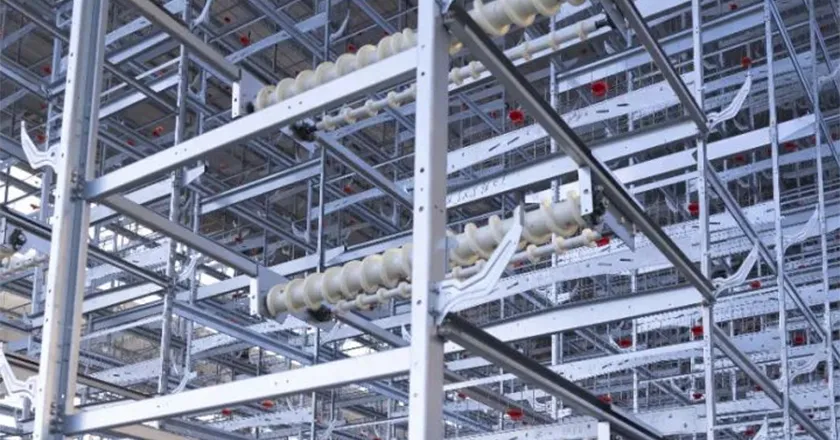
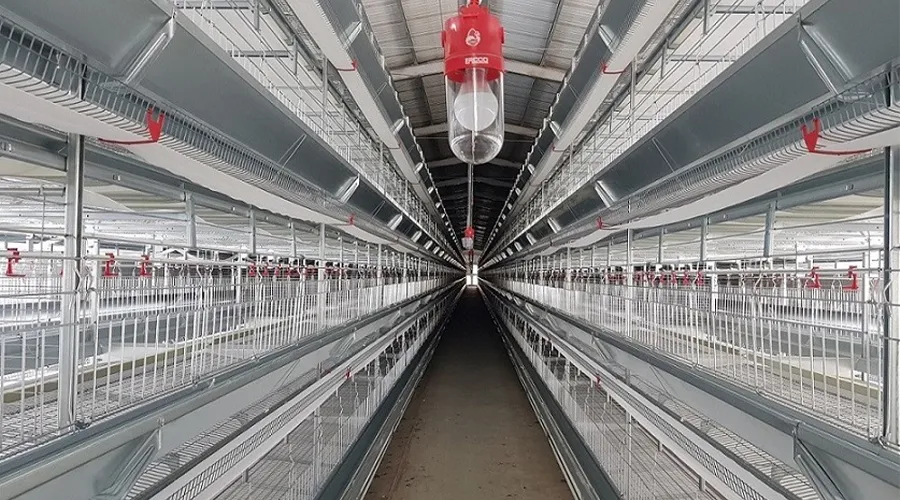
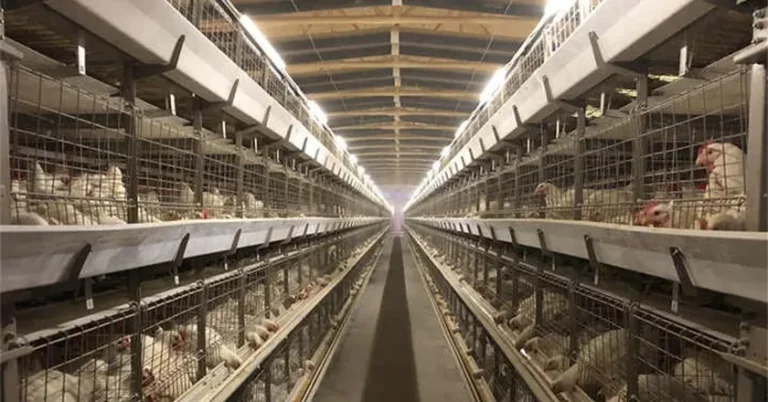
An H Type Automatic Layer Battery Cage is a vertical battery cage system for egg layer chicken production. It uses stacked tier rows, automatic feeding, nipple drinking, automatic egg collection, and a manure cleaning system to improve space use, reduce labor, and support cleaner, more stable egg production in a modern poultry farm. Good layer management also depends on ventilation, lighting, water, and routine care.
Автоматическая батарея клеток H-типа
What is an h type battery cage system?
Why is h type automatic design popular in a modern poultry farm?
How does a layer battery cage system improve egg production?
What systems are included in an automatic egg layer chicken cage?
How does the egg collection system work?
Why is manure cleaning so important in a chicken house?
How do ventilation and the environmental control system support flock health?
What should buyers know about tier, house design, and farm layout?
Why do turnkey poultry farming solutions lower project risk?
How do you choose the right farming equipment manufacturer?
An h type cage system is a vertical housing layout for chicken layers. Instead of using a wide floor plan, it stacks birds across multiple tier levels inside one chicken house. This allows a farm to raise more birds in the same building footprint while keeping feeding, watering, and egg handling organized. FAO materials on poultry housing describe commercial cage housing for laying hens and emphasize that housing design should support management, protection, and efficient production.
A modern layer battery cage is more than wire and steel. It is part of a full working line that often includes a feeding system, drinking water system, egg collection system, conveyor, manure removal, and ventilation support. That is why serious buyers now evaluate the whole battery cage system for layers, not just the metal cage itself.
In practical project planning, we see that the best results come when the cage equipment is matched with the building, climate, power supply, and management targets from the beginning. That is why turnkey supply matters for large and medium chicken farm projects.
The main reason is efficiency. A strong h type automatic layout improves space use, simplifies management, and helps reduce routine labor. In one house, the farm can combine automatic feeding, automatic egg collection, and automatic manure handling in a clear, repeatable flow.
Good management still matters. Hy-Line’s management guide makes clear that flock performance depends on feeding, water, lighting, body weight control, egg handling, and consistent routines. Organized housing makes those routines easier to maintain at scale.
This is why the modern battery cage model is widely used in commercial poultry production. It supports better labor organization, more predictable workflow, and easier scaling. For investors and distributors, that means the application of automatic systems is not just technical. It is also economic.
A good layer battery cage system helps keep flock conditions more uniform. Birds get feed and water more consistently. Eggs move out faster. Waste is removed on time. House air is easier to control. Together, these small improvements can help support steadier egg production.
Egg handling is especially important. Hy-Line’s layer guide emphasizes egg handling, shell quality, and routine collection as important parts of commercial layer management. When a farm uses automatic egg collection, eggs are exposed to dust, breakage risk, and handling stress for a shorter time.
Here is a simple view of how the system helps:
| System part | Main role | Farm benefit |
|---|---|---|
| Layer battery cage | Organizes birds by tier | Better space use |
| Automatic feeding | Delivers feed evenly | Повышение однородности стада |
| Nipple drinking water system | Supplies clean water | Lower waste, cleaner environment |
| Automatic egg collection | Moves eggs quickly | Fewer broken or dirty eggs |
| Manure cleaning system | Removes waste regularly | Better hygiene and air quality |
| Ventilation and controls | Stabilize the курятник | More consistent bird comfort |
This is why many farms now choose a full automatic egg layer chicken cage rather than upgrading one function at a time.
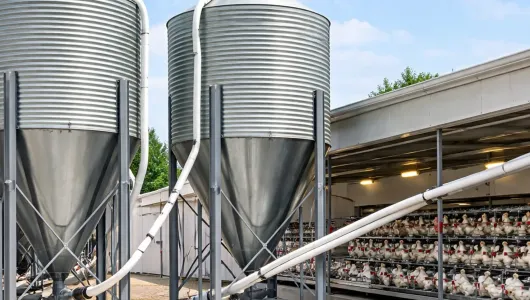
A standard automatic egg layer project usually includes the main cage, feed delivery, nipple water lines, egg belts, manure cleaning system, and a basic or advanced control system. Depending on project size, the farm may also include silos, climate equipment, lighting, and alarms.
The feeding system often includes an automatic feeder, trough line, and main feed transport. The drinking water system uses nipples, pressure regulators, and flushing sections. These elements matter because management guides for layers consistently stress reliable feed and water access as core production factors.
In a more advanced fully automatic project, farms may also use:
a central egg collection system
conveyor transfer
scheduled automatic manure removal
ventilation controls
a lighting system
an alarm system
This is what turns a simple poultry cage into real automatic poultry infrastructure.
Layer Farm — система кормления с центральным силосом
In most commercial systems, eggs roll gently from the cage floor onto an egg belt. That belt carries them along the row to a central conveyor or collection table. This is the core of automatic egg collection.
The benefit is not only speed. It is also cleanliness and consistency. Hy-Line management materials emphasize careful egg handling and proper routine collection to protect shell quality and reduce losses. Faster, gentler movement helps support those goals.
For a large layer chicken farm, this means:
lower manual handling
less breakage
cleaner eggs
faster collection workflow
easier labor management
That is why many buyers specifically ask for an h type automatic egg layer system with a built-in egg collection system instead of leaving egg handling manual.
Because manure affects more than smell. It influences moisture, insects, floor hygiene, and air quality. If chicken manure stays too long in the house, ammonia can rise and the environment becomes harder to manage. Aviagen’s ventilation guidance explains that poultry house ventilation must maintain bird comfort and support air quality under changing outside conditions.
That is why a strong manure cleaning system is a core part of an h type fully automatic layout. Belt-based manure cleaning under each tier allows regular removal and more controlled handling. FAO guidance on poultry production and housing also shows how house environment, ventilation, and waste handling affect successful management.
Key benefits of regular manure removal include:
better air conditions
cleaner working area
easier fly control
less moisture buildup
lower routine labor demand
In other words, a farm should never judge the value of a battery cage system by egg output alone. It should also judge it by how well it handles manure cleaning every single day.
A good environmental control system helps birds stay comfortable and productive. Even the best battery chicken cage will struggle if the house is too hot, too humid, or poorly ventilated. Aviagen states plainly that ventilation is a management tool used to keep birds as comfortable as possible regardless of ambient conditions.
In a real chicken house, this may include fans, air inlets, cooling pads, heaters, controllers, and sensors. The lighting system also matters, because layer performance depends on stable lighting schedules and careful flock management. Hy-Line’s guide repeatedly emphasizes the role of lighting and management routines in layer performance.
When we design turnkey systems, we do not treat climate equipment as an optional add-on. It is part of the core engineering package. Site temperature, humidity, utility conditions, and bird density all affect the final solution. That is why design experts will customize the house and ventilation plan instead of copying one design everywhere.
he farm layout and курятник plan decide how smoothly the project will run. A strong layout and chicken house design should match flock size, local climate, worker movement, feed route, egg room location, and manure discharge direction.
An h frame structure is efficient, but it must fit the building well. The number of tier levels, row spacing, service corridors, and clearance zones all matter. If those points are ignored, even high-quality automatic equipment can become difficult to manage.
A practical planning table looks like this:
| Design point | Почему это важно |
|---|---|
| Building width and length | Determines row arrangement |
| Tier number | Affects capacity and maintenance |
| Service corridor width | Supports daily workflow |
| Egg room position | Improves collection efficiency |
| Ventilation path | Supports house climate |
| Manure outlet direction | Improves waste handling |
| Utility line layout | Supports reliable operation |
This is where real turnkey engineering shows its value. Experts will customize the farm and house design for you according to site conditions and local climate, production goals, and future expansion plans.
A turnkey system brings the key parts together from the start: steel house, cage, feed, water, ventilation, lighting, eggs, and waste. That helps avoid mismatch between suppliers. It also makes installation, operation, and after-sales service more predictable.
For a medium or large poultry farm, that can lower project risk in several ways:
fewer compatibility issues
faster installation planning
simpler staff training
lower labor cost
more consistent daily management
This matters to farm owners, integrated poultry companies, investors, and distributors. Instead of buying disconnected parts, they get coordinated poultry farming solutions from one partner. In our experience, that is one of the biggest differences between product trading and engineering supply.
Turnkey thinking also supports long-term performance. The best projects move smoothly from production to raising, not because one single product is excellent, but because the whole system is designed to work together.
Start with engineering ability, not only price. A true farming equipment manufacturer should understand bird management, utility loading, house airflow, waste handling, and system integration. For a large poultry farm, equipment without design support often creates avoidable problems later.
A reliable supplier should be able to provide:
full poultry farm equipment integration
site-specific house design
matching of feeding system, drinking, eggs, and manure cleaning
installation guidance
after-sales technical support
project references
This is where experience matters. A supplier with strong research and development capability and an expert team with 20 or more years of project experience can usually solve layout and operation issues earlier, before they become site delays or management problems. Good buyers do not just compare price. They compare long-term value, service life, and system fit.
Imagine two farms with the same bird target. Farm A buys separate chicken cages, feed lines, ventilation fans, and egg conveyors from different sources. Farm B buys a coordinated h type automatic battery system with integrated house planning.
Farm A may save a little on the first quote. But Farm B often saves time during installation, reduces interface errors, and gets a more stable routine after startup. That affects labor, training, and maintenance from the first day.
That is why the pursuit of high-quality automatic equipment is not about luxury. It is about reliability. A working automatic poultry farm needs systems that speak to each other, not just parts that fit in the same building.
Автоматическая система селекционных клеток для выращивания родительского поголовья
What is an H Type Automatic Layer Battery Cage?
It is a vertical battery cage system for egg layer chicken production that uses stacked tier rows with automated feed, water, egg collection, and manure cleaning.
Is h type automatic better than a manual layer cage?
For medium and large farms, usually yes. An h type automatic system can reduce labor, improve workflow, and support cleaner egg handling and waste control.
Does the system include automatic egg collection?
In most commercial projects, yes. An automatic egg collection line uses belts and conveyor transfer to move eggs from the cage row to the collection area.
Why is manure removal so important?
Because manure affects moisture, air quality, insects, and routine hygiene. Ventilation and waste handling are major parts of poultry house management.
Can the chicken house and cage system be customized?
Yes. A proper turnkey supplier should customize the farm layout, row design, ventilation plan, and utility matching according to local conditions and project goals.
Is this system only for layers, not broiler production?
Yes, this article focuses on layer battery cage system applications for eggs. Broiler production uses different housing and management systems.
An h type battery cage system is a space-efficient solution for commercial egg layer production.
A complete system links cage, feed, water, eggs, ventilation, and manure cleaning into one workflow.
Automatic egg collection helps reduce breakage and supports cleaner eggs.
Good ventilation is essential for house comfort and air quality.
Regular manure removal is part of good poultry house management, not an optional extra.
Turnkey engineering can reduce project risk, lower labor cost, and simplify operation.
The best supplier should provide both poultry equipment and system design support.
Sourcing poultry equipment from a Chinese manufacturer means controlling four variables di…
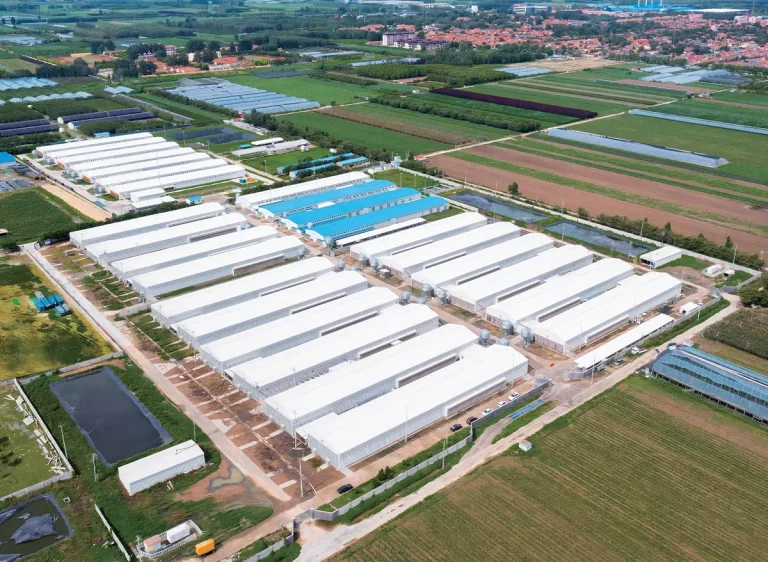
A steel structure poultry house is a prefabricated steel building designed for layer, broi…
Мы ответим на ваш запрос в течение 24 часов. По срочным вопросам свяжитесь с нами через WhatsApp: +86 133 6144 9578 или позвоните нам напрямую.
*Мы уважаем вашу конфиденциальность. Вся предоставленная информация является строго конфиденциальной.
Ваши данные будут использованы только для ответа на ваш запрос. Мы никогда не отправляем незапрошенные электронные письма или рекламные сообщения.