










Poultry House Ventilation Equipment: Sizing and Layout
Ventilation sizing starts with house volume and target hen weight, not fan brand. Tunnel s…


Veja as nossas últimas notícias,
 09:10
09:10 To specify a poultry environmental controller, define the house’s control zones first, then set sensor positions, ventilation stages, alarm outputs and failover behavior for each zone. Write each as a testable requirement in the tender, and add a witnessed acceptance test. Do not specify by brand or model alone.
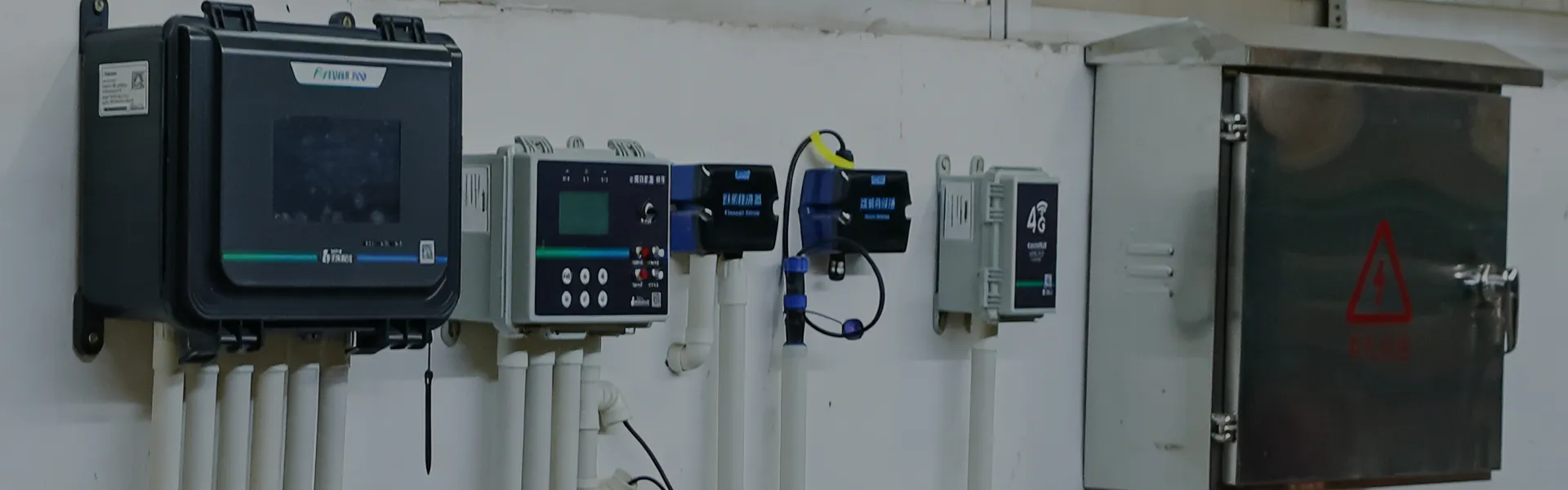
The search term is shared with building HVAC, cold storage and industrial process control. This guide covers only the controller that runs a poultry house: it reads temperature, humidity and pressure inside the house, then drives fans, air inlets, cooling and heating to keep the birds inside the range the breeder’s management guide sets for that strain and age.
Compared with general-purpose HVAC or industrial controllers, a poultry controller has to hold setpoints that change as the flock ages, run ventilation in stages, and keep working through a failed sensor or a power dip. Birds cannot be moved out while someone troubleshoots. A controller quoted from an HVAC catalogue needs to be checked against each of those three points before it goes into a bid.
Each step ends with a check you can run at commissioning.
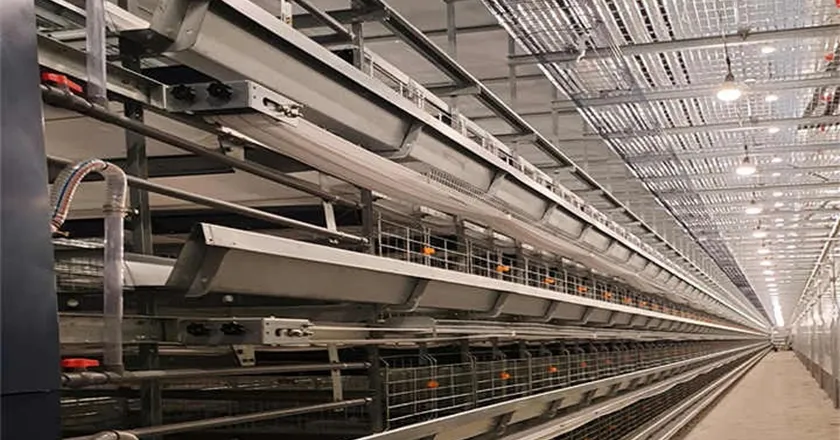
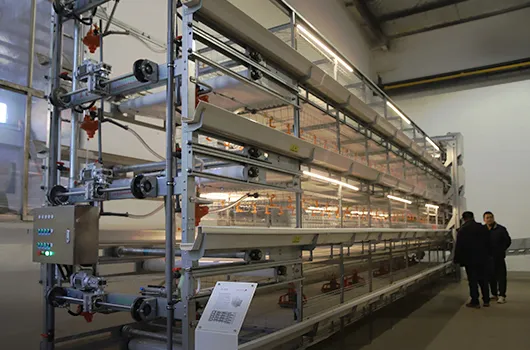
A zone is a group of fans, inlets and sensors that respond to the same readings. A short single-span broiler house can run as one zone. A long house, or one where part of the flock is at a different age, needs more than one.Cage houses add a vertical dimension. The Gaiola automática tipo H para bateria de postura in Mugong’s data comes in 3, 4, 5, 3+3 and 4+4 tier layouts with total height from 2,330 to 6,580 mm. A stack at the tall end can show a different air temperature at its top and bottom tiers, so one sensor at one height describes one tier only.
Check: a one-page drawing listing every zone with its fans, inlets and sensors. Ask each bidder to return it marked up.
Specify temperature and humidity sensors at bird level in every zone, and at more than one height in multi-tier cages. Add a static pressure sensor inside the house and an outdoor temperature and humidity sensor that sits in shade, away from exhaust air. Where air quality is in the tender, name ammonia or CO2 sensors explicitly.
Keep sensors clear of air inlets, heaters, wet areas, direct sun and fan discharge. A sensor beside a heater reports on the heater. Have the bidder submit the datasheet for every sensor type, and take the accepted tolerance from that datasheet instead of writing your own number into the tender.
Check: at commissioning, compare each sensor against a reference instrument and record the offset per sensor.
Stage names differ between suppliers, so require the tender response to list every stage the controller runs, with its trigger and outputs. A typical set looks like this:
| Stage | Usually Triggered By | Controller Drives | Acceptance Check |
| Minimum Ventilation | House temperature at or below the lower band; air quality is the driver | Fans on timed cycles, inlets at minimum opening | Fans cycle as programmed; inlet opening matches the setting |
| Transition | Temperature rising out of the minimum band | Additional fans staged in, inlet opening tied to static pressure | Static pressure holds steady when fan count changes |
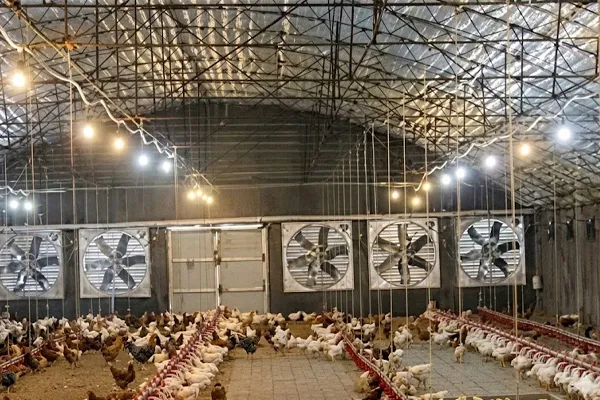
| Maximum / Tunnel Ventilation (tunnel-ventilated houses only) | Temperature at or above the upper band | All required fans, tunnel inlets open | Air moves the length of the house; no fan trips |
| Evaporative Cooling | High temperature with humidity headroom | Pump and pad or fogging outputs | Cooling stops when the humidity limit is crossed |
Setpoints belong to the breeder’s management guide for the strain, entered by the operator as an editable schedule by bird age. A controller with fixed factory curves that cannot be edited fails this step. In the tender, cite FAO poultry production guidance and the applicable national or EU animal-welfare cage standard by name, and check the current edition before quoting either.
Check: run the controller through every stage with substituted sensor values (a temporary override or the controller’s test function) and record which outputs switch.
A cold, damp house is the classic conflict. Ventilation removes moisture but cools the house, and the heater then works against the fans. Write the priority order into the specification: the minimum air exchange program is never overridden by the heating call, and heating and evaporative cooling are interlocked so they cannot run together.
Check: force a cold-and-humid reading and a hot-and-humid reading in turn, then watch which outputs the controller chooses.
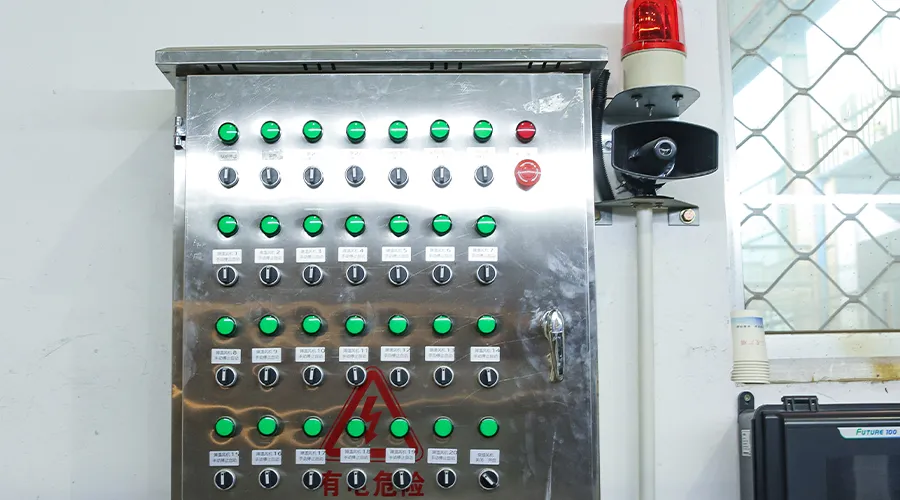
Six alarms cover the situations that harm birds fastest:
For each one, state the trigger condition, the local output (siren, light), the remote notification (named phone numbers, and who acknowledges), and the escalation if nobody acknowledges.
Check: trigger every alarm during acceptance and record the time from event to phone notification. Set the maximum accepted delay in the tender.
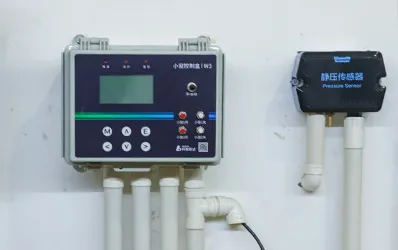
Sensor failure. The controller should flag the failed sensor and fall back to the remaining sensors in the zone or to a default program. The edge case is the sensor that sticks: it keeps sending its last value and looks healthy. Ask for flat-line and out-of-range detection by name.
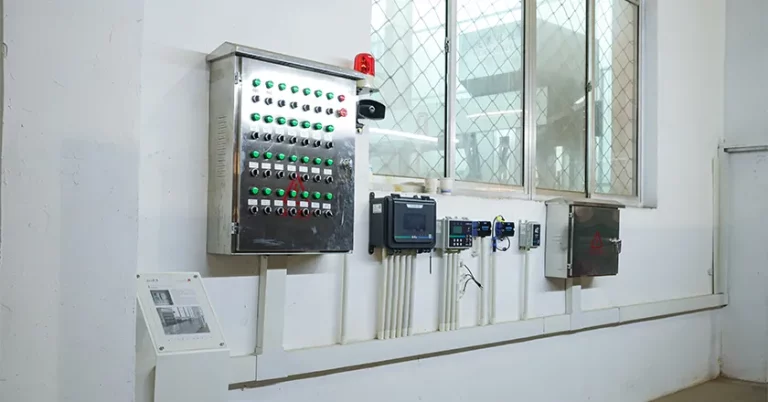
Controller failure. Require a manual override for fans and inlets that works without the controller’s logic, ideally a hardwired bypass with an independent thermostat.
Power failure. Ask what the house does in the first minutes without power: which openings, if any, open by gravity or spring, and how quickly the generator takes the fan load. Require that the controller resumes its last state after power returns, not a factory default.
Check: pull one sensor connector, switch the controller off, and cut mains power with the generator both on and off. Log what each event does.
Specify the log export format (CSV or equivalent), the time-stamp standard, and how long the controller stores data on board. State the interface language and units, the number of training days for operators, a spare sensor set, and separate warranty terms for sensors and controller. For development-funded and government projects, the export requirement is what lets you produce audit records later.
Check: export one week of test data and open it on the buyer’s own computer.
Copy the checks from steps 1 to 7 into one witnessed test, run in the finished house under real fan load, and tie a payment milestone to a signed pass record. The size of the held-back share is a commercial decision for your contracts team.
Specifying by brand or model name alone feels safe and tests nothing. If a bidder offers an equivalent, you have no performance criteria to compare it against.
A controller cannot rescue a house whose fans are undersized or whose walls leak. Specify the controller together with the ventilation design, not as a separate purchase, or the first hot week will be blamed on the wrong component.
Accepting a bench demonstration instead of an in-house test is the third trap. A controller that behaves on a table can still trip a fan when the whole house is drawing power.
| Fator | Supplied with the Cage / House System | Standalone, Third-Party Controller |
| Responsibility When Something Fails | One supplier answers for fans, inlets and controller behavior | Buyer or integrator coordinates two or more parties |
| Lock-In | Spare parts and software tied to the equipment supplier | Can be replaced or retrofitted with another make |
| Integration Effort | I/O mapping and wiring done by the equipment supplier | Someone must document and test every I/O connection |
| Better Fit | New turnkey houses | Retrofits, mixed-brand houses, portfolios already standardized on one controller |
The integrated route costs you flexibility: when the supplier’s controller line changes, you follow it. The standalone route costs you a single point of responsibility, which matters most when a fault could be either the fan or the controller. Mugong describes its scope as turnkey, from equipment design through manufacturing, installation, training and after-sales. Whether the controller sits inside that scope on a given project is confirmed in the quotation.
The catalog line that covers this topic is Farm Support & Auxiliary Systems. The published data for that line names no controller model, sensor list or per-model certificate. The climate-related details that are published sit in the house and cage products:
| Produto | Climate-Related Detail Published |
| Gaiola automática tipo H para bateria de postura | Automatic feeding, drinking, egg collection, manure removal and climate control; 3, 4, 5, 3+3 or 4+4 tiers; total height 2,330–6,580 mm; roof height 2,860–7,110 mm |
| Equipamento para criação de frangos de corte em chão | Fully or semi-automatic floor (litter) system covering feeding, drinking and ventilation; detailed specifications not published |
| Gaiola para aves com estrutura de aço | Row layout for ventilation, manure handling and vehicle access; suited to commercial projects of 10,000–200,000 birds; span and dimensions not published |
Certifications are listed at company level: ISO 9001:2015, CE and SGS. No per-model certificate numbers are published, and none for a controller. CE marking is the European conformity marking, so for an EU-bound project ask in writing for the controller’s own declaration of conformity instead of relying on the company-level listing. Request the controller make, model, sensor list and alarm outputs in writing with the quotation.
No. A poultry controller runs staged ventilation, changes setpoints with bird age, and has to keep operating through sensor or power faults. A general HVAC or industrial controller may do none of that unless it is configured for it, so check each point against the datasheet.
There is no fixed number. Count them from the zone drawing: at least one temperature and humidity point at bird level per zone, more heights in multi-tier cages, plus static pressure and outdoor sensors. Put the count in the tender so bids are comparable.
Ask for it. Mugong’s published data lists ISO 9001:2015, CE and SGS at company level and no per-model certificates, so request the controller’s declaration of conformity in writing with the quotation.
High temperature and power loss put birds at risk fastest, and fan failure is the most common cause of the first. Specify all six alarms in step 5 and test each one.
Yes, but responsibility for interface faults then sits with you or your integrator. The comparison table above sets out what you gain and lose either way.
Ventilation sizing starts with house volume and target hen weight, not fan brand. Tunnel s…
To specify a poultry environmental controller, define the house's control zones first, the…
Responderemos à sua consulta em até 24 horas. Para consultas urgentes, entre em contacto connosco pelo WhatsApp: +86 133 6144 9578 ou ligue diretamente para nós.
*Respeitamos a sua privacidade. Todas as informações enviadas são estritamente confidenciais.
Os seus dados serão utilizados apenas para responder à sua consulta. Nunca enviamos e-mails ou mensagens promocionais não solicitados.