











Sourcing Poultry Equipment Manufacturers in China: Buyer Guide
Sourcing poultry equipment from a Chinese manufacturer means controlling four variables di…

Check out our latest news,
 08:45
08:45 Choosing the wrong housing can quietly drain profit. A cheap building may raise losses through poor ventilation, wet litter, slow growth, and more labor. The smartest solution is not always the cheapest shed. It is the poultry house that balances build cost, bird performance, labor, and long-term farm efficiency.
For most medium-scale broiler farms in warm climates, a naturally ventilated open-sided deep-litter poultry house is usually the most economical to build and run at the start. But for large-scale commercial poultry operations, environmentally controlled houses often deliver better bird performance and lower cost per unit of output over time. For layers, cage systems need higher initial capital, while deep litter needs less capital but more labor.
1. What Does “Most Economical” Really Mean in Poultry Housing?
2. Is a Naturally Ventilated Poultry House the Lowest-Cost Option?
3. Why Is Deep Litter Still Common for Broiler Housing?
4. Are Cage Systems More Economical for Layer Chicken Farms?
5. What About Free-Range and Free Range Poultry Housing?
6. How Do Ventilation, Air Quality, and Side Wall Design Affect Cost?
7. Which Housing Type Works Best for Small, Medium, and Large Farms?
8. How Do Labor, Electricity, and Feeding Systems Change the Real Cost?
9. What Materials Make Poultry House Construction More Durable and Cost-Saving?
10. So Which Type of Poultry House Is the Most Economical for Modern Poultry Production?
The word economical does not simply mean the lowest first price. In a real poultry farm, the most economical housing is the one that gives the best balance between house construction cost, daily operating cost, bird health, labor use, and output. FAO guidance on commercial poultry production makes the same point in a broader way: profitability depends not only on efficient production, but also on proper planning, house design, quality inputs, disease control, and market fit.
That is why two farms can build two different houses and get very different results. One low-cost shed may look cheap at first, but if it creates wet litter, weak air quality, slower broiler growth, or poor egg production, it may stop being economical very quickly. A more efficient design can cost more upfront but still save money through better productivity, lower mortality, and easier daily management.
So before asking which poultry house is cheapest, it is better to ask a smarter question: which housing system gives the lowest total cost for the type of birds, climate, and market you actually have? That is the right way to judge an economical system for modern poultry.
In many developing and warm-climate markets, yes. FAO’s Poultry Development Review says most medium-scale commercial layer and chicken meat houses in developing countries rely on natural airflow through the shed for ventilation, while small-scale commercial facilities are often built with local materials such as timber, mud brick, or bamboo. That usually makes naturally ventilated housing the lowest-cost option to build.
This kind of poultry house often has a partially open side wall or wire-mesh upper wall to let in fresh air, reduce trapped heat, and lower building cost. The environmental guidelines in one FAOLEX-linked poultry document describe a broiler house with low solid walls to hold the litter and mesh above for proper ventilation, using basic materials such as concrete floors, simple wall materials, and galvanized or aluminum roofing.
That is why a low-cost poultry house is often an open-sided shed rather than a fully enclosed and mechanically cooled building. It is easier to construct, uses fewer systems, and usually has lower electricity costs. For many medium-sized farms, that makes it the best cost-saving first step. But low construction cost does not always mean the best long-term economics in very hot climates or very large flocks.
For broiler production, deep litter remains one of the most common systems because it is simple, flexible, and requires less initial capital than more complex options. FAO’s South Asia poultry guide states that commercial broilers in that region are reared essentially on deep litter floors and that rearing broilers on slats or in cages is not the general practice.
Deep litter is attractive because it fits many sizes of farm. It works in a simple chicken house, a medium broiler shed, or a larger naturally ventilated building. It also makes expansion easier because the farmer can add more floor space in batches instead of investing immediately in a fully automated house. In a practical sense, that makes deep litter one of the most cost-effective systems for broiler farmers starting or scaling gradually.
Still, deep litter is not free of cost. The same environmental guidance notes that wet bedding areas should be removed and replaced, the litter bed should be kept loose, and the whole house should be cleaned and disinfected after each batch. That means deep litter saves capital, but it asks for more careful daily management of bedding, water leaks, manure, and flock hygiene.

For layer chicken operations, the answer is more complicated. Cage systems often have a higher initial capital cost because the farmer needs both the building and the cage equipment. The same FAOLEX-linked poultry guidance states this directly: in the battery cage system, “initial capital is high,” since buildings and cages must both be installed.
But cages can still be economical in the right layer business. The guidance also lists labor-saving and easier recordkeeping as cage advantages, because one person can collect eggs more easily and birds are individually confined for monitoring and culling. For large layer projects, that can improve work efficiency, egg collection, and flock control.
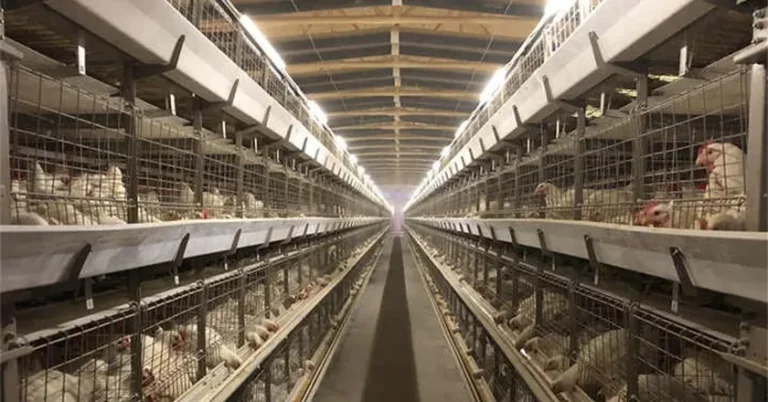
FAO’s Poultry Development Review also notes that for controlled-environment housing of layers, multi-tier cage systems are common, and that most large-scale commercial farms use controlled-environment systems because bird performance is generally superior to naturally ventilated houses when birds remain in their thermal comfort zone. So for a large egg farm, a higher-cost cage house may be more economical over time, even if it is not the cheapest way to start.
Free range or free-range systems are attractive because they can use simpler night shelter buildings and may tap into premium local markets. FAO’s South Asia poultry guide notes that there is a separate market segment for meat and eggs from rural poultry reared under free-range conditions, and that these products can fetch premium prices in some local markets.
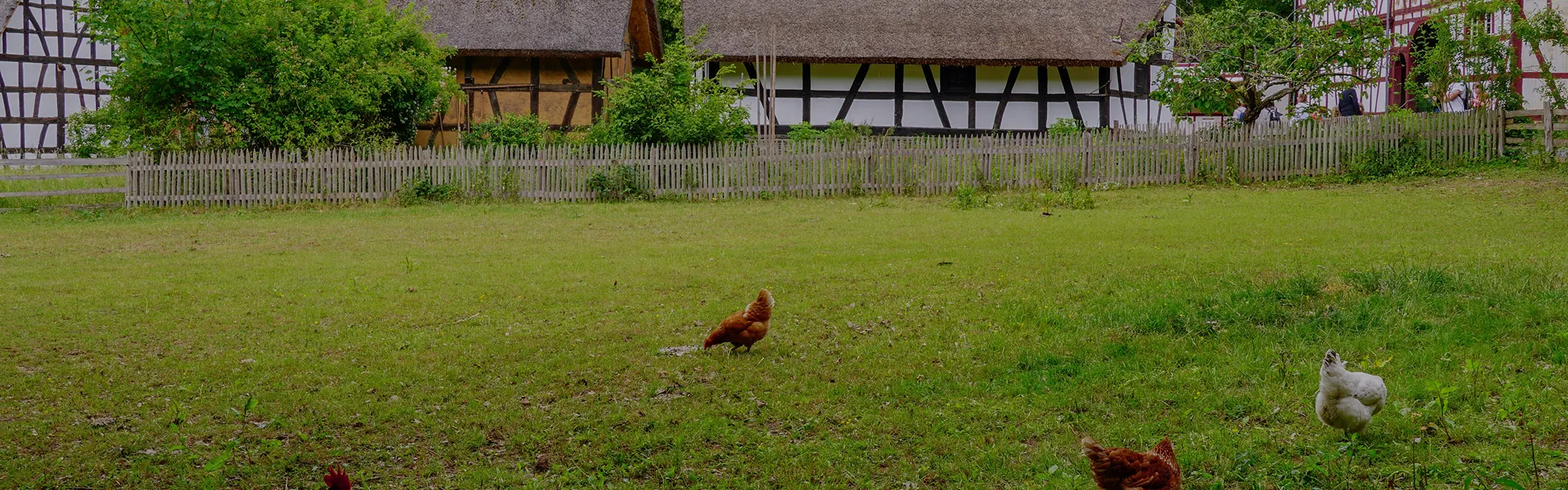
That does not automatically make free-range housing the most economical system for poultry. Free-range birds need land, fencing, predator protection, health management, and often more variable output. A basic coop or chicken coop may be cheap, but the system may produce fewer eggs or slower growth per square foot than intensive commercial systems. In other words, the building can be cheaper, while the production economics may be less efficient.
So free range works best when the market rewards it. If a farmer sells direct and receives a premium, it may be a smart cost-saving model. If not, a more standard housing system may deliver better return from the same number of birds.
Many people focus only on roofing sheets, columns, and floor area. But the real money in housing is often hidden in ventilation and air movement. If the house traps moisture and ammonia, birds eat worse, litter gets wet, and health problems rise. University of Minnesota Extension advises growers to adjust ventilation to avoid moisture and ammonia build-up in broiler houses and to provide good ventilation to prevent ammonia build-up in pullet housing.
That is why side wall design matters so much. A well-planned open-sided building allows fresh air in while still controlling rain and drafts. The environmental guidance on poultry operations specifically recommends wall construction that retains litter at the bottom while using mesh or other suitable material up to the roof for ventilation, and it also says design should allow adequate ventilation while preventing excess drafts.
For a broiler or layer house, that means the cheapest wall is not always the best wall. A poor wall design may save money in week one, then waste money every day after that through heat stress, wet bedding, poor air quality, and avoidable health pressure. A truly efficient and durable house uses smart airflow, not just cheap material.
Scale changes the answer. On small farms, the most economical housing is often a simple open-sided coop or floor-based shed built from local materials, as long as it stays dry, secure, and easy to clean. FAO notes that small-scale commercial poultry facilities in developing countries are commonly built from local building materials and may serve multiple age groups or bird purposes.
On medium farms, a naturally ventilated deep-litter poultry house is often the best balance. It keeps capital moderate, supports broiler production well, and can be upgraded with better feeders, drinkers, and airflow controls over time. This is one reason medium-scale commercial meat and layer houses in many developing regions still rely on natural airflow rather than full environmental control.
On large farms, the answer shifts. FAO says birds’ performance in controlled-environment sheds is generally superior to that in naturally ventilated houses because conditions can be maintained in the birds’ comfort zone, and modern houses are often fully automated with fans linked to sensors. At that level, a more expensive building may become the more economical one because it supports higher density, stronger consistency, and more reliable results.
A house is not just walls and a roof. It is also a labor system. The battery cage section in the FAOLEX-linked guidance says labor is saved because one person can collect all the eggs and litter does not need to be turned, while the deep litter section says deep litter is labor intensive because the litter must be turned regularly. That is a major cost difference.
Then there is electricity. A naturally ventilated poultry house can reduce power use because it depends less on heavy mechanical systems. An environmentally controlled house may need exhaust fans, cooling equipment, lights, and automation, which increases power demand and electricity costs. But it may also protect the flock better in hot weather and improve output. That is why some farms trade higher utility bills for stronger growth or laying performance.
The same logic applies to feeders, drinkers, and simple automation. A basic feeder line is cheaper than full automation, but scientific management often becomes easier when the farm can control feed delivery, water, and airflow more consistently. For commercial projects, the real economic choice is not “manual versus automatic” alone. It is whether the system reduces total cost per bird or per egg.
Simple cost comparison
| Housing type | Upfront cost | Labor need | Electricity use | Best fit |
|---|---|---|---|---|
| Open-sided deep litter broiler house | Low to medium | Medium to high | Low | Small to medium farm |
| Controlled-environment poultry house | High | Lower per bird at scale | High | Large commercial poultry |
| Layer cage house | High | Lower egg collection labor | Medium to high | Medium to large egg operations |
| Free-range shelter and yard system | Low house cost, high land need | Medium | Low | Premium niche markets |
The most economical house is usually the one whose total operating pattern fits the scale and market, not simply the one with the lowest invoice on day one.
The best poultry house construction uses materials that are easy to wash, disinfect, and maintain. The environmental guidelines recommend concrete floors for broiler houses and list wall and roof materials that can be selected from locally available options, as long as the structure remains sturdy, safe, and comfortable.
That matters because house construction is not only about strength. It is also about hygiene. If the floor is hard to clean, if the roof leaks in the rainy season, or if the wall design traps dampness, the house becomes more expensive to run. A cheaper structure that breaks early or causes hygiene trouble is not truly durable or economical.
For many farms, a smart middle path works best: concrete floor, simple steel or block structure, functional roof overhang, mesh upper wall, and room for future equipment upgrades. That gives the supplier and the farmer a practical way to keep build cost controlled without sacrificing future performance.
For most small and medium broiler farms, the most economical choice is usually a naturally ventilated open-sided deep-litter poultry house. It keeps upfront investment lower, uses simpler housing, and fits the way many medium-scale farms actually operate. FAO sources show that medium-scale meat and layer houses in developing countries often rely on natural airflow, and broilers are commonly reared on deep litter floors.
For large-scale, high-output commercial poultry production, the answer changes. A controlled house may cost more to build, but it can still be the more economical system for modern poultry production if it delivers better growth, better feed efficiency, lower stress in hot weather, and more stable flock results. FAO explicitly notes that bird performance is generally superior in controlled-environment sheds compared with naturally ventilated houses.
For layers, the most economical option often depends on whether the farm values low startup cost or labor efficiency and output control. Deep litter is cheaper to begin with. Cage systems cost more at the start but can save labor and support more structured egg management. So the honest answer is not one house for every farm. It is one house for each farm’s climate, scale, bird type, and business goal.
Which poultry house is cheapest to build?
In many markets, a naturally ventilated open-sided floor house built with local materials is the cheapest to build. FAO describes medium- and small-scale poultry houses in developing countries as commonly relying on natural airflow and local materials.
Is deep litter more economical than cages?
For starting cost, yes, usually. The FAOLEX-linked poultry guidance says deep litter has the advantage of needing less capital, while battery cage systems have high initial capital requirements. But deep litter also needs more labor.
Which system is best for broiler farming?
For many small and medium farms, deep litter in a naturally ventilated broiler house is the practical choice. FAO’s South Asia poultry guide says commercial broilers there are reared essentially on deep litter floors.
Which system is best for layer chicken farms?
It depends on the farm scale and business model. Deep litter costs less to start, while cage systems can save labor and improve recordkeeping and egg collection efficiency.
Does ventilation affect poultry house economics?
Yes. Poor ventilation increases moisture and ammonia build-up, which hurts birds and raises hidden costs. Extension guidance specifically recommends good ventilation to prevent moisture and ammonia problems.
Are controlled-environment houses worth the higher cost?
Often yes for large commercial farms. FAO reports that bird performance is generally superior in controlled-environment sheds because conditions can be maintained in the birds’ comfort zone.
The most economical housing is not always the cheapest building at the start. It is the one with the best total cost over time.
For many small and medium broiler farms, a naturally ventilated deep-litter poultry house is usually the best low-capital choice.
For large-scale farms, controlled-environment houses often justify their higher cost through better bird performance.
For layers, cages cost more to install but can save labor, while deep litter costs less to start but needs more hands-on work.
Good ventilation, dry litter, and strong air quality are central to real housing economics.
The best house depends on climate, market, bird type, labor, and future expansion plans.
Sourcing poultry equipment from a Chinese manufacturer means controlling four variables di…
A steel structure poultry house is a prefabricated steel building designed for layer, broi…
We will reply to your inquiry within 24 hours.For urgent inquiries, please contact us via WhatsApp: +86 133 6144 9578 or call us directly.
*We respect your privacy. All information submitted is strictly confidential.
Your details will only be used to respond to your inquiry. We never send unsolicited emails or promotional messages.