










Sourcing Poultry Equipment Manufacturers in China: Buyer Guide
Sourcing poultry equipment from a Chinese manufacturer means controlling four variables di…



Scoprite le nostre ultime novità,
 15:44
15:44 Poor incubation can turn good fertile eggs into weak chicks, late hatches, or failed batches. Temperature, relative humidity, ventilation, egg turning, and sanitation all matter. Once you understand the two methods of incubation, you can choose the right incubator system and improve hatchability.
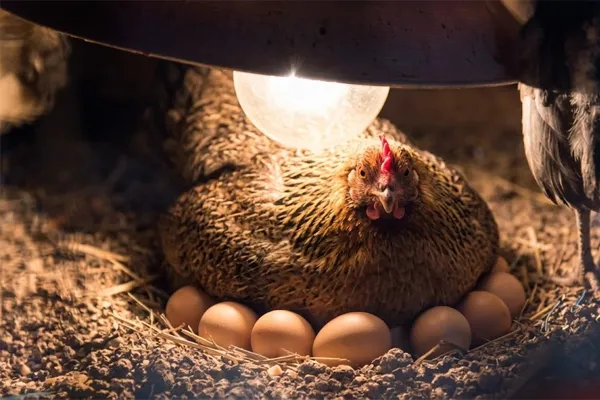
The two types of incubation are natural incubation and artificial incubation. Natural incubation uses a broody hen to warm, turn, and protect eggs until hatch. Artificial incubation uses an incubator, setter, and hatcher to control incubation temperature, relative humidity, oxygen, carbon dioxide, ventilation, and egg turning under a controlled environment.
What are the two types of incubation in poultry?
What is natural incubation, and how does a hen hatch eggs?
What is artificial incubation, and how does an incubator work?
What are the main types of incubators?
Why do incubation temperature and relative humidity matter?
How do ventilation, oxygen, and carbon dioxide affect embryo development?
Why is egg turning important during early incubation?
What happens during the last 3 days before hatch?
How does candling help check embryo development?
How should commercial poultry farms choose an incubator system?
The two methods of incubation are natural incubation and artificial incubation. Natural incubation happens when a broody hen sits on fertile eggs and provides warmth, protection, turning behavior, and basic humidity control. Artificial incubation happens when a machine, usually an incubator, creates the optimal conditions needed for embryo development and chick hatch.
For small backyard flocks, natural incubation may be simple and low-cost. For medium and large-scale poultry farms, artificial incubation is more practical because it can handle a large number of eggs, reduce dependence on broody hens, and improve production planning. FAO explains that natural incubation uses a broody hen, while artificial incubation uses controlled methods to incubate eggs and detect infertile eggs by candling during early development.
For commercial poultry projects, incubation is not just a small hatchery step. It connects breeding flock quality, egg handling, hatchery design, chick quality, brooding house performance, and final farm results. As a turnkey poultry and rabbit farming systems supplier, we usually look at incubation together with steel-structure houses, cages, feeding, drinking, climate control, manure treatment, and chick placement planning.
Natural incubation is the oldest method. A broody hen sits on eggs and uses body heat to incubate them. She also helps maintain humidity, protects the nest, and turns eggs with her body and beak. FAO notes that feed and water should be close to the broody hen, and the hen should be checked for external parasites before natural incubation.
This method works for small poultry farms, local breeds, village production, and low-cost flock expansion. It needs little equipment. But it is not easy to scale. One hen can only cover a limited number of eggs. Hatch timing can be uneven. Egg breakage, bacterial contamination, low fertility, poor nest conditions, and hen behavior can reduce hatchability.
Natural incubation is useful when a farm has a small flock and does not need strict production scheduling. But if you want stable output, uniform chick quality, and planned batch production, artificial incubation is usually the better choice.
Artificial incubation uses an incubator to create a controlled environment for fertile eggs. The incubator manages heat, relative humidity, fresh air, egg turning, and air circulation. The goal is to keep each developing embryo inside a narrow range of proper temperature and moisture conditions.
Mississippi State University Extension explains that important incubation factors include temperature, humidity, ventilation, and egg turning, and that poor results often come from improper control of temperature or humidity, poor ventilation, incorrect turning, or poor sanitation.
A commercial hatchery usually separates the process into a setter and a hatcher. Eggs are placed in setter trays for the main incubation period. Near the end, they move into hatcher baskets, where the chick can pip, break the shell, and complete the hatching process. This separation improves hygiene, airflow, management, and batch control.
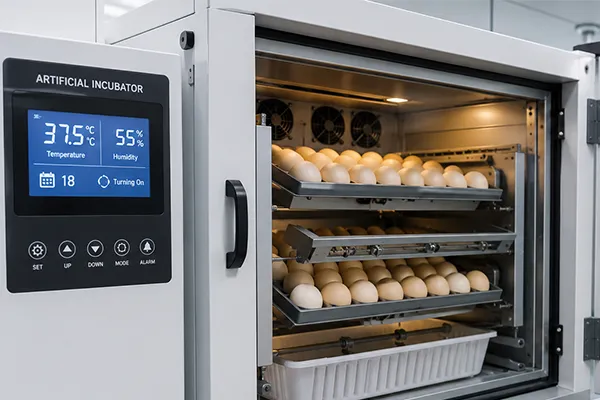
The term types of incubators can mean different things. For small farms, people often compare still-air incubators and forced-air incubators. For hatcheries, buyers may compare single-stage and multi-stage incubators, setter and hatcher systems, or small manual incubators and large commercial incubators.
A still-air incubator has no fan, so air layers form inside the machine. The top of the egg may be warmer than the bottom. A forced-air incubator uses a fan to move air and create more even temperature around the eggs. Mississippi State University Extension notes that forced-air incubators are commonly adjusted to about 99–100°F, while still-air incubators require a higher reading around 102°F at the top of the eggs because of temperature layering.
| Incubator Type | Main Feature | Ideale per |
|---|---|---|
| Still-air incubator | No fan, simple structure | Small hobby use |
| Forced-air incubator | Fan circulation for even heat | Better small farm control |
| Manual incubator | Hand turning and basic control | Low-cost users |
| Automatic incubator | Auto turning and digital control | Small to medium farms |
| Setter | Main incubation phase | Hatchery egg development |
| Hatcher | Final hatch phase | Chick emergence and drying |
| Large commercial incubators | High capacity and precise control | Integrated poultry companies |
For investors and distributors, the right incubator depends on egg capacity, farm scale, automation level, power supply, local climate, hatchery layout, and after-sales support.
Incubation temperature controls the speed and health of embryo development. If the incubation temperature is too low, the hatch may be delayed and chicks may be weak. If it is too high, embryo mortality may increase. Mississippi State University Extension warns that high temperature is especially serious and can reduce total chicks hatched.
Relative humidity controls how much water the egg loses through the shell. If incubation humidity is too low, the air cell may become too large and chicks can dry out before hatch. If humidity is too high, chicks may not lose enough moisture, and unhealed navels or weak hatched chick quality may occur.
For chicken eggs, many incubation guides use around 21 days as the normal hatch time. FAO states that the incubation period for chicken eggs is 20 to 21 days, while some other poultry species take longer.
| Incubation Factor | Perché è importante |
|---|---|
| Temperature | Drives embryonic development and hatch timing |
| Umidità relativa | Controls moisture loss and air cell growth |
| Egg turning | Prevents embryo sticking and supports normal growth |
| Ventilazione | Supplies oxygen and removes carbon dioxide |
| Sanitation | Reduces bacterial contamination risk |
| Egg storage | Protects embryo viability before incubation |
A developing embryo is alive. It needs oxygen and gives off carbon dioxide, moisture, and metabolic heat. As embryonic growth increases, the egg needs more fresh air. If ventilation is poor, oxygen concentration may fall and carbon dioxide concentration may rise. This can reduce hatchability and chick quality.
Mississippi State University Extension includes ventilation as one of the major incubation factors, along with temperature, humidity, and egg turning. Poor ventilation can interfere with normal embryo growth and development.
In a hatchery, airflow design is not only about the incubator machine. The room itself matters. Air inlet, exhaust, hatchery pressure, heat load, humidity levels, chick fluff, sanitation, and traffic flow all affect results. That is why commercial poultry incubation should be planned as part of a full farm engineering system, not as an isolated machine purchase.
Egg turning helps the embryo develop normally and prevents it from sticking to the shell membrane during early incubation. In many incubator systems, eggs are placed in trays with the large ends up and the small end down. This helps the air cell stay in the correct position.
Eggs should be turned regularly during the setter phase. Automatic incubators turn eggs on a set schedule, which reduces labor and improves consistency. Manual turning can work for small farms, but it increases labor and creates more risk of missed turns or temperature loss from opening the incubator.
Egg turning usually stops before the final hatch phase. At this stage, the chick begins to position itself, turn toward the air cell, pip the shell, and prepare to emerge. If turning continues too late, it may disturb the hatching process.
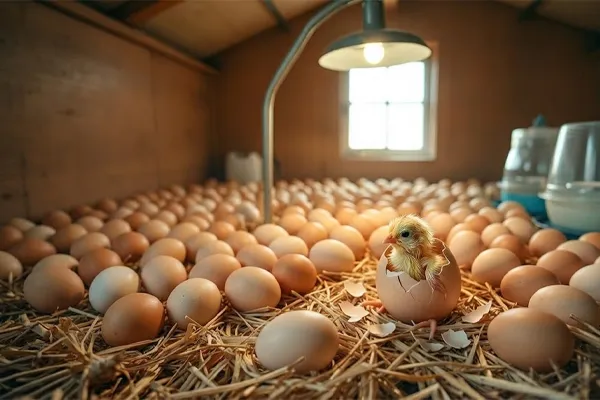
For chicken eggs, the last 3 days are often called the hatching phase or lockdown period. Around day 18, eggs are usually moved from the setter to the hatcher. Turning stops. Relative humidity is increased. The chick positions itself, absorbs the yolk, begins breathing through the air cell, pips the shell, and slowly completes the hatch.
The University of Missouri Extension describes chicken embryo development across incubation, with the beak turning toward the air cell around day 17, the yolk beginning to enter the body cavity around day 19, and chick hatching on day 21.
This phase needs patience. Opening the hatcher too often can disturb temperature and humidity. Too much drying can cause chicks to stick to the shell. Poor ventilation can increase carbon dioxide. A good hatcher design supports airflow, humidity control, chick safety, and easy cleaning after each batch.
Candling means shining a strong light through the egg to check what is happening inside. It helps identify infertile eggs, early embryo death, cracks in the eggshell, and viable embryos. FAO explains that candling uses a strong light above or below the egg so the embryo can be observed through the shell.
Illinois Extension notes that eggs can be candled any time after about day 5 through day 17 of incubation, and that eggs should not stay out of the incubator too long during candling.
For commercial hatcheries, candling is a management tool. Removing infertile or dead eggs can reduce contamination risk, improve hatcher hygiene, and help managers track flock fertility and hatchability. But candling must be done carefully, quickly, and cleanly to avoid temperature shock or bacterial risk.
Commercial farms should choose an incubator system based on production target, egg number, hatch schedule, chick placement plan, power stability, climate conditions, labor level, and biosecurity needs. A small incubator may be enough for trial production, but integrated poultry companies need stable setter and hatcher capacity.
Important selection points include:
| Buyer Question | Perché è importante |
|---|---|
| How many eggs per batch? | Decides incubator capacity |
| What species will be incubated? | Chicken, duck, quail, turkey, or other avian eggs may need different settings |
| Is automatic turning needed? | Reduces labor and human error |
| Is precise temperature control available? | Supports stable embryo development |
| How is humidity controlled? | Affects air cell and hatch quality |
| How is ventilation managed? | Supplies oxygen and removes carbon dioxide |
| How easy is cleaning? | Reduces bacterial and hatchery contamination |
| Is after-sales support available? | Garantisce la produzione a lungo termine |
As a professional manufacturer and engineering supplier of turnkey poultry and rabbit farming systems, we help farm owners, agricultural investors, integrated poultry companies, and equipment distributors build complete livestock and poultry projects. That can include steel-structure houses, cages, feeding, drinking, climate control, manure treatment, and hatchery-related planning.
A medium-scale poultry investor wanted to expand from small flock hatching to a more controlled hatchery. The farm had fertility, but hatch results were uneven. Some chicks hatched late. Some eggs showed early embryo mortality. The farm also had weak ventilation and no clear egg storage rule.
We reviewed the project as a complete system, not just an incubator purchase:
| Problem | Engineering Recommendation |
|---|---|
| Uneven hatch timing | Use forced-air incubator with stable temperature control |
| Poor egg storage | Store fertile eggs in a cool, clean room and avoid long storage |
| High manual labor | Add automatic egg turning |
| Weak ventilation | Improve fresh air and exhaust planning |
| Dirty hatch baskets | Set cleaning and disinfection process |
| Unclear batch schedule | Plan setter, hatcher, and chick placement dates |
The result was a more stable incubation workflow. The customer gained better batch control, cleaner hatching, and a clearer path toward high hatchability.
What are the two types of incubation?
The two types of incubation are natural incubation and artificial incubation. Natural incubation uses a broody hen. Artificial incubation uses an incubator to control heat, humidity, ventilation, and egg turning.
What is the difference between a setter and a hatcher?
A setter is used for the main incubation period, when the embryo develops inside the egg. A hatcher is used during the final hatch phase, when the chick pips, breaks the shell, and dries after hatch.
How long is the incubation period for a chicken egg?
The chicken egg incubation period is usually about 20 to 21 days. Other poultry species may need longer incubation periods, depending on the species.
Why do eggs need to be turned during incubation?
Egg turning helps support normal embryo development and reduces the risk of the embryo sticking to the shell membrane during early incubation.
What temperature should an incubator use?
The correct temperature depends on incubator type. Forced-air incubators are commonly set around 99–100°F, while still-air incubators require a higher reading near the top of the eggs because air is not evenly circulated.
Why is relative humidity important in incubation?
Relative humidity controls water loss from the egg. If humidity is too low or too high, the air cell may not develop correctly, and chick quality or hatchability can suffer.
What does candling an egg mean?
Candling means using a bright light to look inside the egg. It helps identify infertile eggs, embryo development, cracks, and dead embryos.
The two types of incubation are natural incubation and artificial incubation.
Natural incubation uses a broody hen and is common in small flocks.
Artificial incubation uses an incubator to control temperature, relative humidity, oxygen, carbon dioxide, ventilation, and egg turning.
A setter supports embryo development; a hatcher supports the final hatch phase.
Temperature, humidity, ventilation, sanitation, egg turning, and egg quality all affect hatchability.
Chicken eggs usually hatch in about 20 to 21 days.
Candling helps remove infertile eggs and check embryo development.
Commercial poultry farms should choose incubator systems based on egg capacity, automation, hatchery layout, climate, cleaning, and after-sales support.
A complete poultry project should connect hatchery planning with poultry houses, cages, feeding, drinking, climate control, and manure treatment systems.
Sourcing poultry equipment from a Chinese manufacturer means controlling four variables di…
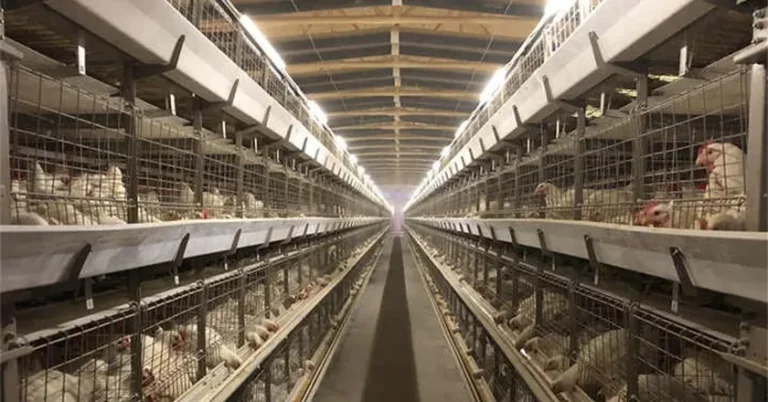
A steel structure poultry house is a prefabricated steel building designed for layer, broi…
Risponderemo alla vostra richiesta entro 24 ore. Per richieste urgenti, contattateci via WhatsApp: +86 133 6144 9578 o chiamateci direttamente.
*Rispettiamo la vostra privacy. Tutte le informazioni inviate sono strettamente confidenziali.
I vostri dati saranno utilizzati solo per rispondere alla vostra richiesta. Non inviamo mai e-mail non richieste o messaggi promozionali.