










Sourcing Poultry Equipment Manufacturers in China: Buyer Guide
Sourcing poultry equipment from a Chinese manufacturer means controlling four variables di…


Consultez nos dernières nouvelles,
 11:52
11:52 De mauvais choix en matière d'hébergement peuvent progressivement réduire les bénéfices de votre exploitation : baisse du nombre d'œufs pondus, augmentation de la mortalité, œufs sales et personnel mécontent. La situation empire encore si vous investissez dans une configuration de cages inadaptée et que vous ne pouvez pas la moderniser par la suite. La solution consiste à acquérir une compréhension claire et détaillée du système de cages en batterie et des alternatives modernes avant de vous lancer dans la construction.
A battery cage system in poultry management is a cage-based housing system where laying hen flocks live in rows of connected cages (often stacked in tiers) designed for efficient egg production, feed and water control, and cleaner manure handling. Today, many projects use improved designs such as enriched cage or colony cage systems, while some markets are moving toward free-range or other alternative systems due to animal welfare policies.
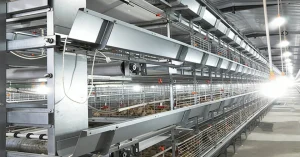
Système de cages en batterie automatiques de type H pour poulets de chair
What is a battery cage system and why is it used on a poultry farm?
How does a battery cage system work for laying hen egg production?
What’s inside a modern chicken cage: feed, water, nest, and perch features
Conventional battery cage vs enriched cage vs colony cage: what’s the difference?
Is free-range better than cage housing system for every farm?
Animal welfare: why are “banned battery cages” a topic in Europe and beyond?
Manure and manure removal: how cage design supports cleaner production
Ventilation and climate control: how a closed poultry house protects flock health
Production efficiency and labor costs: what cage systems change on day-to-day work
How to choose a cage system in poultry farming: a checklist for investors and distributors
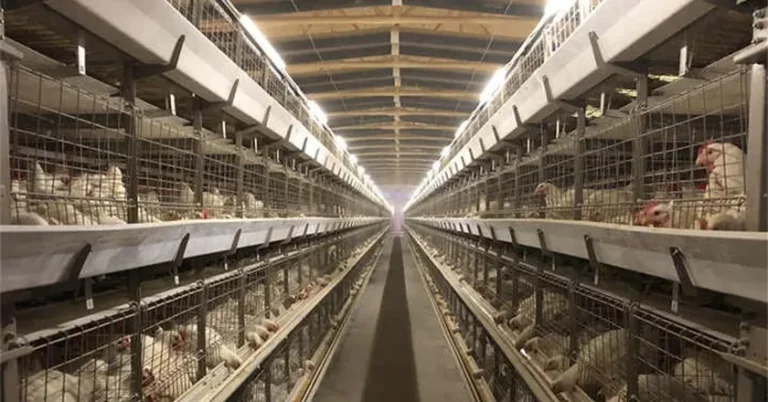
A système de cages en batterie is a structured way to house birds—mainly laying hen flocks—in a standardized cage setup. Think of it like a grid: many cages connected in a line, usually arranged in long rows inside a chicken house. Each cage holds a small group of hens, with controlled access to feed and water and a sloped floor that lets eggs roll forward for collection.
Why do many projects choose this system in poultry? Because it can make egg production more predictable. The system supports easy management, clear bird counting, and stable “inputs” like feed and water. It also reduces egg contact with manure because eggs roll to the front of the cage.
From an engineering view, the battery cage system is not just “the cage.” It is a full housing system that usually includes steel structure, ventilation, feeding lines, drinking system, lighting, and manure removal equipment. That is where turnkey planning matters.
As a professional manufacturer and engineering supplier of turnkey poultry and rabbit farming systems, we integrate steel-structure houses, cages, feeding, drinking, climate control, and manure treatment—because in real projects, the cage system in poultry succeeds only when the full system works together.
In a battery cage, the daily routine is simple and repeatable. Each hen stays in her assigned cage, eats from a front trough, drinks from nipples (or cups), and lays eggs on a slightly sloped floor. Eggs roll forward to a collection area. This design helps keep eggs clean and reduces breakage.
This is one reason battery systems are common in large poultry farm projects: you can standardize performance. Your managers can track feed use, water use, egg count, and mortality by row, by tier, or by house. That improves control over egg production systems.
But it’s also important to say what the system changes. A hen in a traditional cage cannot forage or walk like she would in a free-range setup. That is why animal welfare requirements matter so much, and why many new projects consider enriched cage or colony cage designs that add features like a nest area and perch.
When buyers say “I want a chicken cage,” I ask one question: Which features do you need for your market and bird welfare goals? A cage can be bare and simple, or it can be “furnished” with added parts.
A modern poultry cage line often includes:
feeding systems: trough feeding or chain feeding options (depending on house layout)
drinking system: nipple line with pressure regulators and filters
egg collection support (manual or automatic)
manure removal belts or scraping systems (depending on tier and budget)
optional features for enriched cage systems: nest area, perch, scratching/litter zone
In the EU, rules distinguish between cage types and specify minimum space and features for enriched cages. The European Commission explains that non-enriched cage systems are prohibited and that enriched cages must meet requirements such as at least 750 cm² per hen.
Small detail, big impact: the front-of-cage design matters. The “front of the cage” affects access to feed, worker inspection speed, and egg roll-out reliability. That is why we design not only the cage, but also the workflow around it.
This is where many projects get confused. The word battery cage is often used broadly, but there are clear categories.
| System type | Key idea | Typical features | Common buyer goal |
|---|---|---|---|
| Conventional battery cage (barren cage) | basic cage housing | limited space, no perch/nest | lowest capex, high density |
| Enriched cage (furnished cage) | cage with welfare features | perch, nest, litter/scratch area | meet higher welfare rules |
| Colony cage | larger group cage format | more space, better layout | balance welfare + efficiency |
| Free-range system | birds access outdoor area | indoor house + outdoor range | welfare branding, market access |
| Autre alternative systems | non-cage systems | barn/aviary options | policy or buyer requirement |
In the EU, conventional cages (non-enriched cages) have been prohibited since 1 January 2012, while enriched cages and alternative systems remain in use under defined rules.
How to choose (simple rule):
If your sales market requires cage-free labeling, a cage system may not fit.
If your project needs the most controlled environment, a cage-based housing system often performs best.
If you want a middle path, enriched cage or colony cage can be a strong choice.
Not always. Free-range is a valid production system, but it brings different management challenges.
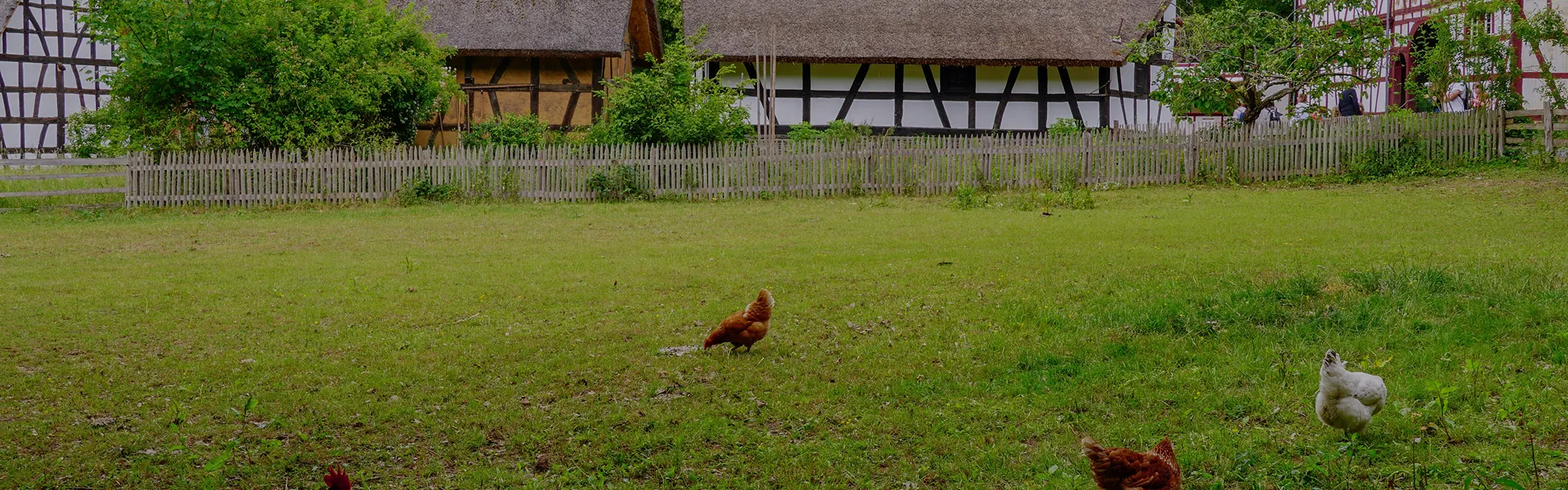
A free-range system can support more natural behaviors like movement, forage, and exploration. Many consumers like that story. But on a large farm, free-range can also increase variability: weather changes, outdoor parasites, and uneven egg collection patterns.
Also, disease risk must be managed carefully. Any open or outdoor exposure can raise the risk of disease transmission if biosecurity is weak. So the question is not “free-range vs cage.” The real question is: Which system can your team manage consistently and safely?
From our project experience, investors and integrated poultry companies usually decide based on:
market access (what buyers demand)
climate and land availability
labor availability and skill
egg handling infrastructure
animal welfare policy pressures
Animal welfare is now a procurement factor, not just a public debate. Many distributors and integrated companies must meet retailer or government requirements.
In the EU, the legal shift is clear: the EU’s laying hen rules prohibit non-enriched cages, and enriched cages must include specific conditions such as space per hen and features.
That’s why people often say “battery cages are banned” in Europe—because the old-style conventional battery cage is no longer allowed under EU rules.
There is also ongoing pressure to reduce or end cage use further. The EU “End the Cage Age” citizens’ initiative page notes the Commission’s communicated intention to propose legislation to phase out and ultimately prohibit cages for animals mentioned, based on EFSA opinions and impact assessment, with a stated target for a proposal by the end of 2023 (timing and final rules depend on the legislative process).
Outside Europe, policies vary. For example, California’s Proposition 12 set minimum confinement standards and restricted sales of products not meeting requirements, influencing egg supply chains.
Buyer tip: Always confirm the destination market rules before choosing a cage design. A good system in one market can be a non-starter in another.
Manure is not a side issue—it is a core part of poultry project success. Poor manure planning leads to ammonia problems, wet litter, fly pressure, and lower bird performance.
A well-designed cage layout supports clean manure handling because manure drops away from eggs and can be moved out by belt or scraper. A manure removal system can reduce labor and improve house hygiene. When manure stays too long under the cage, ammonia rises and birds suffer.
Here’s what we usually plan in a turnkey project:
manure belt sizing and speed
discharge direction and storage design
ventilation balance to remove moisture
integration with manure drying or treatment options
This matters for both egg production and worker comfort. It also supports better compliance for environmental and odor standards—especially for large projects.
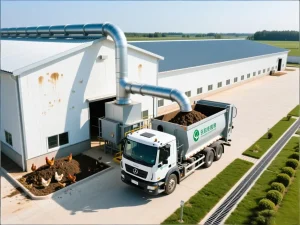
Système d'élimination du fumier
Even the best cage cannot fix a bad climate. In modern poultry production, the house environment is the “hidden feed.” Temperature, airflow, humidity, and ammonia decide how well each hen performs.
In a closed house, the ventilation systems control:
fresh air supply
moisture removal
heat distribution
gas removal (ammonia, CO₂)
dust control
A stable climate supports better feed conversion and more consistent egg production. It also helps reduce respiratory stress and keeps manure drier, which supports better manure removal performance.
As an engineering supplier, we integrate the cage rows with air inlet/outlet layout. That avoids dead zones where air doesn’t move. It also protects “pan house” uniformity, so every laying hen group sees similar conditions.
A cage-based system often improves workflow:
faster inspection per row
easier egg collection (especially with automation)
cleaner egg handling
controlled feed and water delivery
That can reduce labor costs, especially on medium-to-large farms. It also improves recordkeeping, which matters for investors and integrated companies.
But there are trade-offs. A cage system demands:
reliable power and spare parts planning
strong maintenance habits (belt, motor, drinker lines)
training for workers to spot issues early
A short quote we often share with new investors:
“A cage project is a management project. The equipment only delivers results when your team runs it the same way every day.”
If you’re building a new poultry farm or upgrading, use this checklist to choose the right housing system used for your goals.
Market requirement: cage eggs, barn, or free-range?
Welfare target: conventional cage, enriched cage, or colony cage?
Farm size: number of houses, birds per house, expansion plan
Climate: hot, cold, humid—how strong must ventilation be?
Manure strategy: belt, scraper, storage, treatment
Automation plan: egg collection, feeding, drinking, manure removal
Budget: capex vs long-term operating cost
Local rules: confirm compliance (EU-style rules differ from other regions)
Need stable output, high density, strong biosecurity? → cage-based housing system
Need welfare upgrades with controlled indoor performance? → enriched cage / colony cage
Need premium welfare branding + outdoor access? → free-range system
A mid-size investor planned a layer project and asked for a low-cost battery cage line. After we reviewed the destination market requirements and long-term expansion plan, we redesigned the layout as a higher standard cage solution with better manure belts and climate control integration. The result was smoother daily operation, cleaner eggs, and an easier path for future upgrades—without rebuilding the whole house.
This is the value of turnkey thinking: you don’t just buy a chicken cage. You build a working production system.
What is a battery cage system in poultry management?
A battery cage system is a cage-based housing setup where laying hen flocks live in rows of cages designed for efficient feeding, watering, egg collection, and manure handling. In many modern projects, improved cage types like enriched cage or colony cage are used.
Are battery cages banned in the European Union?
Old-style non-enriched cages (often called conventional battery cages) are prohibited in the EU since 1 January 2012. Enriched cages and alternative systems remain allowed under defined requirements.
What is an enriched cage?
An enriched cage is a cage housing type that includes welfare features such as a nest area and perch, and it must meet space requirements per hen under EU rules.
What is a colony cage?
A colony cage generally refers to larger group cages designed to improve space and management compared with small wire cages. It is often positioned as a middle option between conventional cages and non-cage systems.
Is free-range always better than cage systems?
Not always. Free-range can support more natural movement and forage, but it can also increase management complexity and biosecurity risks if not planned well. The best choice depends on market rules, climate, land, and management strength.
What matters most when choosing a cage system for a poultry farm?
Match your cage choice to market requirements, welfare expectations, farm size, manure strategy, and climate control design. In regulated markets like the EU, the legal cage type matters.
A battery cage system is a cage-based housing approach built for controlled egg production and efficient daily work.
A modern battery cage system is really a full housing system: cage + feeding + drinking + manure + ventilation.
The EU prohibits non-enriched cages and sets requirements for enriched cages, shaping global project decisions.
Enriched cage and colony cage systems can balance welfare features with production control.
Free-range and other alternative systems can meet certain markets, but require stronger biosecurity and management.
Turnkey engineering reduces risk because it connects cage design with climate control and manure handling.
Sourcing poultry equipment from a Chinese manufacturer means controlling four variables di…
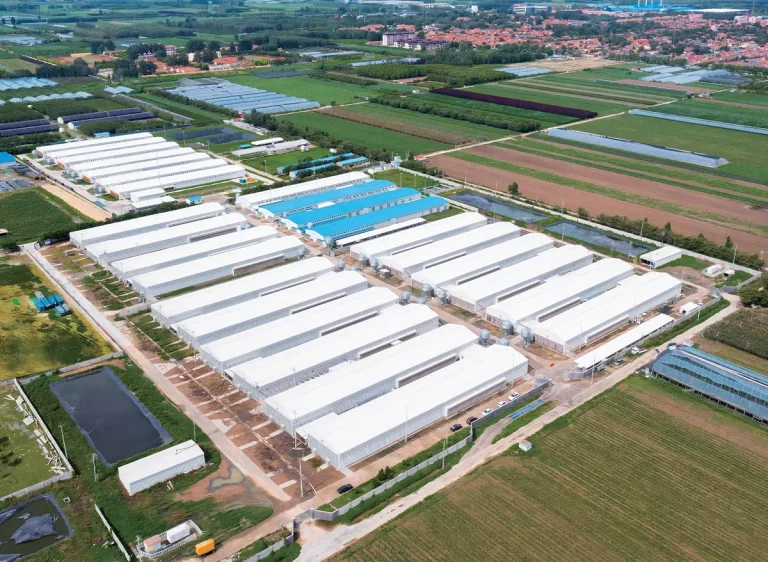
A steel structure poultry house is a prefabricated steel building designed for layer, broi…
Nous répondrons à votre demande dans les 24 heures. Pour les demandes urgentes, veuillez nous contacter via WhatsApp : +86 133 6144 9578 ou nous appeler directement.
*Nous respectons votre vie privée. Toutes les informations fournies sont strictement confidentielles.
Vos coordonnées ne seront utilisées que pour répondre à votre demande. Nous n'envoyons jamais d'e-mails ou de messages promotionnels non sollicités.