









A-Type vs H-Type Battery Cage: What’s the Difference (and Which One Fits Your Poultry Farm)?
Choosing the wrong battery cage layout can lock your poultry farm into high labor, poor ai…


 13:46
13:46 For many beginners, starting a chicken farm sounds simple — buy chickens, feed them, and wait for eggs or meat.
In reality, successful poultry farming is a system, not just feeding birds.
This guide is written for people with no prior experience, helping you understand how a chicken farm really works, what decisions matter most, and how to avoid common beginner mistakes.
Step 1: Decide Your Farming Goal (Eggs or Meat)
Before spending any money, you must answer one key question:
Do you want to sell eggs or chicken meat?
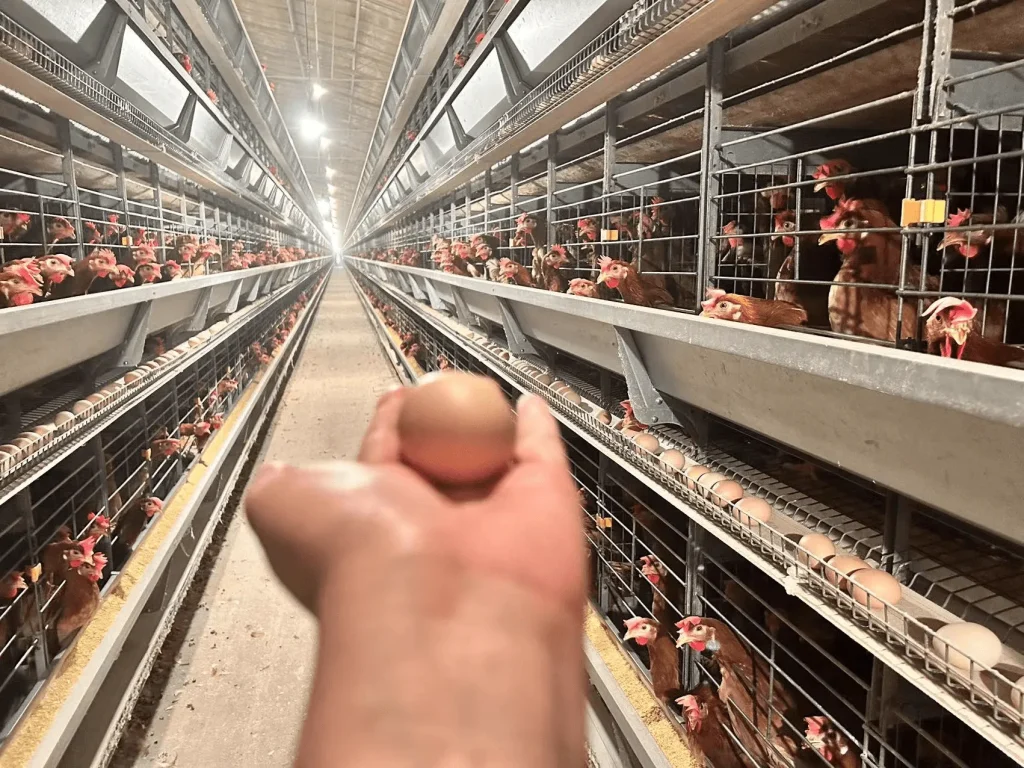
Option 1: Laying Hens (Egg Production)
Chickens start laying eggs at around 18–20 weeks
Eggs are produced daily
Suitable for long-term, stable income
Requires more attention to environment and management
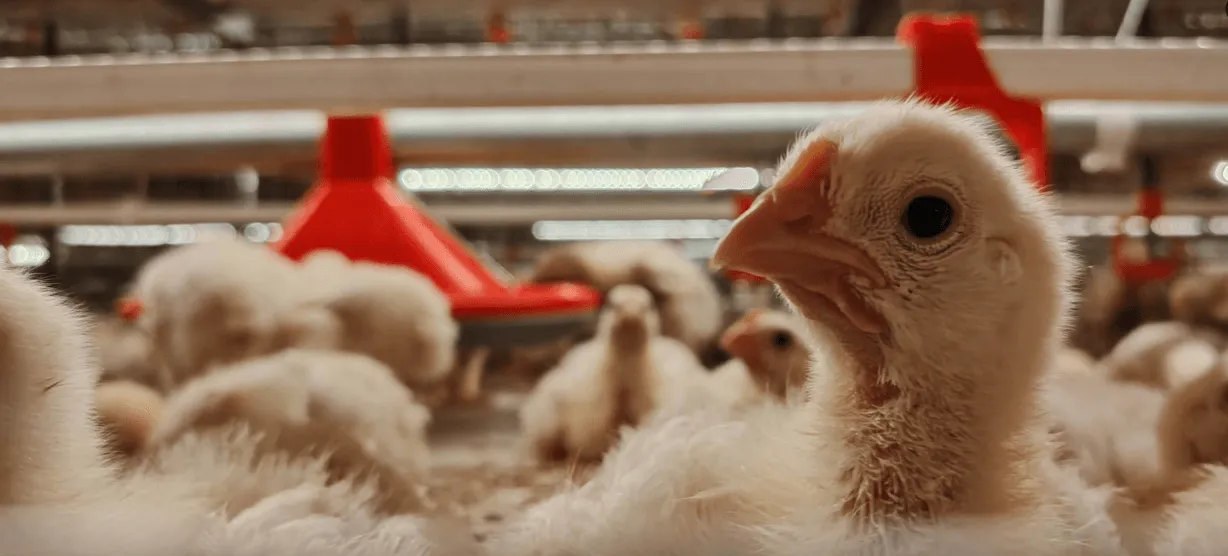
Option 2: Broilers (Meat Production)
Grow fast, usually 35–45 days per cycle
Short investment return cycle
Easier for beginners to manage
Popular choice for first-time farmers
Beginner advice:
If this is your first poultry project, broilers are often easier to start with. Once you gain experience, you can expand into egg production.
Step 2: Choose a Reasonable Starting Scale
Many beginners ask:
“How many chickens should I start with?”
Starting too small makes it hard to cover fixed costs.
Starting too large increases financial and management risks.
In real projects, a starting scale of 5,000–10,000 chickens is common because it:
Matches commercial feed and equipment efficiency
Allows you to learn real farm management
Keeps risk controllable
Makes future expansion easier
Poultry farming is a business — not a hobby.
The goal is learning + sustainability, not guessing.
Step 3: Understand the Chicken House (This Is Critical)
A chicken house is not just a shelter.
It directly affects growth rate, egg production, disease risk, and mortality.
Key factors every chicken house must have:
Good ventilation
Removes heat, moisture, and harmful gases (like ammonia)
Temperature control
Too hot → chickens eat less
Too cold → chickens waste energy to stay warm
Enough space per bird
Overcrowding causes stress, disease, and fighting
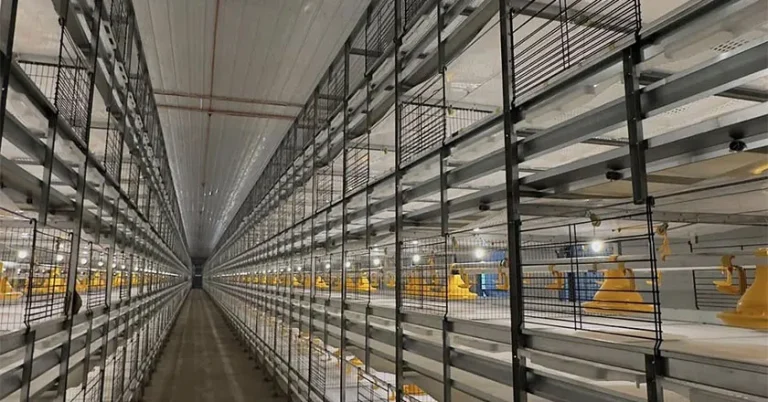
Modern solution:
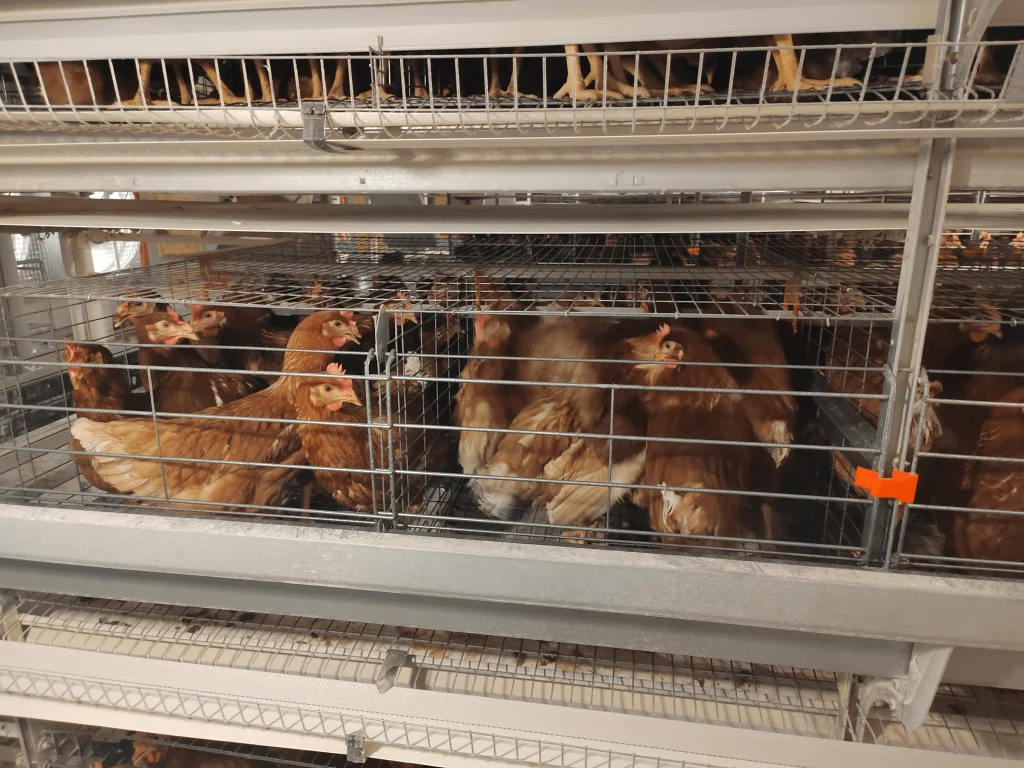
Many farms now use H-type automated cage systems, which:
Save space
Improve hygiene
Reduce labor
Allow better environmental control
For beginners, this means less daily manual work and more stable results.
Step 4: Feeding and Watering (Daily Basics)
Chickens cannot grow or lay eggs properly without correct nutrition.
Feeding basics:
Use commercial feed designed for each growth stage
Do not mix feeds randomly
Avoid sudden feed changes
Drinking water:
Must be clean and always available
Poor water quality = disease risk
Automated feeding and drinking systems help beginners:
Avoid underfeeding or overfeeding
Reduce labor
Keep feeding consistent every day
Step 5: Disease Prevention (More Important Than Treatment)
New farmers often focus on treatment.
Professional farmers focus on prevention.
Basic prevention rules:
Follow vaccination schedules
Keep the chicken house clean and dry
Remove manure regularly
Observe chickens every day (behavior tells you a lot)
Automated manure removal systems reduce:
Bacteria growth
Ammonia smell
Respiratory problems
This directly improves survival rate and productivity.
Step 6: Automation — When and Why It Matters
Automation does not mean “expensive” — it means efficient.
For beginners:
Start with basic automation (feeding, drinking, manure removal)
Add egg collection and environmental control as you expand
Automation helps you:
Reduce labor dependency
Improve consistency
Manage larger flocks with fewer people
Lower long-term operating costs
Step 7: Expand Gradually and Safely
After one or two successful production cycles, you will:
Understand real costs
Know your local market
Identify bottlenecks
At this stage, expansion becomes a business decision, not a guess.
Good farms grow step by step, not overnight.
Final Thoughts for Beginners
Starting a chicken farm is not difficult, but starting correctly is crucial.
Start with a clear goal
Choose a reasonable scale
Focus on environment and management
Use suitable equipment, not just cheap equipment
Learn from each production cycle
With proper planning and professional guidance, poultry farming can become a stable and scalable agricultural business.
If you are planning to start a chicken farm and are unsure about farm layout, equipment selection, or starting scale, professional consultation can help you avoid costly mistakes and move forward with confidence.
Choosing the wrong battery cage layout can lock your poultry farm into high labor, poor ai…
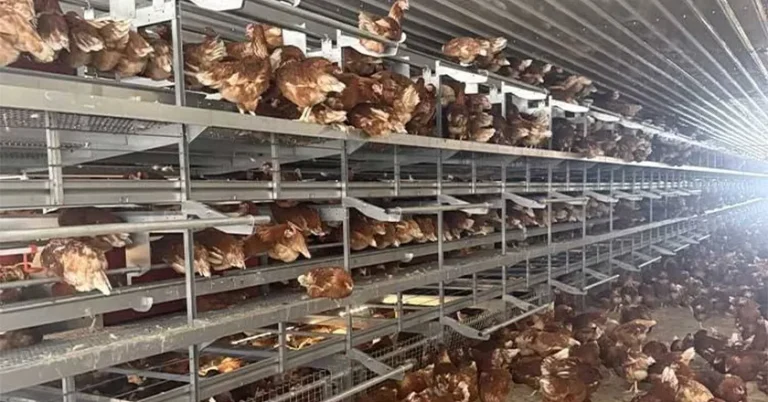
Deep litter vs battery cage system for egg production on a modern poultry farm: Explore wh…
Nous répondrons à votre demande dans les 24 heures. Pour les demandes urgentes, veuillez nous contacter via WhatsApp : +86 133 6144 9578 ou nous appeler directement.
*Nous respectons votre vie privée. Toutes les informations fournies sont strictement confidentielles.
Vos coordonnées ne seront utilisées que pour répondre à votre demande. Nous n'envoyons jamais d'e-mails ou de messages promotionnels non sollicités.