










Sourcing Poultry Equipment Manufacturers in China: Buyer Guide
Sourcing poultry equipment from a Chinese manufacturer means controlling four variables di…


Echa un vistazo a nuestras últimas noticias.,
 17:36
17:36 A Type A layer cage is a manual, A-frame battery cage for commercial egg production. It costs less to install than a fully automatic H-type system because feeding, watering and egg collection are done by hand or with basic mechanical aids instead of motorized lines.
The “A” refers to the frame shape, not a brand or a grade. Cages are stacked in a stepped, A-frame arrangement rather than the vertical, straight-tier stacking used in H-type systems. This layout puts every tier at a slight forward angle, which lets eggs roll down to a collection channel by gravity instead of needing a mechanized belt.
That single design choice is what keeps the Type A cage in the “cost-effective manual” category. Feeding troughs and water lines can still be run along the front of each tier, but the core labor tasks — daily egg collection, manure scraping, spot cleaning — are typically done by farm staff walking the aisles rather than by an automated system moving the whole house at once.
Type A vs H-Type Automatic Cage: Side-by-Side
The honest answer to “which one should I buy” depends less on flock size alone and more on how much labor cost you’re trying to remove. Here’s how the two systems compare on the factors that actually drive a buying decision.
| Factor | Jaula tipo A | H-Type Automatic Battery Cage |
|---|---|---|
| Frame layout | Stepped A-frame, gravity egg roll-off | Vertical straight-tier stacking |
| Nivel de automatización | Manual/semi-manual feeding, drinking, egg collection | Automatic feeding, drinking, egg collection, manure removal, climate control |
| Tier configuration | Not published — confirm with a quote | 3 / 4 / 5 / 3+3 / 4+4 niveles |
| Cage height | Not published | 710 mm |
| Total structure height | Not published | 2.330–6.580 mm |
| Wire mesh option | Standard galvanized (per catalog listing) | Aluminized-zinc, rated 3–4x the corrosion resistance of ordinary hot-dip galvanized wire |
| Labor need per 10,000 birds | Higher — daily manual collection and cleaning | Lower — automation handles most repeat tasks |
| Upfront equipment cost | Baja | Más alto |
| Certificación | ISO 9001:2015 / CE / SGS (company level) | ISO 9001:2015 / CE / SGS (company level) |
Two things stand out here. First, Mugong’s own catalog doesn’t publish detailed tier counts or frame dimensions for the Type A cage — if that level of detail matters for your project planning, you’ll need to request it directly rather than assume it matches the H-type numbers. Second, the wire mesh distinction matters more than it looks: aluminized-zinc coating is only confirmed for the H-type line in the current catalog, so don’t assume the same corrosion rating applies to A-type units without confirming it in your quote.
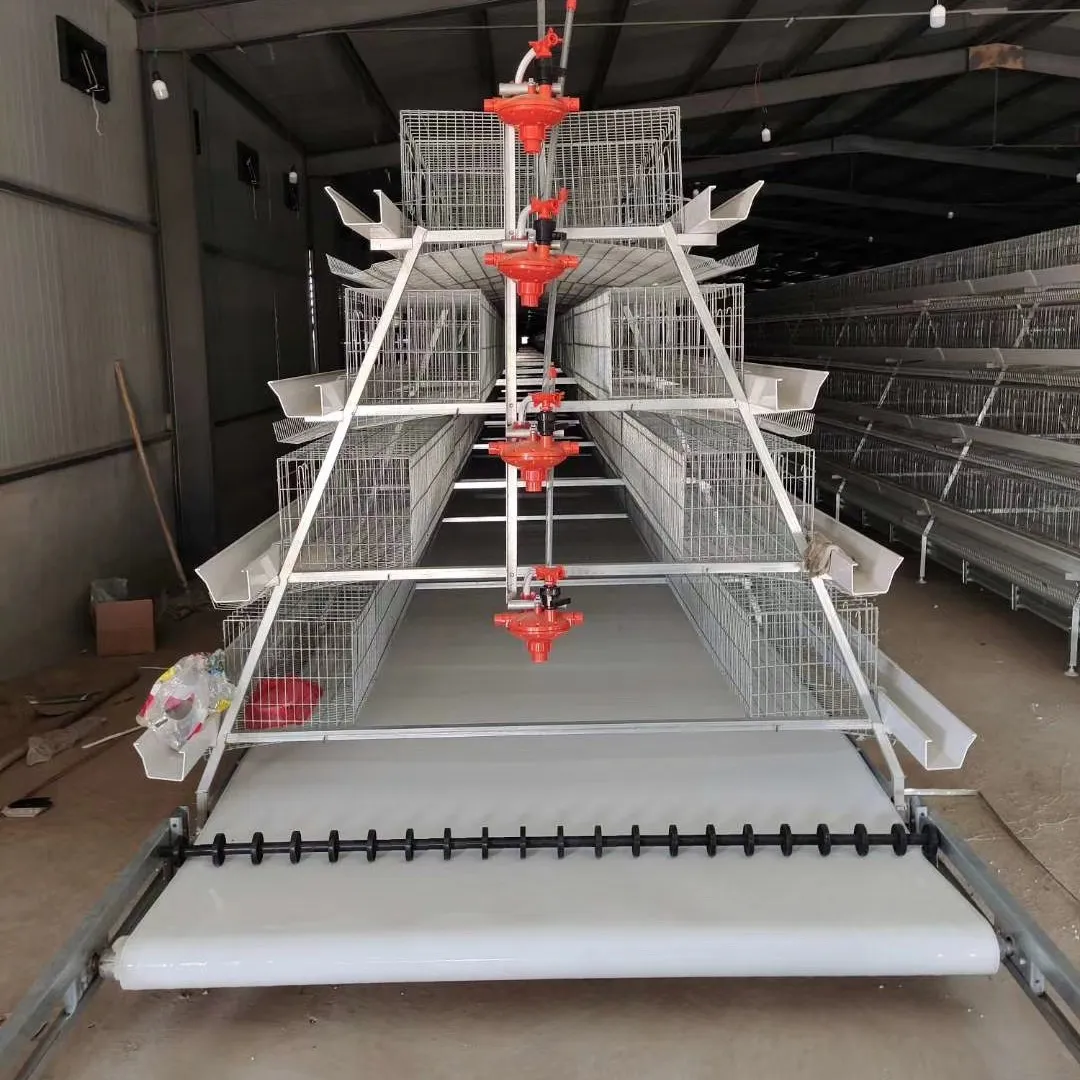
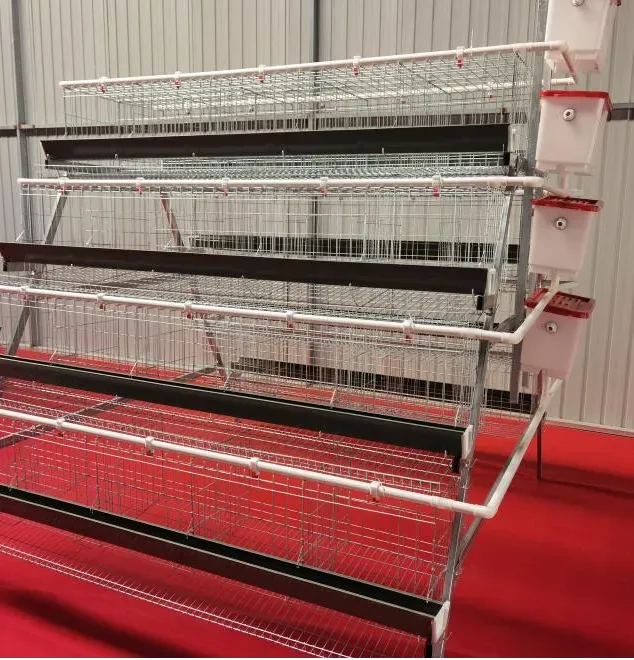
Published market-reference figures for fully automatic layer systems give a useful cost anchor, even though they’re not a Mugong-specific quote for the A-type cage:
Type A cages don’t have a published price range in Mugong’s materials, largely because the manual labor content varies so much by market — feed and water line configuration, whether egg collection is fully manual or semi-mechanized, and local wire mesh sourcing all move the number. If cost is your deciding factor, request a quote rather than working from a placeholder figure; the gap between a bare-bones manual setup and a semi-automated A-type variant can be wide enough to change your ROI math.
The mistake worth flagging: some buyers assume Type A cages are only viable for very small operations under a few thousand birds. That’s not accurate. A-frame manual cages are used at commercial scale in markets where labor cost is low relative to equipment financing cost, or where a farm is phasing in automation gradually — starting with a manual pullet or grower stage, then moving hens into an automated H-type layer system once they reach production age. Treating Type A as strictly a “small farm” product can lead to overbuying automation you don’t yet need, or underbuying it when local labor rates make automation the cheaper long-run option.
Compared with the general product pages most manufacturers publish for A-type cages — which tend to describe the frame concept without giving side-by-side automation or cost context — the comparison above is meant to answer the “should I even consider this” question, not just the “what is it” one.
Q: Is a Type A cage less durable than an H-type cage?
A: Durability depends primarily on wire mesh grade and steel spec, not the frame shape itself. Confirm the mesh coating in your quote rather than assuming it matches the H-type’s aluminized-zinc rating.
Q: Can I mix Type A and H-type cages in the same farm?
A: Yes — using Type A for pullet/grower stages and H-type for layer production is a common phased-automation approach.
Q: Does Mugong publish exact Type A cage dimensions?
A: Not currently. Tier count and frame dimensions aren’t listed in the public catalog; request them directly for project planning.
Where a system needs to scale past 10,000 birds with full automation from day one, it’s also worth reading how a complete turnkey layer project is scoped end to end, since equipment choice is only one part of that decision.
Sourcing poultry equipment from a Chinese manufacturer means controlling four variables di…
A steel structure poultry house is a prefabricated steel building designed for layer, broi…
Responderemos a su consulta en un plazo de 24 horas. Para consultas urgentes, póngase en contacto con nosotros a través de WhatsApp: +86 133 6144 9578 o llámenos directamente.
*Respetamos su privacidad. Toda la información enviada es estrictamente confidencial.
Sus datos solo se utilizarán para responder a su consulta. Nunca enviamos correos electrónicos no solicitados ni mensajes promocionales.