











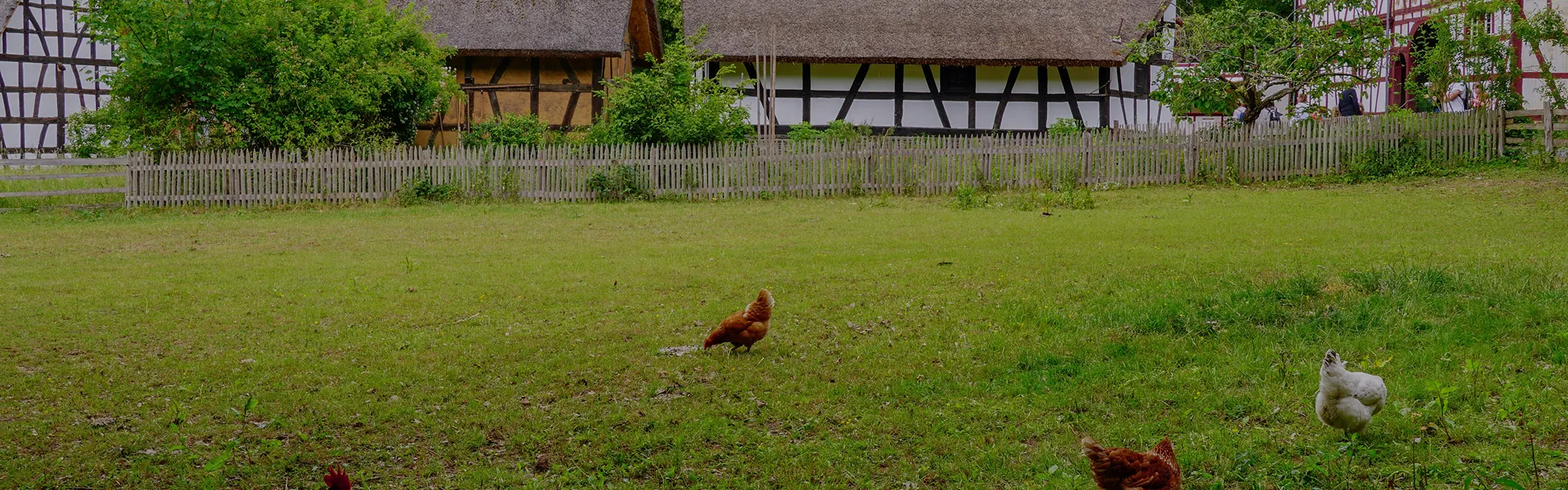
What Type of Chicken Coop Light Is Best for Chickens, Backyard Poultry, and Egg Production?
Poor lighting in a chicken coop can quietly reduce egg numbers, stress birds, and make win…

 11:56
11:56 Problem-Agitate-Solution: Many poultry farmers struggle with balancing space, hygiene, and productivity in broiler rearing. Traditional floor systems can lead to disease, uneven growth, and higher labor costs. Battery cages for broilers offer a modern solution, optimizing space and ensuring healthier, more profitable flocks.
Snippet: Battery cages for broilers are designed to house chickens efficiently, providing better hygiene, feeding, and ventilation. While they restrict some natural behaviors, these cages allow farmers to monitor growth, automate feeding and drinking, and effectively manage manure, making broiler farming more productive and profitable.
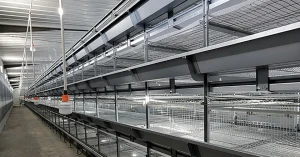
Sistema automático de jaulas en batería para pollos de engorde tipo H
What is a Battery Cage System in Poultry Farming?
How Do Battery Cages Affect Broiler Growth and Development?
What Are the Space Requirements for Broilers in Cages?
Can Battery Cages Improve Hygiene and Reduce Disease?
How Does Feeding and Watering Work in Broiler Battery Cages?
Are Battery Cages Humane and Conducive to Welfare?
How Do Battery Cages Impact Labor and Production Efficiency?
What Are the Pros and Cons of Raising Broilers in Cages?
Can Battery Cages Be Profitable for Large-Scale Poultry Farms?
How to Implement a Modern Poultry Battery Cage System on Your Farm?
A battery cage system is a method of housing chickens in stacked cages to maximize space utilization. Designed specifically for poultry farming, these cages are made to ensure good environmental conditions, including ventilation, controlled temperature, and easy manure removal. Modern battery cages for broilers often integrate automatic feeders and drinkers, allowing poultry farmers to effectively control the environment according to growth.
In comparison to traditional chicken coops, battery cages prevent overcrowding and reduce the use of litter, which can harbor pathogens. They are structured to house broiler chickens per bird in a way that balances production efficiency with hygiene management.
Key Features of Battery Cage Systems:
Designed to house multiple broilers efficiently
Automatic feeding and water supply systems
Facilitate manure removal and cleaning
Improve air quality and reduce disease spread
Growth and development of broiler chickens is closely tied to their living conditions. Cages prevent the flock from excessive movement, which some argue limits exercise, but the benefits include uniform growth and healthy weight gain. Broiler battery systems are designed to ensure space per bird, good environmental conditions, and effective feeding, which collectively promote faster, more predictable growth.
Studies indicate that broilers in battery cages reach market weight quicker than those in floor systems due to reduced energy expenditure on movement and improved nutrition delivery. Additionally, ventilation in these cages keeps the flock comfortable, supporting healthy growth and reducing stress-related issues.
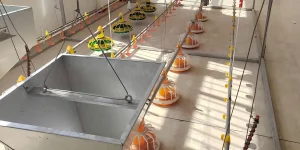
Equipo para cría de pollos de engorde en suelo
Providing adequate space per bird is essential to avoid overcrowding and maintain health. For broilers, battery cages are designed according to growth stages, ensuring each chick has enough room to move slightly, stretch, and access feeders and drinkers.
| Growth Stage | Recommended Space per Broiler | Notes |
|---|---|---|
| Starter (0–3 weeks) | 0.08–0.10 m² | Ensure access to automatic feeders and drinkers |
| Grower (4–5 weeks) | 0.10–0.12 m² | Adequate air quality and light exposure |
| Finisher (6+ weeks) | 0.12–0.15 m² | Allows safe growth before market weight |
Using cages according to the growth ensures broilers are healthy and reduces risks of disease and stress, making the system both profitable and efficient.
Hygiene is a primary concern in poultry farming, and battery cages excel in this aspect. Because broilers are off litter, contact with feces is minimized, reducing the risk of bacterial infections and disease transmission.
Manure removal is automated or easy to clean
Airflow is optimized for good environmental conditions
Chickens are less likely to develop footpad lesions or respiratory issues
Many poultry farmers report a decrease in illness and mortality rates when using battery cages for broilers, which directly improves farm productivity and lowers veterinary costs.
Feeding and watering in battery cages are typically automated to ensure uniform distribution of nutrition and water. Automatic feeders provide consistent access to feed, while drinkers ensure clean water supply, reducing spillage and waste.
Benefits include:
Consistent growth and development
Reduced labor for feeding and maintenance
Improved production efficiency and feed conversion ratio (FCR)
Some systems allow feeding according to the growth stage, which helps optimize broiler performance and supports healthy flock development.
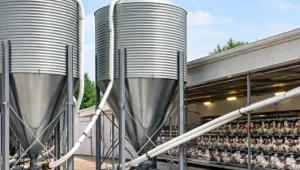
Layer Farm – Central Silo Feeding System
The welfare of broilers in battery cages is debated. While cages limit natural behaviors like dust bathing and foraging, they provide conducive control over the environment, reducing stress and disease.
Modern designs now consider:
Adequate space requirements
Perches for resting
Proper ventilation and lighting
The goal is to balance production efficiency with animal welfare, creating a humane and profitable solution for modern poultry farms.
Battery cages can dramatically reduce labor requirements by automating feeding, watering, and egg collection (if dual-purpose systems are used for layers). Farmers report:
Less daily manual work
Faster cleaning with manure removal systems
Easier monitoring of flock health
With reduced labor costs and improved flock performance, production efficiency is maximized, making battery cages for broilers attractive for large-scale operations.
Pros:
Improved hygiene and reduced disease
Faster, uniform growth and development
Efficient space utilization and automated feeding
Easier manure management
Cons:
Limits natural behaviors like dust bathing and foraging
Initial cost of battery cages and machinery
Public perception concerns regarding humane treatment
Ultimately, the decision depends on farm scale, goals, and market requirements.
Profitability in poultry farming hinges on flock health, growth rate, and labor efficiency. Battery cages for broilers improve all three:
Uniform growth reduces losses
Automation lowers operational costs
Efficient space utilization allows larger flocks per farm
Case studies show that farms switching from floor systems to battery cages can increase production efficiency by up to 20–30%, making the investment worthwhile.
Implementing a battery cage system requires planning:
Assess farm layout for optimal space utilization
Choose automatic feeding and drinking systems
Ensure proper ventilation and air quality
Train staff on cage management and maintenance
Monitor flock performance and adjust feeding schedules according to growth
Do broilers grow faster in battery cages?
Yes, controlled feeding and reduced movement help broilers reach market weight more quickly than traditional floor systems.
Are battery cages better for farm hygiene?
Absolutely. By preventing contact with litter, battery cages reduce disease risk and make manure management more efficient.
Can battery cages be used for both broilers and layers?
While cages are primarily designed for layers, specialized battery cages for broilers are available to optimize growth and productivity.
Do battery cages affect chicken welfare?
They limit natural behaviors, but modern designs focus on adequate space, ventilation, and comfort to ensure healthy broiler development.
Are battery cages profitable for large farms?
Yes, automation and efficient space utilization significantly improve production efficiency, reducing labor costs and boosting profitability.
Battery cages for broilers optimize space and automate feeding and drinking
Improve hygiene, air quality, and reduce disease
Support uniform growth and healthy development
Reduce labor costs and enhance production efficiency
Profitability depends on farm scale and proper system management
Modern designs address welfare concerns while maximizing farm output
Poor lighting in a chicken coop can quietly reduce egg numbers, stress birds, and make win…
A good ventilation fan removes heat, humidity, dust, and unwanted air from a room or worki…

Responderemos a su consulta en un plazo de 24 horas. Para consultas urgentes, póngase en contacto con nosotros a través de WhatsApp: +86 133 6144 9578 o llámenos directamente.
*Respetamos su privacidad. Toda la información enviada es estrictamente confidencial.
Sus datos solo se utilizarán para responder a su consulta. Nunca enviamos correos electrónicos no solicitados ni mensajes promocionales.