











What Type of Chicken Coop Light Is Best for Chickens, Backyard Poultry, and Egg Production?
Poor lighting in a chicken coop can quietly reduce egg numbers, stress birds, and make win…

 15:08
15:08 Wet floors, ammonia smell, and dirty birds can quietly destroy results. If your broiler house starts with the wrong floor setup, wet litter shows up fast—then foot issues, disease pressure, and poor growth follow. This post gives a simple, field-tested reason why litter-type flooring works—and how to manage it well.
Litter-type flooring is recommended for broilers because it supports comfort, traction, insulation, and droppings control while improving litter quality and reducing ammonia release when managed correctly. Good poultry litter acts like a “living buffer” that absorbs moisture, lowers contact with manure, and helps stabilize the broiler house environment—leading to better broiler performance.
Poultry basics: what is poultry litter and why is it used as flooring in a broiler house?
Litter quality: how does bedding material protect broiler chickens and boost broiler performance?
Wet litter: why do wet litter conditions become a great concern to broiler producers?
Litter management: what management practices keep litter moisture should be maintained in the right range?
Bedding material choices: what litter material works best, and what are disadvantages of particular litter sources?
Poultry house design: how do ventilation and climate control litter moisture and ammonia release from the litter?
Used litter vs reused litter: is used litter safe for broiler production, and how do you control litter risk?
Litter amendments: when does the use of litter amendments help control litter moisture and litter pH?
Turnkey broiler house systems: how do feeding, drinking, and manure treatment affect litter conditions?
Case study + checklist: how to prevent wet litter problems would likely in modern poultry projects?
In simple terms, poultry litter is the bedding layer spread on the floor of a poultry house. It usually starts as a dry bedding material (like wood shavings, sawdust, rice hulls, straw, or similar). Over time, it mixes with manure and feathers and becomes the litter environment that broilers live on. This is why litter is also the primary “floor system” in most conventional broiler farming.
So why is it recommended? Because it solves many problems at once. A good litter layer gives broilers traction, keeps them warmer than bare concrete, and reduces direct contact with litter that is wet or manure-heavy. A stable litter layer also supports normal bird behavior—resting, walking, and feeding—without constant slipping or cold stress.
In large-scale farms, this matters even more. In the poultry industry, performance is measured in tiny margins—feed conversion, livability, uniformity. The effect of litter touches all of them. When litter is managed well, broilers stay cleaner and drier, and that supports steady growth and better overall flock results.
Think of litter quality as the comfort layer that separates birds from waste. When litter stays dry and fluffy, it absorbs moisture, reduces odor, and protects feet and skin. Studies show that higher litter moisture is strongly linked to worse footpad condition and higher ammonia risk; one 2025 paper notes high litter moisture (e.g., >25%) correlates with higher ammonia and more footpad lesions.
Good bedding material also helps prevent caking. Caked litter turns the floor into a hard, wet mat—broilers stand on it for weeks. That’s a direct path to discomfort, dirty feathers, and reduced welfare outcomes. A strong flock starts from the ground up: good bedding supports better resting time, smoother walking, and fewer stress events.
Here’s the simple relationship I share with farm investors and integrators:
Better litter quality → lower stress → steadier intake → better broiler performance
Poor litter quality → higher disease pressure + ammonia → growth loss + higher costs
And yes, broiler performance is highly dependent upon litter—especially in high-density production where the floor environment changes quickly.
Wet litter is not just “messy.” It’s expensive. It increases the risk of footpad dermatitis and hock burns, increases odor complaints, and can raise ammonia levels. Research consistently reports litter wetness as a leading factor for footpad lesions; studies note litter moisture exceeding ~30% is associated with impaired footpad condition.
This is why wet litter conditions are a great concern to broiler producers: they damage welfare and profits at the same time. Wet litter can also increase pathogen pressure. For example, wet litter further aggravates coccidiosis risk in many production discussions because moisture supports cycling of certain organisms.
The hidden cost is air quality. Ammonia volatilization from poultry litter rises with humidity, ventilation rate, temperature, and litter pH conditions. A 2021 review notes high ammonia levels (e.g., >25 ppm) can reduce body weight gain and harm bird health and comfort.
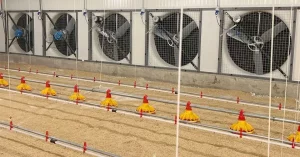
معدات تربية الدجاج اللاحم
Litter management is a daily discipline. You don’t “fix” litter once—you guide it every day so litter moisture should be maintained at a stable level.
The best management practices usually focus on three levers:
Water control (drinkers, leaks, pressure)
Air movement (ventilation and heating balance)
Litter handling (depth, stirring, spot removal)
Universities and extension programs repeat the same core actions: manage drinkers to prevent leaks and adjust pressure as birds grow, because excessive water wastage into the litter is a common driver of wet litter.
A practical “thumb in estimating litter moisture” that farmers often use is: squeeze a handful of litter. If it forms a tight ball and stays stuck, it’s too wet. If it falls apart easily, you’re closer to “litter dry.” (This field method is widely used in broiler operations; always confirm with your own farm standards.)
Fast checklist to control litter moisture:
Fix drinker leaks that will increase litter moisture
Adjust drinker height weekly (reduces splash)
Ventilate + add heat when needed to move moisture out (warm air holds more moisture)
Remove affected litter should be removed in wet zones
Keep litter level to support uniform feeder/drinker height
Your litter material choice matters because different materials hold water differently and cake differently. Regional availability often decides the final selection. Common bedding materials include sawdust, wood shavings, rice hulls, straw, and paper products.
A good bedding material should be:
absorbent (but not “mud-making”)
low dust (better respiratory comfort)
easy to spread evenly
cost-effective at scale
But there are disadvantages of particular litter sources. For example, some materials dust more, some cake faster, and some are hard to source consistently. Also, if new litter is not stored properly (gets wet in storage), you start the flock with a problem.
Quick comparison table
| Bedding material | Strength | Watch-out |
|---|---|---|
| Wood shavings | soft, common, good cushion | supply cost swings |
| Sawdust | absorbent | can cake if fine + wet |
| Rice hulls | good structure | regional availability |
| Straw | cheap in some areas | may mat/cake faster |
| Paper products | sometimes available | quality varies |
Also consider depth. Extension guidance suggests sufficient bedding depth is important; one guideline notes minimum 3 inches and often 4–6 inches as ideal in many broiler houses.
This is where engineering turns into profits. The broiler house ventilation system is not just for temperature—it is a moisture removal machine.
When moisture in the litter increases, you often see:
higher ammonia release from the litter
more caking
dirtier birds
worse foot condition
Ventilation plus controlled heating helps evaporate water and move humid air out. UGA notes the combination of heating and ventilating can remove considerable moisture from the house.
A detailed review of wet litter also emphasizes ventilation effectiveness for reducing shed humidity and increasing evaporation when excess water accumulates.
Two factors that influence litter (big picture):
Water input (drinkers, leaks, bird excretion)
Water removal (ventilation, heat, airflow over litter)
If you want stable litter, you must control litter moisture through engineering plus routine management.
In many regions, used litter can serve multiple flocks (especially when managed well), although single-flock clean-outs are also common in some markets.
The question is not “used or new” only. The real question is: is the quality of litter stable and safe for the next flock?
Potential risks:
used litter can become seeded with pathogens if biosecurity breaks
spread easily in contaminated litter if moisture stays high
ammonia trapped in the litter can spike at placement
nutrient buildup and uneven moisture zones
If you do reused litter, control litter moisture and manage litter pH and ammonia risk. Many poultry companies and broiler producers use litter amendments and targeted heating/ventilation strategies to stabilize reused litter between flocks.
A practical approach:
Remove wet cake zones
Dry down the house (heat + ventilation)
Evaluate moisture content of the litter before placement
Consider amendments if ammonia risk is high
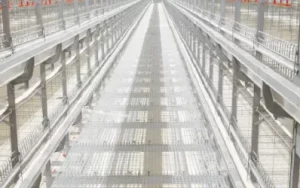
Ventilated cage floor and aisles
Litter amendments can help in two common situations:
when ammonia risk is high, and
when litter is wet or starting to cake.
Amendments often work by changing litter pH or binding ammonia, which reduces ammonia volatilization from poultry litter. There is research on amendments (such as alum-based products) reducing ammonia loss and improving litter nitrogen retention; the topic is widely studied in poultry science literature.
But here’s the honest operator truth: amendments are not magic. If drinkers leak and ventilation is weak, no bag of additive will save the flock. I treat amendments as a tool—never a replacement for core management.
When amendments make sense:
early placement when ammonia spikes are expected
wet zones that keep returning after you fixed leaks
high-density houses where moisture load is heavy
Also, if you want to “lower litter pH,” follow product guidance carefully and match it to your equipment and manure-handling plan.
This is the part many buyers miss. Litter problems are often equipment problems.
In modern broiler projects, litter conditions most are manure + water management. These drivers matter:
Drinker type and pressure: wrong settings cause water wastage into the litter
Feeding management: nutrition also influences litter quality (salt balance, gut health)
Manure treatment strategy: how you handle cake, storage, and removal affects air quality
Climate control: airflow pattern determines drying speed across the floor
In turnkey engineering, we integrate the house steel structure, cages (for rabbits or layers where relevant), feeding, drinking, climate control, and manure treatment so the system works as one. That’s how you reduce “mystery wet litter” events that show up mid-cycle.
A good design also supports easy inspection. If you can’t quickly spot leaks, you will fight wet litter every flock.
Case study (typical modernization upgrade)
A medium-scale farm expanded from 2 houses to 6 houses. After expansion, they faced high litter moisture and odor. The root cause was not the bedding material alone—it was airflow distribution plus drinker pressure. We adjusted:
drinker pressure and height schedule
ventilation staging to keep humidity lower
bedding depth to maintain a stable floor buffer (4–6 inches target)
Result: fewer wet zones, improved bird cleanliness, and more stable broiler performance.
“Stop wet litter” checklist (printable)
Check for leaks that will increase litter moisture (daily walk)
Confirm ventilation settings match humidity load (not just temperature)
Keep bedding depth uniform; avoid thin spots
Remove affected cake zones fast
Watch nutrient inputs that cause watery droppings
Consider amendments only after basics are fixed
Re-check moisture with the squeeze test and visual scoring
If wet litter problems would likely happen in your operation, start with water input + water removal. That’s the fastest win.
Why is litter flooring used in broiler production instead of bare concrete?
Litter provides comfort, traction, insulation, and moisture buffering. It reduces direct contact with manure and supports better litter quality and air conditions when managed well.
What causes wet litter in a broiler house?
Common causes include drinker leaks or pressure issues, poor ventilation effectiveness, high humidity, and management errors. Extension guidance highlights drinker management and ventilation/heating as key controls.
What litter moisture level is too high?
Research and field studies often link high litter moisture (e.g., above ~25–30%) with worse footpad condition and higher ammonia risk.
How deep should bedding material be in a broiler house?
Some extension guidance recommends maintaining at least ~3 inches and often suggests ~4–6 inches as ideal in many broiler houses to support moisture control and bird comfort.
Do litter amendments really work?
They can reduce ammonia volatilization and help stabilize litter pH, but they don’t replace drinker control and ventilation. Use them as a support tool after fixing root causes.
Can used litter be reused safely?
Yes in many systems, but it depends on moisture control, biosecurity, and between-flock conditioning. Used litter can carry risks if it stays wet or contaminated, so manage it carefully and monitor ammonia.
Litter flooring is recommended because it buffers moisture, improves comfort, and supports stable broiler production.
Wet litter is the enemy: it raises ammonia risk and damages feet, welfare, and results.
Control litter moisture with water management + ventilation/heat—not with additives alone.
Choose bedding material based on absorbency, caking behavior, dust, and local supply.
Maintain proper bedding depth and uniformity to prevent thin, wet zones.
Turnkey systems (drinking, feeding, climate control, manure handling) strongly affect litter quality and broiler performance.
Poor lighting in a chicken coop can quietly reduce egg numbers, stress birds, and make win…
A good ventilation fan removes heat, humidity, dust, and unwanted air from a room or worki…

سنرد على استفسارك في غضون 24 ساعة. للاستفسارات العاجلة، يرجى الاتصال بنا عبر WhatsApp: +86 133 6144 9578 أو الاتصال بنا مباشرة.
*نحن نحترم خصوصيتك. جميع المعلومات المقدمة سرية للغاية.
سيتم استخدام بياناتك فقط للرد على استفسارك. نحن لا نرسل أبدًا رسائل بريد إلكتروني أو رسائل ترويجية غير مرغوب فيها.