










Sourcing Poultry Equipment Manufacturers in China: Buyer Guide
Sourcing poultry equipment from a Chinese manufacturer means controlling four variables di…



En son haberlerimize göz atın,
 11:10
11:10 Sourcing a kümes ekipmanı üreticisi in China comes down to four decisions made before the contract is signed: which certification actually matches your import market, what minimum order quantity and payment terms you can live with, where the manufacturer’s freight and installation responsibility legally ends, and how fast spare parts reach you after year one.
Type this keyword into a search engine and the first page is mostly supplier landing pages and marketplace directories, each claiming to be “the” manufacturer to work with. Scroll through a dozen of them and you’ll find the same three lines repeated: ISO certified, CE certified, years of experience. What you won’t find is anything about which CE process applies to poultry cage equipment, what happens to your shipment once it clears the destination port, or how long a replacement feed-line motor takes to arrive when your system is already stocked with 40,000 birds. That gap is exactly where a distributor or OEM buyer gets exposed — not on the factory floor, but in the paperwork and the logistics handoff.
This guide is written for that gap. It assumes you already know you want cage systems, house structures, or a turnkey EPC package from a China-based supplier. What it covers is how to verify what a manufacturer tells you, rather than repeat what they claim.
Three certification terms show up on almost every manufacturer’s homepage — ISO 9001:2015, CE marking, and SGS inspection — and they answer three different questions. Confusing them is the single most common paperwork mistake a first-time buyer makes.
ISO 9001:2015, maintained by the International Organization for Standardization, certifies that a manufacturer’s quality management process is documented and audited. It says nothing about whether a specific cage model meets any particular country’s safety or import standard — it certifies the factory’s process, not the product.
CE marking works differently depending on the equipment category. For most poultry battery cage and house equipment, the manufacturer self-declares conformity by issuing a Declaration of Conformity (DoC) that lists the directives and standards it claims to meet. Third-party inspection through a Notified Body is only required for a narrower set of higher-risk equipment categories. Neither path is inherently wrong, but they carry different weight, and a supplier who lets you assume one means the other isn’t being straight with you.
SGS — one of the more widely used independent inspection firms in cross-border equipment trade — verifies a specific shipment or production run against an agreed specification. An SGS report tied to your purchase order confirms that particular batch matched what was ordered; it does not certify the manufacturer’s entire catalog going forward.
| Certification | What It Confirms | Who Verifies It | Document to Request | What It Doesn’t Cover |
| ISO 9001:2015 | The manufacturer’s quality management process is documented and audited | Accredited third-party certification body | Certificate showing the accreditation body and certification scope | Whether a specific product meets your country’s import standards |
| CE Marking (Self-Declared) | The manufacturer’s own claim of conformity with applicable EU directives | The manufacturer | Declaration of Conformity (DoC) naming the specific directives applied | Independent confirmation that the equipment meets those directives |
| CE Marking (Third-Party Inspected) | An accredited body tested or audited the product against the applicable directive | Notified Body, required only for certain higher-risk product categories | Notified Body certificate with an identification number | N/A |
| SGS Inspection | The shipment matches the agreed specifications and the inspected factory conditions align with the supplier’s claims | SGS or an equivalent independent inspection body | Inspection report linked to the specific purchase order | The quality of production completed after the inspected shipment leaves |
Most buyers see “CE” on a product page and assume an outside lab tested it. For the majority of poultry cage and house equipment, that’s not the process — the manufacturer wrote the declaration itself. That isn’t a red flag on its own; self-declaration is a legitimate and common route under EU conformity rules. The problem is buyers who never ask to see the DoC, never check which standards it names, and find out only after the equipment arrives that the paperwork covers a different product category than what they ordered.
If you’re shipping to a market outside the EU — Nigeria’s SONCAP program or the PVOC scheme used across parts of East Africa, for example — CE marking doesn’t substitute for those national requirements at all. Ask the manufacturer directly which of your destination country’s schemes they have prior export experience with, and get that answer in writing, not in a sales call.
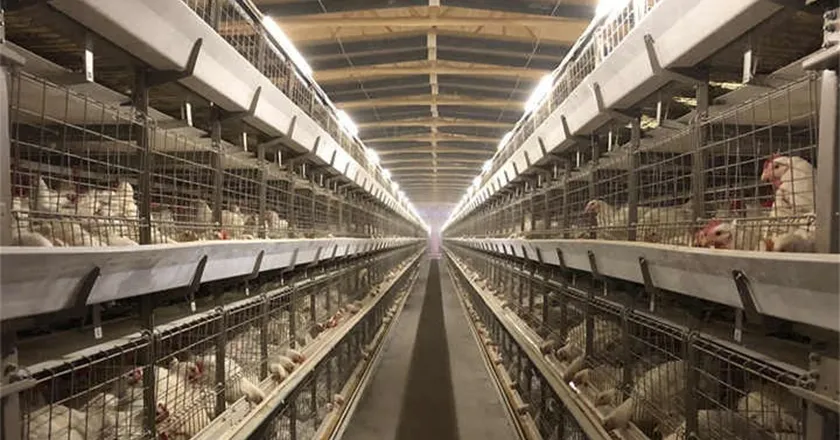
A poultry equipment manufacturer offering full turnkey EPC (engineering, procurement, construction) scope is a different commercial relationship than one selling cages and systems only. Neither is better by default — the right choice depends on whether you already have a local construction partner and how much of the project risk you want to hold yourself.
| Scope Item | Equipment-Only Contract | Turnkey EPC Contract |
| House / Cage Design | Buyer or local partner handles building design separately | Manufacturer designs the house and equipment as one integrated system |
| Civil and Site Works | Not included | Included, either self-performed or subcontracted |
| Kurulum ve Devreye Alma | Often quoted separately and may be handled by the buyer’s own crew | Included, with the manufacturer’s crew working on-site |
| Personel Eğitimi | Documentation or video guidance provided upon request | On-site training delivered as part of commissioning |
| After-Sales / Spare Parts | Buyer independently manages logistics and local repairs | Usually coordinated through a single after-sales contact |
| Cost Transparency | Higher — equipment pricing is presented as a separate, comparable figure | Lower — freight, labor and site work may be combined, so request an itemized quotation |
If a supplier quotes turnkey EPC as a single lump sum with no breakdown, that’s a legitimate reason to push back and ask for it split by scope item. A single number makes it impossible to compare two suppliers’ equipment pricing against each other.
Manufacturer pricing for poultry equipment is quote-based and shifts with automation level, structural material, and destination logistics, so treat every number below as a starting range to qualify a quote against — not a fixed price you should expect to be handed.
| Project Type | Typical Reference Range | What Drives the Range |
| Automatic Layer Battery Cage — Equipment Only | Approximately US$15–25 per bird capacity | Automation depth and structural materials |
| 10,000-Bird Layer Cage Project — Equipment Only | Approximately US$18,000–32,000 | Automation depth and steel specifications |
| 20,000-Layer Fully Automatic System | Approximately US$35,000–120,000 | Automation configuration level |
| Full Turnkey Project — Cage, House and Site Works | Quotation only — no reliable published range | Civil works, freight and destination country introduce significant variable costs |
Cost drivers worth putting in front of a supplier before you ask for a number: bird capacity and tier count, manual versus semi- or fully automatic operation, galvanized versus aluminized-zinc structure, depth of climate control, whether a steel-structure house is included, destination country freight and certification requirements, and equipment-only versus full EPC scope. A supplier who can’t walk through these seven variables with you before quoting hasn’t priced the project — they’ve guessed at it.
Turnkey EPC scope concentrates accountability with one supplier, which matters if you don’t have a construction partner on the ground in the destination country — but it also means less visibility into how much of the total price is equipment versus civil works and labor, and less leverage to swap in a local contractor if their rates are lower.
Equipment-only sourcing gives a cleaner, more comparable price and lets you control the construction relationship separately — but it puts the integration risk on you: if the house design and the cage system don’t match up on dimensions or electrical load, there’s no single party responsible for catching that before installation day.
Neither option removes the need for the six checks above. It only changes who you’re asking to perform them.
This varies by product line and isn’t standardized industry-wide; get it in writing per SKU rather than assuming a blanket minimum applies across a manufacturer’s full catalog.
Not necessarily. For most poultry cage and house equipment, CE conformity is self-declared by the manufacturer through a Declaration of Conformity. Third-party testing through a Notified Body applies only to a narrower set of higher-risk equipment categories.
It depends on whether the part is held in regional stock or made to order in China. Ask for an average lead time in days for both scenarios before signing, since brochure warranty terms rarely specify this.
Not inherently — EPC bundles civil works and labor into one price, which can be cost-effective if you’d otherwise have to source a local contractor separately. The issue is comparability: a bundled quote is harder to benchmark against a competitor’s equipment-only price unless you ask for a scope breakdown.
Generally yes, if your destination country requires it. CE marking is an EU conformity framework and doesn’t substitute for a separate national import compliance scheme like Nigeria’s SONCAP or the PVOC program used in parts of East Africa.
Ask for the Declaration of Conformity by name, not “your certificates.” Suppliers who can produce it immediately have it on file for real; suppliers who need a few days to “prepare” one are a signal worth noting.
Sourcing poultry equipment from a Chinese manufacturer means controlling four variables di…
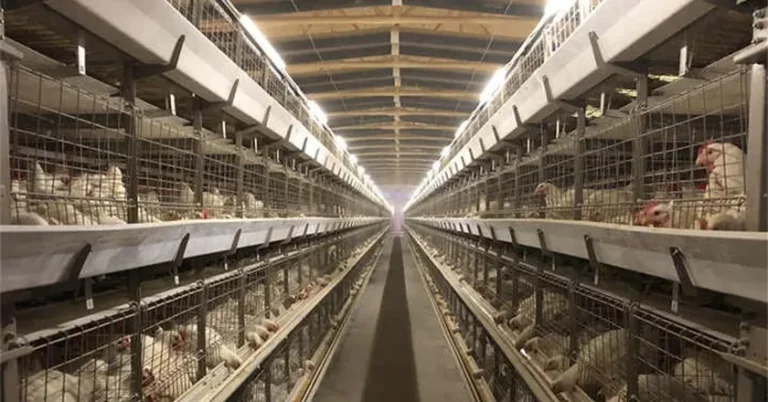
A steel structure poultry house is a prefabricated steel building designed for layer, broi…
Sorunuza 24 saat içinde cevap vereceğiz. Acil sorularınız için lütfen WhatsApp üzerinden +86 133 6144 9578 numaralı telefondan bize ulaşın veya doğrudan bizi arayın.
*Gizliliğinize saygı duyuyoruz. Gönderilen tüm bilgiler kesinlikle gizlidir.
Bilgileriniz yalnızca sorunuzu yanıtlamak için kullanılacaktır. İstenmeyen e-postalar veya promosyon mesajları asla göndermiyoruz.