










Sourcing Poultry Equipment Manufacturers in China: Buyer Guide
Sourcing poultry equipment from a Chinese manufacturer means controlling four variables di…


En son haberlerimize göz atın,
 16:50
16:50 Starting a poultry farm without choosing the right cage can lead to poor bird comfort, harder management, and lower returns. Many buyers feel confused because there are many cage designs on the market. The solution is to match the right chicken cage and housing plan to the right bird, production goal, and farm scale.
Kümes hayvanı üretiminde başlıca farklı kafes türleri arasında yumurtacı kafesi, batarya kafesi, zenginleştirilmiş kafes, broyler kafesi ve civciv kafesi sistemleri yer alır. Her kafes sistemi, civciv yetiştirme, piliç yetiştirme veya daha iyi yumurta üretimi, yemleme verimliliği ve gübre kontrolü için yumurtlayan tavukları destekleme gibi farklı bir aşama veya amaç için inşa edilmiştir. İyi bir kafes seçimi tavuk türüne, çiftlik büyüklüğüne, iklime ve otomasyon seviyesine bağlıdır.
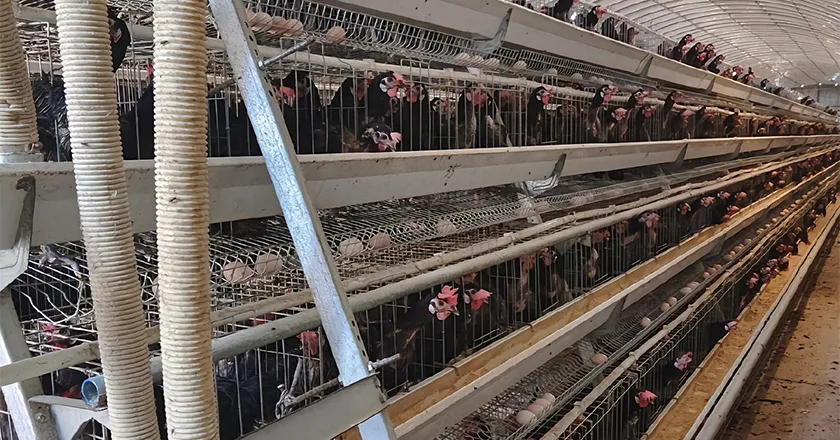
A Tipi Katman Kafesi
What are the main types of cage systems in poultry?
What is a battery cage system?
What is the difference between layer cages and broiler cages?
What is an enriched cage or furnished cage?
What is a chick cage and when should it be used?
How do A-type and H-type layer cages compare?
Which cage system is best for a modern poultry farm?
What farm factors affect cage selection?
How do cages affect egg collection, manure removal, and labor costs?
How can poultry farmers balance productivity and animal welfare?
If you plan to build or upgrade a poultry project, this guide is worth reading because the right poultry cage system affects bird health, workflow, output, and long-term profit. As a professional manufacturer and engineering supplier of turnkey poultry and rabbit farming systems, we have seen that the best cage is never the cheapest one alone. It is the one that fits your birds, your management style, your climate, and your business goals.
The main types of poultry cages used in commercial production are katman kafes si̇stemleri̇, broiler cages, chick cages, conventional cages, and more advanced systems such as colony cages or enriched cage designs. In simple terms, one cage is not suitable for every bird. A laying hen needs a different setup from a broiler, and a day-old chick needs very different support from both.
A modern chicken cage system is usually built around the production goal.If the goal is table eggs, farmers often choose a layer cage or battery cage system with easy egg collection and manure removal, often as part of complete yumurta üreti̇m çözümleri̇. If the goal is meat production, the farm may use a broiler cage or floor housing, depending on the local market and management preference. For young birds, a chick cage is suitable during the early growing stage because it helps control heat, feed access, and hygiene.
In practical commercial work, we often group cages into three broad families:
Layer chicken cages for hens that lay eggs
Broiler cage systems for meat birds
Chick cage systems for pullets or young birds
That simple framework helps buyers avoid costly mistakes.
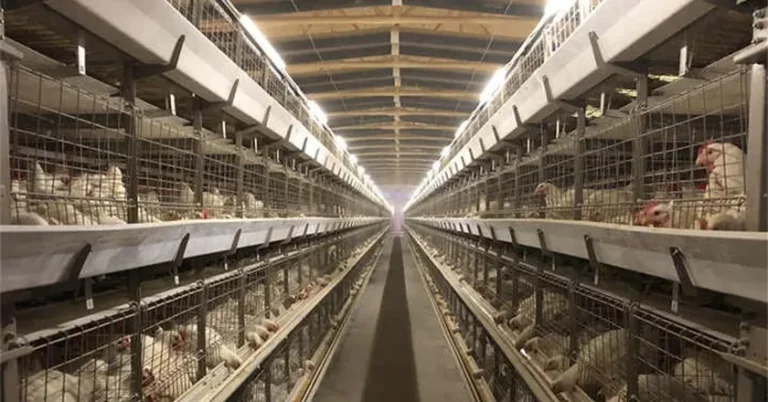
A battery cage is one of the best-known poultry housing formats in the world. In this setup, cages are arranged in rows and often cages stacked in tiers to improve land use and allow a large number of birds to be kept in a compact area. A conventional battery cage is built for efficient feeding, watering, cleaning, and egg handling. This is why it has been widely used in the poultry industry for commercial layer management.
The biggest strength of a battery cage system is efficiency. These cages provide easy access to birds, simplify feeding and watering, and make it easier to monitor health, collect eggs, and manage manure. Because the system is organized, it often lowers labor costs and supports more consistent egg production on large farms.
At the same time, battery cages have welfare limits. Welfare studies and veterinary guidance note that confined systems can restrict movement and may increase the risk of some health issues, including bone weakness in poorly managed birds. This is one reason why some producers look at enriched cage or alternative housing systems when regulations or buyer expectations are changing.
A layer cage is used for hens kept for eggs. A broiler cage is used for birds raised for meat, and many commercial farms choose integrated broyler üreti̇m si̇stemleri̇ to improve growth, feeding efficiency, and daily management. That may sound basic, but the design details matter a lot. Chicken layer cages are built to support frequent egg laying, keep eggs clean, and move them forward for smooth egg collection. Broiler cages focus more on safe growth, feeding space, drinker access, airflow, and flock control over a short production cycle.
The size of the cage, floor slope, feeder line, nipple line, and floor wire design are different because the birds behave differently. A laying hen must stay comfortable over a longer cycle and produce many eggs. A broiler grows fast and needs good feed conversion, clean water, and strong ventilation. So even though both are poultry cages, they are not interchangeable.
Here is a quick comparison:
| Kafes Tipi | Main Purpose | Kuş Türü | Key Design Focus |
|---|---|---|---|
| Layer cage | Egg production | Hens / pullets | Egg slope, nest-free rolling, clean eggs |
| Broiler cage | Meat production | Broiler birds | Growth, feeder access, airflow |
| Chick cage | Early rearing | Chick / young pullet | Heat, hygiene, safe feed and water access |
| Enriched cage | Egg production + welfare features | Laying hens | Perches, nesting areas, better behavior support |
When buyers ask which chicken cage is best, the first question should always be: what bird are you raising?
An enriched cage, sometimes called a furnished cage, is designed to improve the welfare of hens while keeping many management advantages of caging. These systems may include perches, nesting areas, scratch spaces, and layouts that better support some natural behaviors. Veterinary and welfare sources note that furnished systems were developed to address behavioral needs while keeping health and management benefits linked with caging.
This matters because animal welfare is now part of many purchasing decisions. More buyers ask whether hens can perch, nest, or show behaviors such as dust bathing or moving more freely. An enriched system does not solve every welfare question, but it can be a middle path between a strict conventional cage and fully non-cage production.
For export-oriented projects, this is important. Some markets care strongly about the welfare of hens, while others focus more on cost and production. A good supplier should explain clearly what each housing system offers.
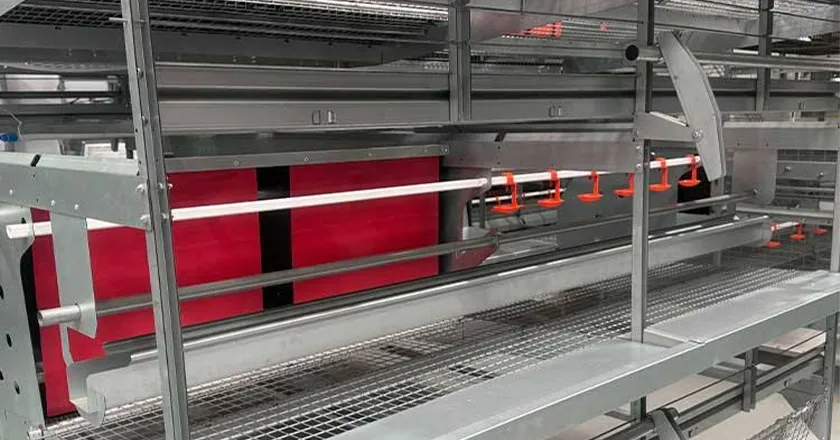
Hayvan Refahı Tasarımı ile Yumurtacı Tavuklar için Otomatik Zenginleştirilmiş Kafes Sistemi
A chick cage is used for young birds in the early stage of life, often from the day of hatching to a defined rearing age, depending on the farm plan. The purpose is simple: keep the birds warm, clean, and easy to manage while they learn to eat and drink well. Young birds are sensitive. They need even heat, easy feed access, and clean water distribution from their first days of age.
Because chicks are small, the system must prevent feed waste and injury. It must also support good hygiene, since young flocks can face a higher risk of disease transmission if management slips. Many farmers use a chick system before moving pullets into a grower or layer setup. This staged approach helps keep birds stronger and more uniform.
In turnkey projects, the chick section is often one of the most important investments because early mistakes can affect the whole flock later.
In commercial projects, a-type and h-type designs are two common ways to arrange layer cages. A-type layer cages usually have a simpler frame and are often chosen when the customer wants a practical entry-level investment. In many markets, a-type cages are popular because cages are generally cheaper, easier to install, and easier to maintain with moderate automation.
An h-type layer system is more automated and more compact. In this layout, cage rows are vertical, allowing a strong ability to house a larger number of chickens in limited floor area. These systems are often paired with automated feeding, drinking, manure removal, egg belts, and climate-control equipment. This makes them attractive to large farms aiming for increased production and lower labor input.
İşte basit bir karşılaştırma:
| Design | En Uygun Olan | Advantages | Considerations |
|---|---|---|---|
| A-type layer cages | Medium-scale farms | Lower cost, simpler operation | Lower automation level |
| H-type layer cages | Büyük ticari çiftlikler | Higher density, more automation | Higher initial investment |
Many systems come in 3 tiers or more, depending on house height, automation, and the local management model.
There is no single best cage system for every poultry farm. The right answer depends on your production target, climate, investment budget, labor availability, and the level of automation you want. If you want efficient commercial eggs, a layer system with automated feeding and egg collection may be ideal. If you want meat production, a broiler plan may be better, especially when it is supported by complete broyler et üreti̇m çözümleri̇ for housing, feeding, drinking, and climate control. If you plan a full project, the cage must fit the steel house, drinker lines, fans, cooling pads, and waste handling design.
This is why we prefer to discuss the whole farm, not just the cage itself. In real projects, the best poultry housing solution includes cages, steel structure, feed system, ventilation, water lines, waste treatment, and other tarım destek ve yardımcı sistemler working together. A cage alone cannot fix poor climate control or weak house design.
Several factors shape cage selection. The first is the type of chicken. A layer bird, broiler bird, and young pullet each have different specific needs. The second is stocking plan. The number of birds, expected output, and target stocking density affect the frame size, feeder design, and line layout.
The third factor is local climate. A hot region needs better airflow, cooling, and dust control. A cold area needs heat retention and careful fresh-air supply.Good ventilation is essential because it helps keep birds comfortable and reduces moisture and ammonia pressure in the chicken house, so buyers should also understand ventilation systems in poultry houses. Aviagen management guidance stresses the importance of correct ventilation and clean air in poultry houses.
The fourth factor is regulations and buyer preference. Some regions focus more on output and economic benefits. Others pay closer attention to bird welfare and how birds can engage in natural behaviors like perching or nesting. The supplier should help the buyer balance all of these factors.
Well-designed cages can improve workflow in a major way. In egg projects, cages reduce dirty eggs by guiding the eggs forward after they are laid. This makes egg collection cleaner and faster. Automated systems for feeding, drinking, and egg belts also reduce manual work and can support better egg production by keeping management more consistent.
On the waste side, good cages also improve manure removal. That matters more than many first-time investors expect. If waste is not removed on time, it can increase ammonia, moisture, flies, and disease pressure. A clean system helps keep chickens healthy and supports better house hygiene.
From a business angle, automation can reduce labor costs, especially on larger farms. But the real value is not labor alone. It is consistency. A more consistent farm often gets better daily control over water, feed, eggs produced, and bird condition.
This is one of the biggest questions in modern chicken farming. Farmers want reliable output, but buyers and regulators increasingly ask about animal welfare too. The truth is that every housing system used in poultry has trade-offs. USDA and veterinary sources note that no single system scores best on every welfare and production measure. Management quality matters a great deal.
A well-managed cage system can support flock health, hygiene, and production. But if the cage size is wrong, if feed or water access is poor, or if the house climate is weak, performance and welfare can both suffer. This is why cages must be chosen together with the right feeder space, drinker design, airflow, and management routine.
We usually advise buyers to think in three layers:
Bird needs: comfort, access to feed and water, safe movement
Farm needs: labor efficiency, cleaning, automation, profit
Market needs: compliance, customer preference, welfare expectations
That is how poultry farmers make better long-term cage decisions.
Let’s say a buyer wants a commercial chicken egg farm with 30,000 birds. The first question is not just price. The first question is how the farm will run every day. If land is limited and labor is expensive, an automated H-type layer system may be the stronger fit. If investment needs to stay lower, A-type cages may be more realistic.
In one common planning model, the project includes steel house design, feed silo, automatic feeder, nipple drinkers, fans, cooling pads, lighting, and manure belts. In that case, the cage becomes one part of a complete system. The better the system fit, the more likely the farm gets stable number of eggs, lower waste, and smoother daily management.
That is why many buyers no longer ask only, “What is your cage price?” They ask, “What is the best layout for my project?” That is the right question.
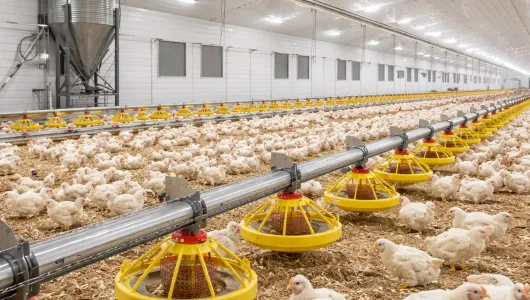
Broiler Farm – Automatic Chain Feeding
How many types of cages are in poultry?
The main types include layer cage, broiler cage, chick cage, battery cage, and enriched cage systems. Some farms also classify cages by structure, such as A-type and H-type designs.
What is the most common cage used in commercial chicken farming?
For commercial egg farms, the battery cage or layer cage remains one of the most common systems because it supports efficient feeding, watering, cleaning, and egg handling.
What is the difference between battery cage and enriched cage?
A battery cage mainly focuses on management efficiency and space use. An enriched cage adds features like perches or nesting areas to better support some natural behaviors and welfare needs.
Can broilers be raised in cages?
Yes, broilers can be raised in cages in some commercial systems, though floor housing is also common. The right choice depends on climate, farm design, labor plan, and local market practice.
Which cage system is better for egg production?
A properly designed layer cage with good feed access, clean water, airflow, and reliable egg handling is generally better for commercial egg projects than a broiler or chick system.
What should buyers consider before choosing a poultry cage system?
Buyers should check bird type, house size, climate, automation level, budget, labor, regulations, and long-term farm goals before selecting a poultry cage system.
The main poultry cage types are layer cages, broiler cages, chick cages, battery cages, and enriched cages.
A chicken cage should always match the bird type and farm purpose.
Battery cage systems are efficient, but welfare expectations may push some farms toward enriched or alternative designs.
A-type and H-type systems serve different farm sizes and budget levels.
Good cages improve egg collection, cleaning, and labor efficiency.
The best results come from a full system view: cage, house, climate control, feeding, drinking, and waste treatment.
Modern buyers should balance productivity, cost, and animal welfare together.
Sourcing poultry equipment from a Chinese manufacturer means controlling four variables di…
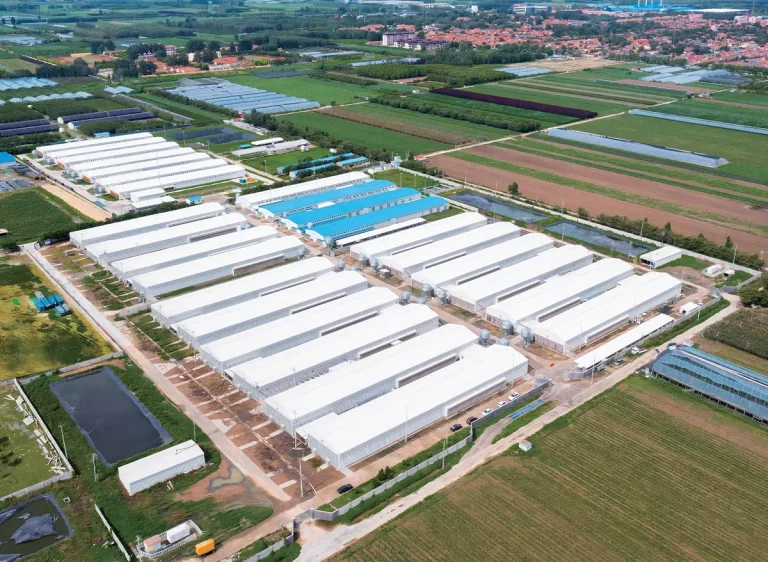
A steel structure poultry house is a prefabricated steel building designed for layer, broi…
Sorunuza 24 saat içinde cevap vereceğiz. Acil sorularınız için lütfen WhatsApp üzerinden +86 133 6144 9578 numaralı telefondan bize ulaşın veya doğrudan bizi arayın.
*Gizliliğinize saygı duyuyoruz. Gönderilen tüm bilgiler kesinlikle gizlidir.
Bilgileriniz yalnızca sorunuzu yanıtlamak için kullanılacaktır. İstenmeyen e-postalar veya promosyon mesajları asla göndermiyoruz.