









Sourcing Poultry Equipment Manufacturers in China: Buyer Guide
Sourcing poultry equipment from a Chinese manufacturer means controlling four variables di…


En son haberlerimize göz atın,
 14:14
14:14 In commercial egg production, operational efficiency, hygiene management, and productivity are the core metrics that determine a farm’s profitability. Challenges related to egg breakage rates, feed conversion ratios, and disease control can result in significant economic losses. These operational risks are often directly linked to the design and effectiveness of the poultry housing and management systems.
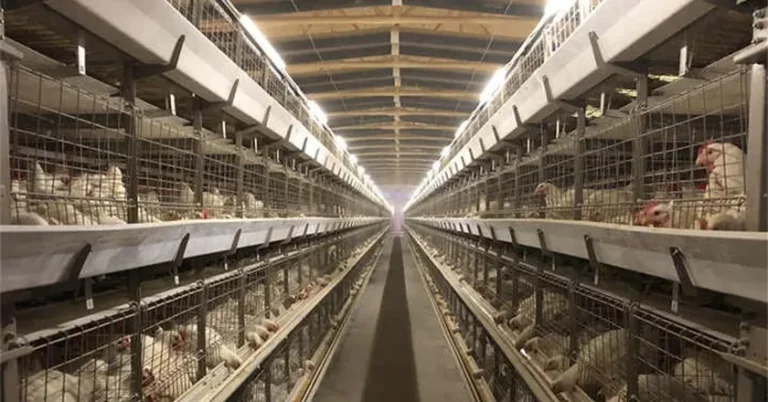
A Modern Layer Cage System is an engineered housing solution designed to address these challenges by providing a highly controlled environment for laying hens. The primary objective of this system is to optimize production processes, enable automated hygiene management, and maximize output per unit of area.
The fundamental operating principle of a layer cage system is based on its unique floor-net design.
The cage’s wire mesh floor is engineered at a specific incline, typically in the range of 7-8 degrees. This design feature is critical: after a hen lays an egg, gravity causes it to gently and automatically roll to the front of the cage into an Egg Collection Tray. This mechanism effectively prevents eggs from being trampled or pecked by the birds, thereby minimizing breakage rates in well-managed systems.
Simultaneously, this floor structure achieves physical separation between the birds and their manure. The manure passes through the gaps in the mesh floor, preventing the hens from coming into contact with their waste. This design is foundational to modern poultry hygiene management, as it effectively breaks the transmission route of fecal-borne pathogens and plays a decisive role in maintaining flock health and reducing disease risk.
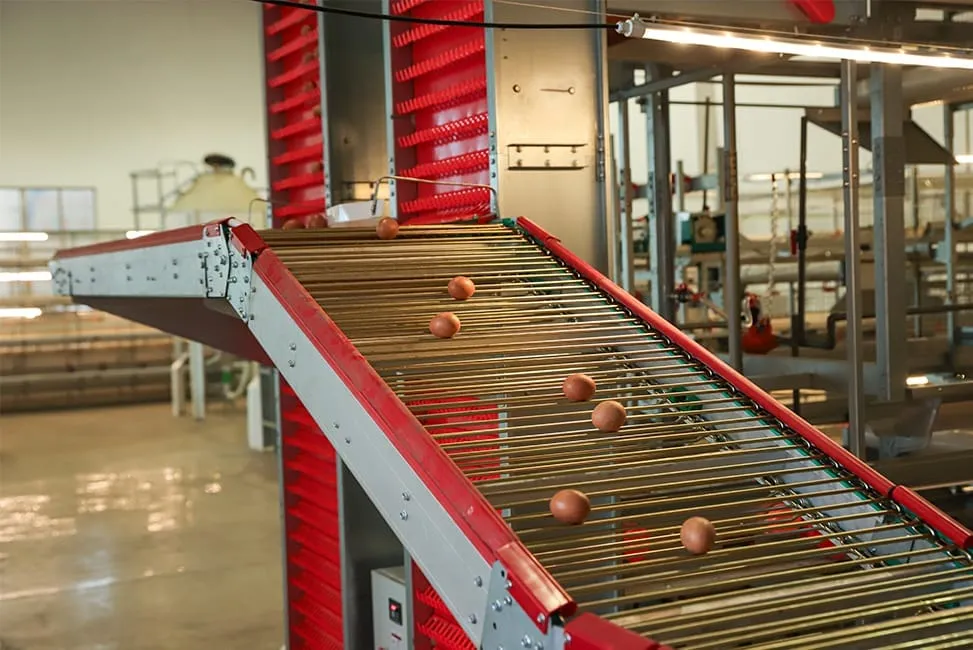
Egg Collection and Manure Separation
A modern layer cage system is an integrated solution composed of several automated subsystems working in concert. It primarily includes the following five components:
The cage frame system is manufactured from hot-dip galvanized metal to ensure structural integrity and corrosion resistance, thereby extending the equipment’s service life. Its modular design facilitates installation and allows for flexible configuration according to the specific dimensions of the poultry house.
This system consists of a central feed silo, a delivery auger or chain-feeder, and feed troughs distributed along the cages. Feed is transported precisely and evenly from the silo to each trough, ensuring all birds receive an equal amount of feed, significantly reducing wastage and optimizing the feed conversion ratio.
This system typically employs Nipple Drinkers. Water lines are installed along the cages, with each point featuring a stainless steel nipple that ensures birds have constant access to clean drinking water. The closed-pipeline design effectively prevents water source contamination, guaranteeing water hygiene.
In large-scale operations, this system uses a conveyor belt to automatically transport eggs from the collection trays to a central collection area. The flexible material of the belt and optimized transit speed ensure stability during transport, further reducing breakage rates.
This system is critical for maintaining the internal environmental hygiene of the poultry house. It typically uses a conveyor belt (Manure Belt) or scraper-type (Manure Scraper) machine to periodically and automatically remove manure from beneath the cages. This not only reduces labor costs but also effectively controls ammonia concentration, improving air quality within the house.

Automated Manure Removal System
Based on structural design and space utilization, layer cage systems are primarily categorized as A-Type and H-Type.
A-Type cages feature a cascading layout, with upper and lower tiers offset to form a pyramid-like structure. The advantage of this design is its relative simplicity, allowing manure to fall directly into a deep pit below. It is generally suitable for small to medium-sized farms or projects with lower automation requirements.
Şu H-Type Cage uses a vertical, stacked layout where the tiers are aligned directly above one another. This design significantly increases the stocking density per unit area of the poultry house. Due to the vertical overlap, each tier must be equipped with an independent belt-type manure removal system. The H-Type cage is the standard configuration for large-scale, high-density, fully automated farms.
| Feature | A-Type Cage | H-Type Cage |
| Suitable Scale | Small to medium-sized farms | Large-scale, industrial farms |
| Structural Layout | Cascading | Vertical Stacked |
| Stok Yoğunluğu | Relatively Lower | Very High |
| Gübre İşleme | Direct Drop (Deep Pit) | Belt System (Per Tier) |
| Automation Reliance | Optional | Mandatory |
| Investment Cost | Daha düşük | Higher |
The choice of system depends on the farm’s scale, capital budget, and long-term operational strategy.
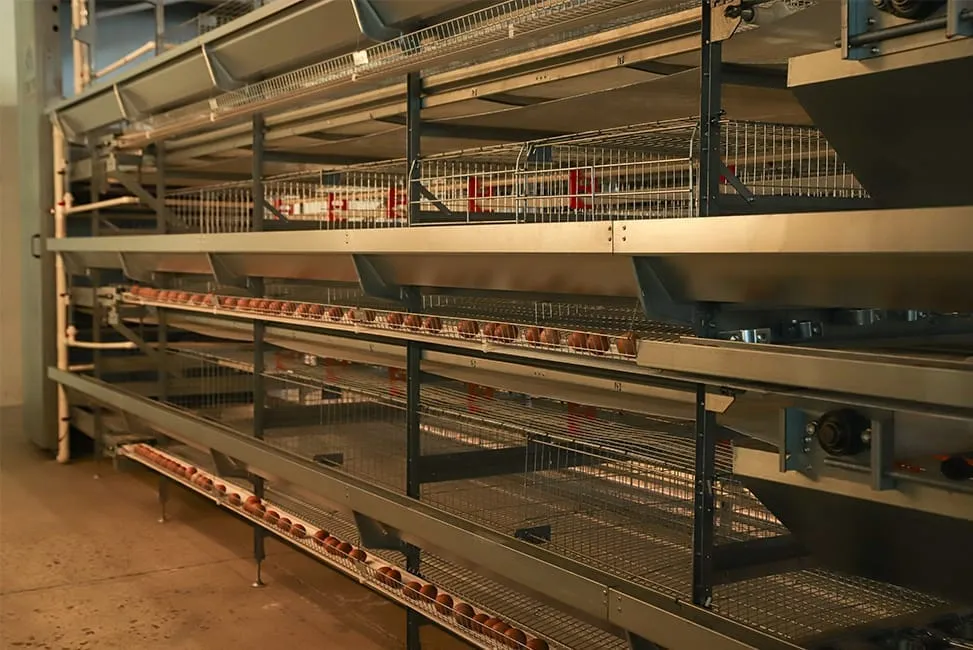
H-Type Cage
Early conventional battery cages sparked widespread animal welfare discussions due to their limited space. In response, the industry has developed improved systems.
Enriched Colony Cages are the current mainstream standard in regions like Europe. Compared to conventional cages, they provide more space per bird and include key “enrichment” features, such as:
These enhancements aim to balance the efficiency of intensive production with fundamental animal welfare requirements.
From an operational management perspective, cage systems have clear advantages and limitations.
| Metric | Conventional Cage | Enriched Cage | Cage-Free Aviary |
| Cost per Dozen Eggs | Baseline | Slightly Higher | Significantly Higher (+36% typical) |
| Hen-Day Egg Production | İyi | Highest | Daha düşük |
| Feed Conversion Ratio | Daha düşük | Slightly Higher | Highest |
| Ölüm Oranı | Daha düşük | Daha düşük | Highest |
Note: Performance metrics are commonly observed in commercial operations, but actual results can vary significantly depending on flock genetics, nutrition, climate, and day-to-day farm management.
The working principle of a layer cage system is, in essence, the standardization and automation of key processes in poultry farming—feeding, watering, egg collection, and manure removal—through engineering design. Its structural design achieves both efficiency in egg collection and control over hygiene management.
The evolution from A-Type to H-Type, and further to enriched cages, reflects the industry’s ongoing focus on animal welfare and sustainability while pursuing production efficiency. It is important to note that the selection of a housing system is increasingly influenced by regional regulations and market demands for specific labels, such as “cage-free” or “free-range.” Ultimately, the success of any system, regardless of its technical sophistication, is contingent upon a high standard of farm management.
Building a modern layer farm requires professional planning and reliable equipment. An experienced system supplier can provide systematic solutions for projects of varying scales.
As a follow-up to our technical analysis, we address common questions from farm owners, investors, and project managers regarding system selection and implementation.
A: Selecting an inappropriate layer cage system introduces significant operational and financial risks that can undermine a farm’s long-term viability. The primary risks are:
Conclusion: The “wrong” system is one that is misaligned with your farm’s scale, climate, labor availability, and long-term business plan. A thorough pre-investment analysis is critical to mitigate these risks.
A: The cost-effectiveness of a layer cage system is not determined by a single number but by the break-even point between automation-driven efficiency and capital investment. The system’s viability threshold varies for A-Type and H-Type configurations, depending on local labor costs and energy prices.
Conclusion: Cost-effectiveness is a function of scale. The key is to select the system whose economic model aligns with the target production capacity and operational context of the farm.
A: Reliable implementation of a modern layer cage system goes far beyond simple equipment installation. It requires a system integrator with deep, cross-disciplinary expertise, distinguishing a turnkey solution provider from a mere equipment reseller. The required experience includes:
Conclusion: A reliable implementation partner acts as a consultant, engineer, and project manager to ensure the system delivers on its promised efficiency and productivity from day one.
Sourcing poultry equipment from a Chinese manufacturer means controlling four variables di…
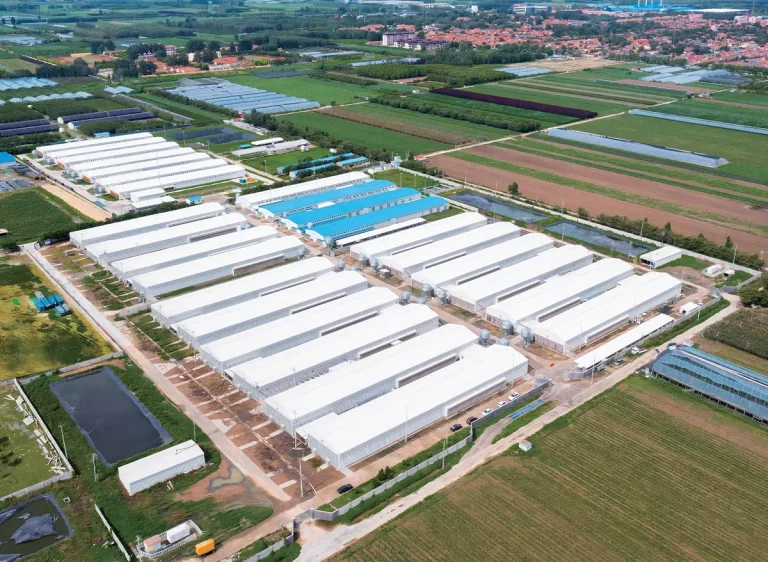
A steel structure poultry house is a prefabricated steel building designed for layer, broi…
Sorunuza 24 saat içinde cevap vereceğiz. Acil sorularınız için lütfen WhatsApp üzerinden +86 133 6144 9578 numaralı telefondan bize ulaşın veya doğrudan bizi arayın.
*Gizliliğinize saygı duyuyoruz. Gönderilen tüm bilgiler kesinlikle gizlidir.
Bilgileriniz yalnızca sorunuzu yanıtlamak için kullanılacaktır. İstenmeyen e-postalar veya promosyon mesajları asla göndermiyoruz.