












Ventilation Fan and Exhaust Fan Guide: How to Choose the Right Ventilation for Bathroom, Garage, Attic, and Commercial Space
A good ventilation fan removes heat, humidity, dust, and unwanted air from a room or worki…

 10:42
10:42 Poor housing can quietly destroy profit on a poultry farm. Birds get stressed, feed wastage rises, disease risks increase, and labor becomes harder to manage. The right setup changes that. A smart choice between deep litter and battery cage system can improve output, hygiene, and daily control.
The answer depends on your goals. A battery cage system is often better for commercial layer operations focused on clean egg collection, labor savings, and high egg production. A deep litter system can suit lower-budget projects, some broiler farms, and buyers who want a more open environment for the bird. The best option depends on scale, budget, labor, climate, and management level.

deep litter
What is a battery cage system in poultry farming?
What is a deep litter system, and how does it work?
Battery cage vs deep litter: what are the main differences?
Which system is better for egg production and laying eggs?
How do feeding, drinking, and manure management compare?
Which housing system in poultry farming is easier to keep clean?
What are the pros and cons of each system for modern farms?
Which option is better for small, medium, and large-scale farm projects?
How do climate, ventilation, and labor affect the final choice?
How can poultry farmers make the best investment for long-term success?
A battery cage system is a structured housing system where layers are kept in organized wire cages. These cages are usually installed in more than one row, often with cages connected together in tiers to save space and simplify daily work. Each unit gives birds access to feed and water through a feeder and drinker, while dropping falls away from the birds into a collection area or manure handling system.
In modern poultry production, a battery cage setup is mainly used for layer farms that want efficient egg collection, better control, and more predictable performance. Because the birds stay in fixed groups, the farmer can monitor feeding, health, laying rate, and overall productivity more easily. Many large and medium projects choose this route because the system improves labor efficiency and supports high-density operation.
From our experience as a manufacturer and engineering supplier of turnkey poultry and rabbit farming systems, many investors prefer the battery cage system when they need scalable production, easier management, and cleaner operating conditions. It works especially well when paired with steel-structure houses, automatic feeding lines, drinking systems, climate control, and manure removal equipment. turnkey poultry farm solutions and automatic layer cage systems are often the first pages buyers want to review.
The deep litter system keeps birds on the floor instead of inside a cage. The floor is covered with bedding material such as wood shavings, rice husk, or chopped straw. Over time, the litter builds up as manure mixes with the bedding. When managed well, the litter stays dry and helps support flock comfort.
This litter system is common in smaller farms, some breeder houses, and many broiler operations. It allows birds to move more freely, scratch, and behave more naturally. Some buyers feel the birds feel less restricted in this setup, and for some markets that can be an important point in discussions around animal welfare.
Still, the deep litter system requires careful daily management. Wet patches must be removed, the litter depth must be maintained, and cleanliness depends heavily on ventilation, stocking density, and good water line control. If not handled well, the litter can become a source of moisture, odor, and disease pressure. That is why the deep litter approach looks simple at first, but in practice it still needs skilled supervision.
When comparing deep litter vs cage-based production, the biggest differences are space use, bird control, waste handling, and labor style. A battery cage system keeps each hen in a more controlled environment. A deep litter house gives birds more movement but can be harder to standardize from one flock to the next.
Here is a simple comparison table:
| Factor | Battery Cage System | Deep Litter System |
|---|---|---|
| Bird location | Inside wire mesh cages | On floor with litter |
| Space use | High efficiency | Lower density |
| Egg handling | Easy, clean egg collection | More manual collection |
| Manure control | Easier to separate | Mixed into bedding |
| Labor demand | Lower per bird | Higher per bird |
| Feed loss | Lower, often reduces feed waste | More spillage possible |
| Movement | More restricted | More natural movement |
| Cleanliness | Usually cleaner | Depends on litter control |
So, in battery cage vs deep litter, one system offers more control while the other offers more freedom of movement. That is why deep litter and battery cage systems serve different business goals. Commercial layer farms often lean toward cages, while some floor-based projects choose litter for management style, market preference, or lower starting cost.
For layers, the battery cage system is usually better for high and consistent egg production. The reason is simple. Birds live in a controlled space, feed intake is easier to measure, stress from ground competition is reduced, and egg collection is fast and organized. Clean eggs roll outward, which lowers breakage and keeps labor low.
A deep litter system can also support laying eggs, but it normally needs more careful supervision. Eggs may be laid in floor areas, nests can become dirty, and losses can rise if farm discipline is weak. In larger projects, even a small rise in broken or dirty egg count can affect profit over time.
For buyers building a commercial layer farm, this is often the turning point when comparing deep litter vs battery cage. If the goal is to maximize output per square meter and keep operations uniform, battery cage equipment is usually the more practical choice. This is why many integrated companies and equipment distributors prefer layer chicken cage systems and automatic egg production houses when planning a new poultry farm.
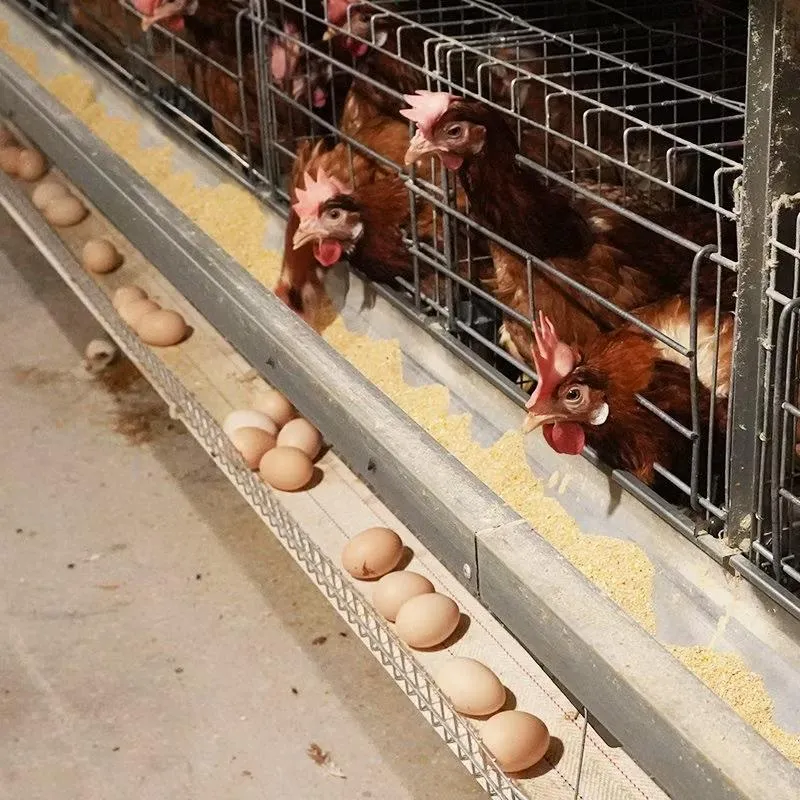
A good project is not only about bird placement. It is also about feeding, drinking, and manure flow. In a battery cage house, the feeder line and drinker line are fixed and easy to manage. Birds get direct access, and the system can be designed to reduce competition. This setup usually reduces feed waste and makes feed conversion easier to monitor.
In a deep litter house, feed and water are also easy to provide, but the floor setting creates more chance for litter contamination and spillage. Wet litter under drinkers can quickly become a management problem. That means the farmer must spend more time on daily checks and litter correction.
Manure handling is another major difference. In a battery cage system, manure can be collected under the cages and removed with scraper or belt systems. In a deep litter system, manure stays with the bedding until partial or full clean-out. This can work, but the litter system and battery approach do not deliver the same level of separation. For large-scale livestock and poultry investors, easier manure handling often becomes a major advantage of cages.
If we are talking about pure hygiene, the battery cage system is usually easier to keep cleaner. Birds are separated from most waste, eggs are kept off the floor, and the house is easier to organize into clear operating zones. This helps the team maintain cleanliness and lower some common disease risks.
The deep litter model depends far more on the quality of day-to-day management. If the litter stays dry, the house can run well. But if the bedding becomes damp, compacted, or dirty, problems build fast. Ammonia rises. Foot issues appear. Pathogen pressure may increase. So while deep litter can work, the margin for error is often smaller than buyers expect.
That is why the housing system used should match the skill level of the team. A strong technical crew can manage either one. But for many medium and large farms, the control level of a cage house is easier to standardize. As a result, many professional poultry farmers choose cage-based solutions when long-term consistency matters most.
Let’s break down the pros and cons clearly.
Battery Cage System
Pro
Better space efficiency
Cleaner egg collection
Lower feed wastage
Easier manure removal
Better production monitoring
Con
More equipment investment
More limited space per bird
Requires good design and installation
Deep Litter System
Pro
Lower initial equipment cost
Simpler structure in some cases
More bird movement
Familiar to some small-scale farmers
Con
Higher labor demand
Greater litter management pressure
More risk of dirty eggs
More variable flock condition
This is the heart of the pros and cons of deep floor rearing versus cages. The cons of deep litter usually appear in labor, waste, and house condition. The con of cages is mainly upfront cost and tighter space per bird. So when people ask, “Which one do you prefer?” the real answer is this: choose the system that fits your business model, not the one that simply looks cheaper on day one.
For small-scale farmers, deep litter may feel easier to start with because the structure is simple and the first investment can be lower. That said, once the flock size grows, daily management becomes more demanding. Labor, litter turnover, and egg handling can become serious pressure points.
For medium-sized projects, the choice depends on whether the focus is layers or meat birds. A medium layer farm often benefits more from a battery cage system, while a broiler house may still run well on the floor with proper design. In this stage, buyers often begin comparing long-term efficiency rather than only startup cost.
For large-scale projects, an H-Type battery cage system is usually the stronger option for layers.It offers better standardization, easier expansion, and more efficient production methods. This is especially important for investors who want a modern system in poultry farming that can grow into multiple houses over time. In such cases, poultry house climate control systems and automatic manure removal solutions also become critical internal support pages to review.
Climate matters more than many buyers think. In hot or humid regions, ventilation and moisture control are essential. A deep litter house in a wet environment can struggle if airflow is poor. Damp litter increases odor and disease pressure. In a cage house, airflow is still important, but manure is more isolated, which can make moisture control easier.
Labor is another major factor. A deep litter system often needs more manual observation, more floor maintenance, and more time spent correcting wet spots or cleaning up losses. A battery cage system can automate more of the daily routine. For investors facing labor shortages or rising labor cost, this difference is very important.
We often tell clients on their poultry farming journey that the right answer comes from the full project picture: climate, workforce, target output, market channel, and available budget. A good system is not only one that works today. It is the one that continues to perform next year, too.
To make the best decision, start with your production goal. Are you producing commercial table eggs, breeder eggs, or meat birds? Are you expanding a current site or building a new one from zero? Do you need a simple floor house or a highly engineered solution with automatic systems?
Then look at the total package. The cage or floor method is only one part of the project. Real success also depends on house structure, drinker design, feeder layout, climate control, manure treatment, and installation quality. That is why many buyers now prefer turnkey solutions instead of sourcing every piece from a different supplier.
As a turnkey supplier for poultry and rabbit projects, we support clients with steel-structure houses, cages, feeding lines, drinking systems, climate control, and manure treatment equipment in one coordinated package.This helps improve compatibility, reduce project mistakes, and shorten the path from planning to stable production, especially when buyers compare automatic layer cage systems with other housing options. For serious buyers, custom poultry farm project design and turnkey livestock and poultry equipment are strong next-step internal pages to include.

A medium-sized investor planning a 30,000-layer project may first compare the starting price of deep litter and battery cage options. At first glance, floor rearing may look cheaper. But after adding labor, nest management, dirty egg loss, litter replacement, and less efficient space use, the long-term picture changes.
In many such projects, the battery cage system wins because it supports stable output, easier cleaning, and simpler management expansion. On the other hand, a buyer planning a smaller meat chicken operation with good floor management may still choose deep litter and get very good results. The right answer depends on the flock goal and management style.
Which system is better for layer farming?
For most commercial layer farms, the battery cage system is better because it supports cleaner eggs, easier management, and stronger egg production control.
Is deep litter good for broilers?
Yes. Deep litter is widely used for broiler farming because floor rearing can work well for meat production when litter, density, and house climate are managed properly.
Does a battery cage system reduce feed waste?
Yes. In many cases, a well-designed battery cage setup lowers feed wastage because birds eat from controlled troughs with less scattering and contamination.
Which system is easier for disease control?
A battery cage system is often easier to manage for hygiene and waste separation, which can help reduce some disease risks, especially in large layer operations.
Is deep litter cheaper than battery cage?
Usually, yes at the beginning. But long-term cost depends on labor, output, litter handling, egg losses, and farm scale.
What should a farmer consider before choosing?
A farmer should consider flock type, budget, climate, labor availability, market target, manure handling, and future expansion plans before selecting a housing system in poultry farming.
Battery cage vs deep litter is not only about price; it is about long-term control, labor, and output.
A battery cage system is often the best option for commercial layers and clean egg collection.
A deep litter system can work well for broiler farming and some smaller projects.
Deep litter needs strong litter management, dry conditions, and good ventilation.
A battery cage setup usually offers better space use, easier manure handling, and lower feed wastage.
The best farm solution depends on climate, labor, budget, and production target.
Turnkey design helps buyers combine housing, equipment, and management needs into one practical solution.
A good ventilation fan removes heat, humidity, dust, and unwanted air from a room or worki…
Many first-time chicken keepers buy birds before they understand the tools needed to feed …

We will reply to your inquiry within 24 hours.For urgent inquiries, please contact us via WhatsApp: +86 133 6144 9578 or call us directly.
*We respect your privacy. All information submitted is strictly confidential.
Your details will only be used to respond to your inquiry. We never send unsolicited emails or promotional messages.