










Sourcing Poultry Equipment Manufacturers in China: Buyer Guide
Sourcing poultry equipment from a Chinese manufacturer means controlling four variables di…


Scoprite le nostre ultime novità,
 14:30
14:30 Short winter days can make a healthy hen slow down or stop laying. For farm owners, that means fewer eggs, unstable output, and lower returns. The solution is simple but must be managed carefully: give the flock enough light, proper housing, and a steady daily routine.
Most laying hens need about 14–16 hours of light per day to support steady egg production. Natural daylight may be enough in spring and summer, but during fall and winter, many farms use artificial light or supplemental light in the chicken coop to maintain a stable lighting program. Too little light can reduce egg laying, while too much light may stress the birds. University Extension sources commonly recommend 14–16 hours of light for laying hens.
Why does light affect chicken egg production?
Di quante ore di luce hanno bisogno le galline per deporre le uova?
Why do chickens lay fewer eggs in fall and winter?
Should you use artificial light in the chicken coop?
What is the best lighting schedule for laying hens?
How should you add supplemental light safely?
Do pullets and new chickens need the same light as adult hens?
What happens during molt and why do hens stop laying?
How does lighting work in commercial poultry houses?
What should farm owners consider before designing a lighting program?
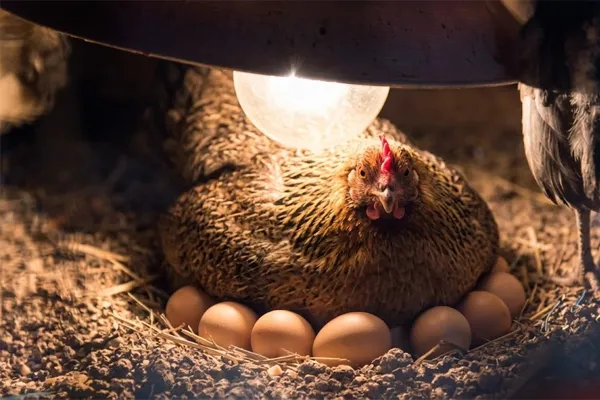
Light is one of the key signals that controls a chicken reproductive cycle. When the daylight period is long enough, the hen’s body receives a natural signal to support egg production. When the days get shorter, especially in fall and winter, the body may slow down or pause laying. Michigan State University Extension explains that the amount of daylight affects the chicken reproductive cycle and that hens begin laying when daylight reaches about 14 hours per day.
This is why many farms notice a clear seasonal pattern. In spring and summer, the hours of daylight are longer, so hens often lay well. In the winter months, natural light may fall to only 8–10 hours per day in some locations. That shorter day length can reduce egg laying or make some hens stop laying entirely.
For large and medium-scale farms, light is not a small detail. It is part of house design, daily management, feed intake, bird health, and production planning. This is why modern poultry projects often integrate lighting with layer cage systems, feeding, drinking, climate control, and manure removal in one complete system.
Most laying hens need 14-16 hours of light per day to maintain consistent laying. University of Maine Cooperative Extension gives a clear rule of thumb: keep laying hens on a constant 14 to 16 hour day. Wisconsin Extension also notes that hens can continue producing eggs during spring, fall, and winter when artificial light is used to provide 14–16 hours of light.
A simple practical guide looks like this:
| Light Per Day | Likely Effect on Laying Hens |
|---|---|
| 8 hours of daylight | Too short for steady egg laying in many flocks |
| 12 hours per day | Some hens may lay, but output may be lower |
| 14 hours per day | Common minimum target for steady egg production |
| 15 hours per day | Often effective for maintaining production |
| 16 hours of light | Common upper target for strong production |
| More than 16 hours | Usually not needed and may reduce rest time |
For maximum egg consistency, many producers aim for 14-16 hours of light rather than trying to keep lights on all day. Chickens still need darkness for rest. A good lighting program gives enough light to stimulate laying while still allowing the bird to sleep and roost naturally.
In fall and winter months, days get shorter. Less light tells the hen’s body that it may not be the best season for reproduction. Michigan State University Extension states that hens begin laying when daylight reaches 14 hours per day in early spring and that maximum egg laying occurs when day length reaches 16 hours.
This is also why many backyard chickens seem to slow down suddenly when the days get shorter. The birds may still look healthy, eat normally, and stay active, but egg production decreases because the amount of light is no longer enough to keep the reproductive cycle fully active.
Other factors can also reduce laying, including age, breed, nutrition, stress, disease, temperature, water quality, and molt. But light is one of the most common causes of seasonal decline. For commercial farms, this is why lighting should be planned together with farm support and auxiliary systems, not added casually after the house is already running.
You can use artificial light in the chicken coop when natural daylight is too short and you want more stable egg production. Poultry Extension guidance says that when pullets are ready to start laying, light exposure can be slowly increased to about 14 hours per day, and maintaining at least 14 hours can help keep the flock in lay year-round.
However, artificial lighting should be used carefully. More light is not always better. A lighting plan should be steady, safe, and gradual. Sudden changes can stress the flock. Too much light can reduce rest time. Poor electrical installation can create fire risk or equipment failure.
A good artificial light setup usually includes:
For larger houses, lighting is often part of automatic control inside a steel-structure poultry house. This makes the light program easier to manage across many birds and multiple houses.
A practical lighting schedule for adult laying hens is usually 14 to 16 hours of light per day. Wisconsin Extension says maximum egg production is reached during summer days with 16 hours of daylight, and artificial light can be used to provide 14–16 hours during other seasons.
For small farms and backyard chickens, many keepers add light in the early morning. This allows birds to wake up earlier while still going to the roost naturally at sunset. Wisconsin Extension specifically suggests using a timer and adding light in the morning and late afternoon while allowing hens to roost naturally in the evening.
For commercial farms, the schedule may be more structured. Mississippi State Extension says pullets placed in the laying house should receive an increasing daily light schedule, with day length increases continuing until birds receive 16–18 hours of light each day.
A simple schedule example:
| Production Stage | Suggested Lighting Idea |
|---|---|
| Growing pullets | Avoid too much early light stimulation |
| Before lay | Increase light gradually when birds are ready |
| Early lay | Maintain about 14 hours per day |
| Peak production | Maintain 14–16 hours per day |
| Late production | Some programs increase toward 16 hours |
| Molt period | Some farms allow a natural rest period |
The exact program should match breed, age, body weight, house type, climate, and production goal.
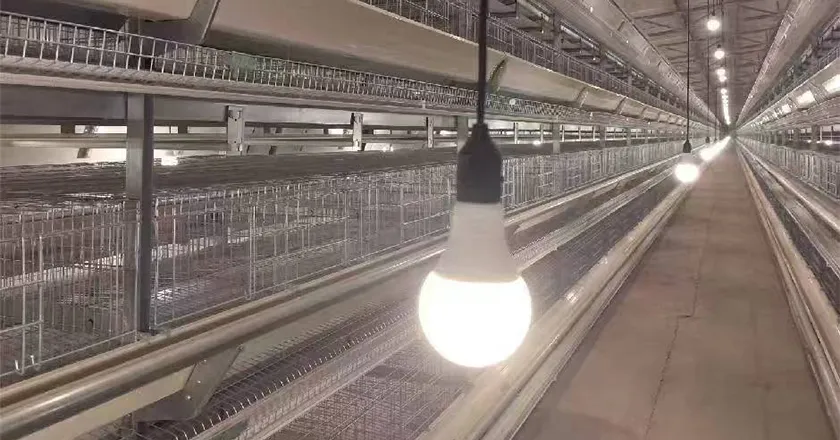
If you decide to add supplemental light, do it slowly. Do not suddenly move a flock from short winter days to a very long light schedule overnight. Poultry Extension recommends slowly increasing light exposure when pullets are ready to start laying.
A safe method is to calculate the natural daylight hours first, then add only what is needed to reach the target. For example, if your area has 10 hours of natural light in winter and you want 14 hours total, you need to add about 4 hours of artificial light.
Practical setup tips:
| Lighting Item | Practical Suggestion |
|---|---|
| Timer | Use a timer for a stable daily schedule |
| Bulb | Use safe, protected lighting suitable for the house |
| Placement | Keep lights away from water, litter, and bird contact |
| Brightness | Use enough light for birds to see feed and water |
| Timing | Morning light is often easier for natural roosting |
| Safety | Protect wiring from dust, moisture, and pecking |
| Monitoring | Watch bird behavior and egg numbers after changes |
In commercial poultry houses, lighting should be integrated with feeding, drinking, ventilation, and manure control. A properly designed H-Type Automatic Layer Battery Cage system, for example, already considers house layout, cage rows, feeding, drinking, manure removal, and lighting as connected parts of daily management.
No. New chickens and pullets should not always receive the same light schedule as mature laying hens. Pullets need time to grow before they begin to lay eggs. Minnesota Extension explains that increasing day length encourages early sexual maturity, but it is best to delay pullet sexual maturity so birds can achieve better body growth before egg production begins.
Wisconsin Extension says hens usually begin producing eggs at about 18–22 weeks of age when day length, nutrition, housing, and management are suitable. Arizona Extension also notes that most pullets begin laying eggs between 18 and 22 weeks, depending on breed.
This means the lighting plan should match the life stage:
| Bird Stage | Lighting Goal |
|---|---|
| Chick | Support feeding, drinking, warmth, and early growth |
| Growing pullet | Avoid overstimulation before body development |
| Ready-to-lay pullet | Gradually increase light to stimulate lay |
| Adult hen | Maintain stable 14–16 hours of light |
| Older hen | Adjust based on production cycle and health |
For farms raising pullets into production, Gabbie di cova completamente automatiche can help organize brooding and rearing with consistent cage layout, feeding, drinking, and lighting access.
A molt is a natural period when hens lose and regrow feathers. During molt, many hens reduce or stop egg production because the body directs nutrients toward feather growth and recovery. Oregon State University Extension explains that hens eventually molt even with a lighting program, and allowing hens to molt during their second winter can help them return to production later.
This is important because light is not the only factor. Even with 16 hours of light, an older hen may slow down because of age, molt, nutrition, or health. If a farm owner assumes every egg drop is caused by lighting, they may miss other problems.
Common reasons hens stop laying include:
For commercial egg farms, these issues should be managed as a complete production system. Automated egg production equipment can help connect cages, feeding, drinking, egg collection, manure removal, climate control, and lighting into one workflow.
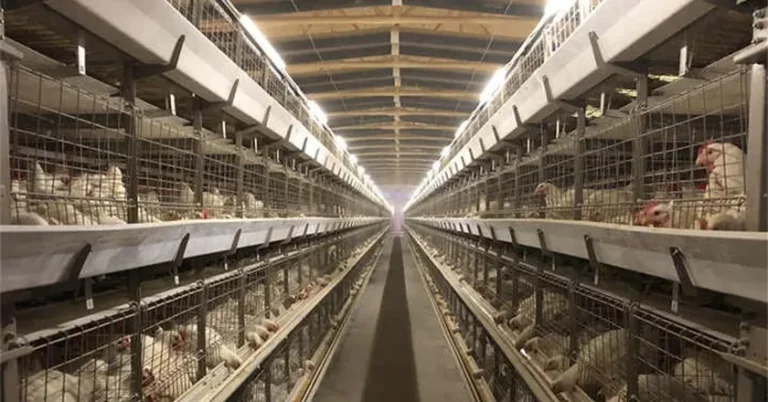
In commercial poultry houses, lighting is part of a complete management program. It is not just a bulb hanging in the house. It must match house size, cage rows, stocking density, airflow, feeding, drinking, and daily inspection. Commercial layer systems often use controlled lighting to support stable laying, reduce stress, and maintain predictable production.
Layer cage systems page describes commercial layer farms using A-type and H-type battery cages with feeding, drinking, egg collection, manure removal, lighting, and climate control as integrated components.
A well-designed chicken house lighting system should consider:
| Factor | Perché è importante |
|---|---|
| Light duration | Controls reproductive stimulation |
| Light distribution | Prevents dark zones and crowding |
| Light color | Can affect behavior and response |
| Light intensity | Supports activity without stress |
| Timer control | Keeps the schedule stable |
| Backup power | Protects consistency during outages |
| Cage layout | Affects light reach across tiers |
| Climate control | Works with light and heat load |
| Maintenance access | Helps staff check and replace fixtures |
For large projects, lighting should be designed during the house planning stage, not after installation. That is why turnkey engineering is valuable for investors, integrated poultry companies, and equipment distributors.
Before designing a lighting program, farm owners should define the production goal. Do you want seasonal laying, steady year-round egg production, pullet rearing, breeder management, or commercial table eggs? Each goal needs a different light plan.
A basic planning checklist includes:
Bird age and breed
House type
Natural daylight pattern in the project location
Target egg production level
Cage or floor system layout
Electrical safety
Feed and water access
Ventilation and temperature control
Backup power
Labor and management level
Whether the flock should rest during molt
Local animal welfare requirements
From an engineering supplier’s view, light should be planned with the full poultry house. A professional system connects cages, steel structure, feed, drinking, climate, manure treatment, and egg collection. If you are planning a large or medium egg farm, it is better to discuss lighting inside a complete turnkey poultry farming system instead of buying lights separately.
For project planning, you can also guide buyers toward the Contact Us page when they need a layout, cage quantity, lighting plan, or full farm equipment quote.
A medium-scale layer farm noticed that egg numbers dropped sharply during the winter months. The birds were healthy, feed was normal, and the water system worked well. The main problem was that the flock received only about 9–10 hours of daylight.
The farm added a controlled lighting program to reach about 14 hours per day. The team used a timer, checked light distribution across the house, and avoided sudden changes. They also checked feed intake, water access, and ventilation.
The result was not instant magic. Chickens need time to respond. But after the schedule became stable, egg output became more predictable. The farm also learned a key lesson: light management works best when it is paired with nutrition, clean water, housing, and climate control.

| Articolo | Natural Light | Artificial Light |
|---|---|---|
| Cost | No direct power cost | Requires electricity |
| Control | Changes by season | Can be scheduled |
| Winter production | Often lower | Can support laying |
| Summer production | Usually strong | May not need much support |
| Risk | Weather and short days | Poor setup can stress birds |
| Uso ottimale | Small farms, seasonal laying | Year-round egg production |
| Equipment needed | Windows, open design | Bulb, timer, wiring, controls |
Natural light is simple, but it changes with the season. Artificial light gives more control, but it must be installed and managed safely.
Di quante ore di luce hanno bisogno le galline per deporre le uova?
Most chickens need about 14–16 hours of light per day for steady laying. Egg production may drop when the day length is much shorter, especially during fall and winter.
Do hens need 16 hours of light every day?
Not always. Many hens lay well with about 14 hours of light, while some programs use up to 16 hours for stronger production. More than 16 hours is usually not necessary for normal management.
Can chickens lay eggs with only natural daylight?
Yes, especially in spring and summer when daylight is long. In winter, natural light may be too short, so egg production may decrease unless artificial light is added.
Should I put a light in the chicken coop during winter?
You can add light in winter if you want steadier egg output. Use a timer, add light gradually, and keep the setup safe. Do not use unsafe heat lamps or exposed wiring in dusty poultry houses.
Why did my chickens stop laying eggs in winter?
The most common reason is shorter daylight. Other possible reasons include molt, age, poor nutrition, low water intake, disease, stress, or temperature problems.
When do pullets begin laying eggs?
Many pullets begin laying eggs around 18–22 weeks of age, depending on breed, nutrition, body development, housing, and light management.
Is artificial light bad for hens?
Artificial light is not automatically bad, but it must be managed properly. Hens need enough dark time to rest. Sudden changes, too much light, or poor electrical safety can cause problems.
Most laying hens need about 14–16 hours of light per day for steady egg production.
Natural daylight is often enough in spring and summer, but winter days may be too short.
Artificial light or supplemental light can help keep egg production more stable during fall and winter.
Use a timer and increase light gradually instead of making sudden changes.
Pullets should not be overstimulated too early; they need proper body growth before laying.
Molt, age, nutrition, water, stress, disease, and housing also affect egg laying.
A good lighting program works best with proper cages, feeding, drinking, ventilation, and manure management.
For commercial farms, lighting should be designed as part of the full poultry house system, not treated as a separate accessory.
Turnkey planning helps farm owners match cage layout, house design, climate control, and lighting for stable production.
Sourcing poultry equipment from a Chinese manufacturer means controlling four variables di…
A steel structure poultry house is a prefabricated steel building designed for layer, broi…
Risponderemo alla vostra richiesta entro 24 ore. Per richieste urgenti, contattateci via WhatsApp: +86 133 6144 9578 o chiamateci direttamente.
*Rispettiamo la vostra privacy. Tutte le informazioni inviate sono strettamente confidenziali.
I vostri dati saranno utilizzati solo per rispondere alla vostra richiesta. Non inviamo mai e-mail non richieste o messaggi promozionali.