










Sourcing Poultry Equipment Manufacturers in China: Buyer Guide
Sourcing poultry equipment from a Chinese manufacturer means controlling four variables di…


Consultez nos dernières nouvelles,
 15:40
15:40 Do you want to raise big, healthy broiler chickens for your commercial farm? It can be a challenge. Birds might get sick. They might not grow uniformly. This is a big problem for any large-scale operation, directly impacting profitability and feed conversion rates.
Imagine your entire poultry farming project is underperforming. You see inconsistent growth rates, high mortality, and rising operational costs. This can feel overwhelming. It can stall your farm’s expansion and hurt your investment’s return. This is a significant worry for any investor planning a new chicken building structure.
But there is a clear solution. Success lies in understanding and implementing the precise requirements broilers need to thrive. This guide provides the essential, no-fluff rules for commercial production. We will cover the critical pillars: the right poulailler, optimized feeding and watering systems, and robust biosecurity. When you master these rules and equip your farm with the right systems, your operation will achieve predictable, profitable results.
A well-designed house is the foundation of a successful broiler farm. If chickens are improperly housed, they experience stress, which directly inhibits growth.
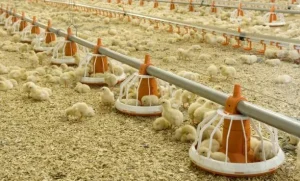
Building the Right Foundation for Broilers
Overcrowding is a common and costly mistake in commercial broiler farming. It directly causes health issues like footpad dermatitis and creates intense competition for feed and water, leading to uneven flock growth.
When birds are too crowded, their welfare suffers, and so does your balance sheet. Stressed birds have weaker immune systems, making disease outbreaks more likely. A seemingly small miscalculation in stocking density can compromise an entire flock’s performance.
Provide each bird with adequate space. The ideal density depends on your climate and ventilation system, but a common target helps ensure healthy growth. Proper spacing is a fundamental aspect of effective broiler flock management.
Chart 1: The Impact of Stocking Density on Broiler Performance
| Stocking Density ( kg/m ²) | Impact on Weight Gain | Other Health Impacts |
| Low (under 30) | Higher individual weight. | Better foot health, lower stress. |
| Medium (30-38) | Good weight if managed well. | An optimal balance for economic returns. |
| High (over 38) | Lower individual weight. | High risk of heat stress and disease. |
Engineering Implication for Project Buyers: For commercial houses, stocking density must be designed together with ventilation capacity and the cooling system. Planning for higher density without significant airflow and cooling upgrades increases heat stress and mortality risk, negating any potential gains.
Poor flooring conditions, especially wet and dirty litter, are a primary source of disease. High levels of ammonia gas from damp manure can cause respiratory damage and eye infections.
Imagine thousands of birds living on a damp, toxic floor. They are constantly exposed to pathogens, and the corrosive ammonia damages their health. This scenario, caused by poor litter management, quickly leads to economic losses.
The house, whether it’s a prefabricated chicken coop or a custom build, must be dry and secure. For floor-raised systems, deep, absorbent litter like wood shavings ou rice husks is essential. However, modern systems offer a more hygienic alternative.
System Takeaway for Project Buyers: While litter management is key for floor raising, modern broiler battery cage system with automated manure removal belts eliminate litter entirely. This dramatically reduces ammonia levels, improves hygiene, and lowers labor costs, creating a healthier environment that supports higher density.
Broilers are sensitive to temperature. Maintaining the correct environmental conditions is critical for growth, especially for young chicks.
Chicks cannot regulate their own body temperature. If they get cold, they won’t eat or drink, leading to high early mortality.
A poorly managed brooding phase can result in the loss of a significant percentage of your chicks in the first week. This is a devastating financial and operational blow before your project has even truly begun.
The brooding period requires precise temperature control using reliable équipement de chauffage like radiant brooders for chicks. The temperature must be kept high initially and then gradually reduced each week.
Table 1: Brooder and Grow-Out Temperature Requirements by Age
| Age of Broilers | Recommended Temperature (°C) | Recommended Temperature (°F) |
| Week 1 | 32 – 35°C | 90 – 95°F |
| Week 2 | 29 – 31°C | 85 – 90°F |
| Week 3 | 26 – 28°C | 80 – 85°F |
| Week 4+ | 23 – 25°C | 75 – 80°F |
Engineering Implication for Project Buyers: The heating system’s capacity (BTU or kW) must be calculated based on the poultry house volume, insulation (R-value), and the coldest local ambient temperature. Undersized systems will fail to maintain target temperatures, harming chick development.
Stale, ammonia-filled air is toxic to broilers. Poor air quality leads to respiratory diseases in chickens and reduced feed intake.
A poorly ventilated house is a liability. Birds become sick, growth slows, and mortality rates climb. The entire investment in a steel chicken coop can be jeopardized by an inadequate air exchange system.
A powerful poultry ventilation system is non-negotiable. You need correctly sized ventilation fans to continuously remove stale air and introduce fresh air. Systems like tunnel ventilation are standard in commercial farms. In hotter climates, a cooling system using evaporative cooling pads is essential.
System Takeaway for Project Buyers: For commercial broiler houses, ventilation systems (tunnel or cross-flow) must be sized to match the maximum bird heat load at target weight and local climate extremes. Choose corrosion-resistant poultry exhaust fans and compatible cooling pads to effectively control ammonia, humidity, and heat stress.
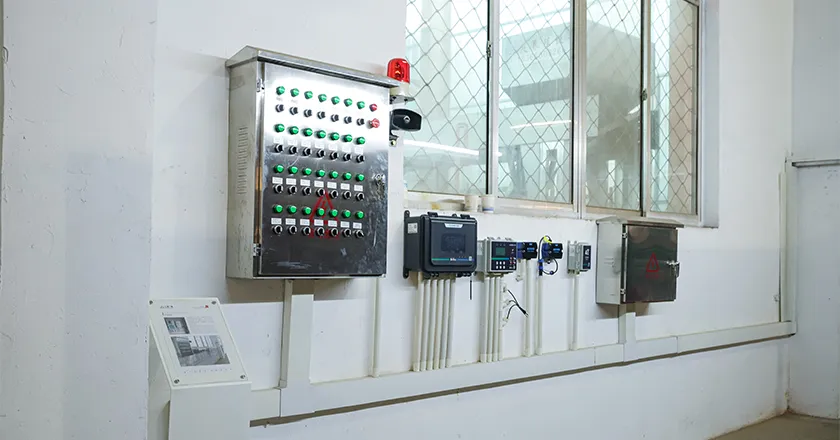
Contrôleur environnemental
Optimal nutrition and hydration are the engines of broiler growth. Any failure in these systems directly translates to lost production.
Using a generic feed formula. Broilers have specific, changing nutritional needs as they age. The wrong feed leads to poor growth and a high feed conversion ratio (FCR).
Spending a significant portion of your budget on feed only to see subpar growth is frustrating and unprofitable. Without the right broiler nutrition, you are essentially converting expensive feed into waste, not meat.
Use a staged feeding program with diets formulated for broilers:
A reliable poultry feed system, including chicken feed silos and an automatic feeding system for chickens, ensures this critical input is delivered cleanly and efficiently.
Inadequate or contaminated water. Birds drink roughly twice as much water as they eat feed, and a lack of clean water immediately suppresses appetite and growth.
Water is the most critical nutrient, yet it’s often overlooked. A failing water line or contaminated drinkers can quickly spread diseases like E. coli, causing a catastrophic health crisis across the flock.
Ensure constant access to fresh, clean water. Modern poultry drinking systems, such as nipple drinkers for chickens, are essential as they keep water clean and reduce spillage, which helps keep litter dry.
System Takeaway for Project Buyers: An automated feeding and drinking system is a core requirement for any commercial farm. The system design should ensure equal access for all birds, with the number of feed pans and nipple drinkers calculated based on the total bird population. Investing in a reliable silo and auger system protects feed quality and reduces labor.
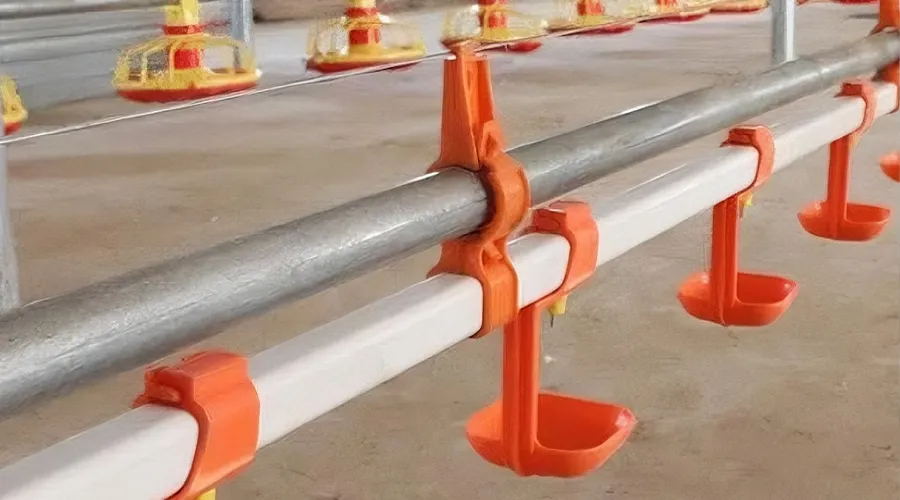
Feed and Water
Planning a new broiler farm requires moving from theory to a concrete Bill of Materials (BOM). This checklist outlines the core systems and considerations for project buyers.
Take the Next Step for Your Project:
In commercial poultry, preventing disease is always more cost-effective than treating it. Your equipment and protocols are your first line of defense.
Introducing pathogens into your farm from outside sources. People, vehicles, and wild animals are common vectors for devastating diseases like Avian Influenza.
A single biosecurity breach can bypass all your hard work, leading to a massive disease outbreak that can wipe out your entire flock and halt your operations for months.
Implement and enforce a strict poultry farm biosecurity plan. This includes perimeter fencing, controlled access points with disinfection protocols, and preventing contact with wild birds.
The spread of common poultry diseases like Coccidiosis, Salmonelle, and Infectious bursal disease (Gumboro) within the flock.
An outbreak, even if contained, leads to treatment costs, reduced growth rates, and higher mortality, all of which erode your profit margins.
Work with a veterinarian to establish a proper broiler vaccination schedule. Crucially, practice an all-in, all-out system. After each flock is removed, perform a thorough poultry farm disinfection of the house and all equipment during a planned downtime period.
System Takeaway for Project Buyers: The design of your equipment directly impacts biosecurity. Choose systems with smooth, non-porous surfaces that are easy to clean and disinfect. An automatic manure removal system is a superior biosecurity tool, as it removes waste from the house daily, drastically reducing pathogen loads and ammonia production.
Raising broilers commercially is a science of controlled systems. You have seen the problems that arise from guesswork: disease, poor growth, and financial loss. You understand how these issues can agitate any farm owner and threaten their investment.
Le solution is to engineer success from the ground up. By providing your broilers with a precisely controlled environment built on superior housing, automated systems, and strict biosecurity, you can achieve consistent, profitable outcomes. Using a high-quality, fully integrated poultry house design is the most reliable path to this goal.
Attention to these systemic details is what separates top-performing farms from the rest. Your feed conversion ratio will improve, mortality rates will drop, and your operation will become a predictable asset. With the right knowledge and the right broiler farm equipment, you can build a farm that is efficient, humane, and highly profitable.
Sourcing poultry equipment from a Chinese manufacturer means controlling four variables di…
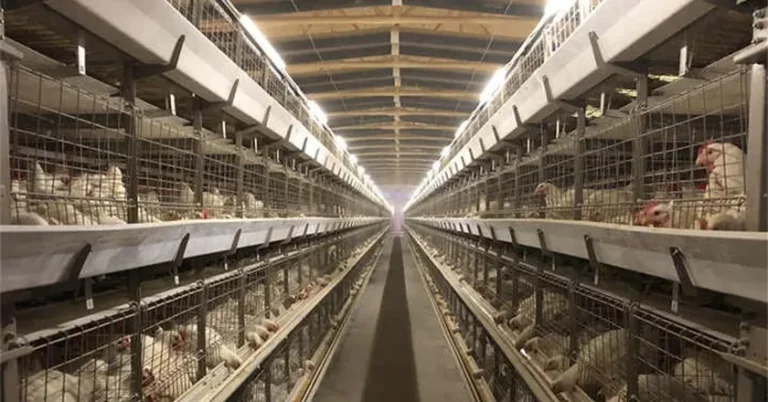
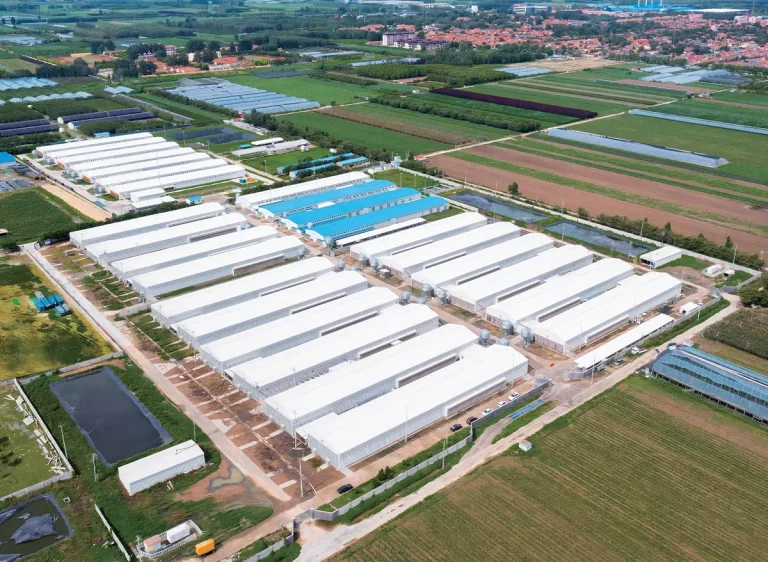
A steel structure poultry house is a prefabricated steel building designed for layer, broi…
Nous répondrons à votre demande dans les 24 heures. Pour les demandes urgentes, veuillez nous contacter via WhatsApp : +86 133 6144 9578 ou nous appeler directement.
*Nous respectons votre vie privée. Toutes les informations fournies sont strictement confidentielles.
Vos coordonnées ne seront utilisées que pour répondre à votre demande. Nous n'envoyons jamais d'e-mails ou de messages promotionnels non sollicités.